
H1N1 surge in Delhi: Cases jump six-fold year-on-year to 1,449 as hospital doctors test positive
Delhi’s H1N1 tally has crossed 1,400 as doctors flag under-reporting of mild infections; Karnataka, Kerala and Maharashtra have also recorded high burdens in previous surveillance
- Aug 21, 2026,
- Updated Aug 21, 2026 11:47 AM IST
Delhi is seeing a sharp rise in H1N1 influenza cases, with 1,449 infections reported as of August 12, 2026, more than six times the 229 cases recorded during the comparable period last year, according to National Centre for Disease Control (NCDC) data.
The surge is also reaching the healthcare system. Business Today has learnt that doctors working in Delhi government hospitals have tested positive for H1N1 during the current surge, with some requiring hospitalisation for treatment. The infections among healthcare workers add another dimension to the outbreak, given their repeated exposure to patients with respiratory infections.
The latest increase comes after a sharp rise in Delhi’s H1N1 burden in 2024, when the capital recorded 3,151 cases. Delhi had reported 92 cases in 2021, 442 in 2022 and 209 in 2023. Nationally, H1N1 cases have fluctuated significantly. India recorded 778 cases in 2021, rising to 13,202 in 2022, before falling to 8,125 in 2023. Cases then jumped to 20,414 in 2024, with 347 deaths.
Karnataka, Kerala, Maharashtra among high-burden states
The H1N1 burden has historically extended well beyond Delhi. In 2024, Karnataka recorded 3,530 H1N1 cases, followed by Delhi with 3,151, Kerala with 2,846, Maharashtra with 2,072 and Gujarat with 1,711, according to NCDC surveillance data.
The state-wise numbers underline the seasonal and geographically dispersed nature of influenza in India. The 2026 picture is still developing, making fresh surveillance from states important to establish whether the current rise is concentrated in Delhi-NCR or represents a wider increase in transmission. The distinction is important because historical state-level numbers should not be read as the current 2026 burden. The NCDC’s surveillance system provides the baseline against which the emerging 2026 numbers can be assessed.
Dr Rahul Sharma, Director, Pulmonology & Critical Care, Fortis Healthcare, Noida, says Delhi-NCR is experiencing an H1N1 surge in August 2026, but the confirmed numbers are likely to significantly underestimate the actual number of infections. “The reported figure is just the tip of the iceberg,” Sharma says. Many infections are mild and may never be tested or reported. Patients may self-medicate or recover at home, keeping them outside the formal surveillance system.
Sharma says several factors could be operating together, including monsoon-associated indoor crowding and transmission, accumulation of susceptible individuals, waning immunity from previous vaccination or infection, increased testing and possible antigenic drift leading to partial immune escape.
No evidence of a new pandemic strain; hospitals see more flu-like illness
Despite the rise in cases, Sharma says there is currently no evidence that a new antigenically distinct H1N1 strain is responsible for the Delhi surge.
Influenza viruses undergo small mutations in their surface proteins, primarily haemagglutinin (HA) and neuraminidase (NA). These changes, known as antigenic drift, can allow the virus to partially evade existing immunity and contribute to recurring seasonal outbreaks. Antigenic shift is different. It involves a major reassortment event in influenza A viruses and can produce a substantially different virus with pandemic potential. There is currently no evidence that the Delhi 2026 H1N1 rise represents antigenic shift, Sharma says. Dr Tushar Tayal, Associate Director – Internal Medicine, CK Birla Hospital, Gurugram, says doctors are seeing a significant number of patients with flu-like symptoms.
These include high-grade fever, in some cases reaching 103°F, chills, runny nose, sore throat and cough. Some patients also experience nausea and vomiting. A large proportion of these patients are testing positive for influenza, including H1N1, Tayal says. For most otherwise healthy individuals, influenza remains a self-limiting viral illness that can be managed with rest, hydration and symptomatic treatment. Patients with severe symptoms or low immunity may require antiviral medication, as advised by a doctor. Tayal also cautions against unnecessary antibiotics. Antibiotics do not treat influenza unless there is a suspected or confirmed bacterial infection.
Why vaccinated people can still test positive and who needs an H1N1 test?
The current surge has also raised questions about annual influenza vaccination, particularly as infections are being reported among people who receive yearly shots. Sharma says vaccination remains worthwhile, particularly for elderly people, pregnant women, healthcare workers and patients with diabetes, obesity, cardiovascular disease, cancer, chronic kidney disease, COPD, asthma or immunosuppression.
Vaccination does not completely prevent infection. However, even when infection occurs, it can reduce the risk of severe influenza and hospitalisation. The occurrence of breakthrough infections therefore does not necessarily mean that vaccination has failed; protection against severe outcomes remains an important benefit. Sharma says PCR testing is not required for every patient with influenza-like illness during a known H1N1 surge.
In uncomplicated outpatient cases, a clinical diagnosis can be reasonable when influenza is already circulating locally. Testing becomes more important for patients with atypical symptoms, COPD, pneumonia, severe comorbidities or serious disease, where establishing the diagnosis can influence clinical management. That also means confirmed case numbers are unlikely to capture every infection in the community. Dr Aishwarya R, Consultant – Infectious Diseases at Aster RV Hospital, Bengaluru, says H1N1 can initially resemble seasonal influenza, with fever, cough, scratchy throat, runny or blocked nose, body aches, headache, chills and fatigue. Some patients may also experience vomiting and diarrhoea.
The risk of severe disease is higher among young children, older adults, pregnant women, people with weakened immunity and those with underlying conditions such as asthma, diabetes, heart disease, kidney disease and obesity, she says. In severe cases, H1N1 can progress to pneumonia and acute respiratory distress syndrome (ARDS). Severe lung inflammation can reduce oxygen levels and potentially lead to respiratory failure. In the most serious cases, complications can include multi-organ failure.
What to watch next
For hospitals and public-health authorities, the key indicators now are not simply confirmed cases but hospitalisations, oxygen requirements, ICU admissions and deaths. The historical NCDC data show how quickly India’s H1N1 burden can change. National cases rose from 8,125 in 2023 to 20,414 in 2024, while deaths increased from 129 to 347. The current Delhi numbers, activity being monitored across other states, and the infection of healthcare workers make the latest rise worth watching.
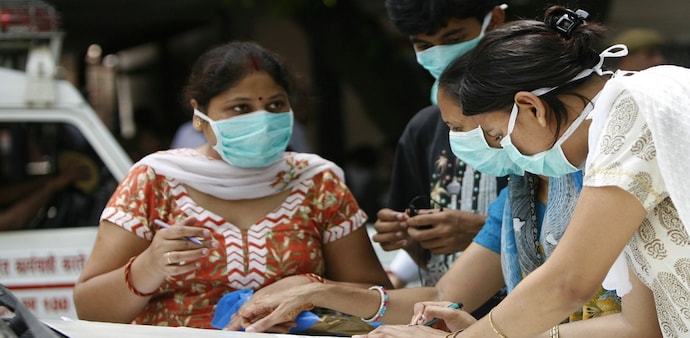
Sharma recommends mask use in selected crowded or high-risk public settings, particularly indoors, during the current surge, but does not recommend that every healthy person wear a mask continuously outdoors. For symptomatic people, doctors recommend wearing a mask around others, maintaining hand hygiene, avoiding close contact and staying home when unwell. People should avoid self-medicating with antibiotics or antivirals without medical advice. The next phase of state-wise surveillance will be critical in determining whether the 2026 H1N1 rise remains a seasonal spike or develops into a broader public-health concern.
Delhi is seeing a sharp rise in H1N1 influenza cases, with 1,449 infections reported as of August 12, 2026, more than six times the 229 cases recorded during the comparable period last year, according to National Centre for Disease Control (NCDC) data.
The surge is also reaching the healthcare system. Business Today has learnt that doctors working in Delhi government hospitals have tested positive for H1N1 during the current surge, with some requiring hospitalisation for treatment. The infections among healthcare workers add another dimension to the outbreak, given their repeated exposure to patients with respiratory infections.
The latest increase comes after a sharp rise in Delhi’s H1N1 burden in 2024, when the capital recorded 3,151 cases. Delhi had reported 92 cases in 2021, 442 in 2022 and 209 in 2023. Nationally, H1N1 cases have fluctuated significantly. India recorded 778 cases in 2021, rising to 13,202 in 2022, before falling to 8,125 in 2023. Cases then jumped to 20,414 in 2024, with 347 deaths.
Karnataka, Kerala, Maharashtra among high-burden states
The H1N1 burden has historically extended well beyond Delhi. In 2024, Karnataka recorded 3,530 H1N1 cases, followed by Delhi with 3,151, Kerala with 2,846, Maharashtra with 2,072 and Gujarat with 1,711, according to NCDC surveillance data.
The state-wise numbers underline the seasonal and geographically dispersed nature of influenza in India. The 2026 picture is still developing, making fresh surveillance from states important to establish whether the current rise is concentrated in Delhi-NCR or represents a wider increase in transmission. The distinction is important because historical state-level numbers should not be read as the current 2026 burden. The NCDC’s surveillance system provides the baseline against which the emerging 2026 numbers can be assessed.
Dr Rahul Sharma, Director, Pulmonology & Critical Care, Fortis Healthcare, Noida, says Delhi-NCR is experiencing an H1N1 surge in August 2026, but the confirmed numbers are likely to significantly underestimate the actual number of infections. “The reported figure is just the tip of the iceberg,” Sharma says. Many infections are mild and may never be tested or reported. Patients may self-medicate or recover at home, keeping them outside the formal surveillance system.
Sharma says several factors could be operating together, including monsoon-associated indoor crowding and transmission, accumulation of susceptible individuals, waning immunity from previous vaccination or infection, increased testing and possible antigenic drift leading to partial immune escape.
No evidence of a new pandemic strain; hospitals see more flu-like illness
Despite the rise in cases, Sharma says there is currently no evidence that a new antigenically distinct H1N1 strain is responsible for the Delhi surge.
Influenza viruses undergo small mutations in their surface proteins, primarily haemagglutinin (HA) and neuraminidase (NA). These changes, known as antigenic drift, can allow the virus to partially evade existing immunity and contribute to recurring seasonal outbreaks. Antigenic shift is different. It involves a major reassortment event in influenza A viruses and can produce a substantially different virus with pandemic potential. There is currently no evidence that the Delhi 2026 H1N1 rise represents antigenic shift, Sharma says. Dr Tushar Tayal, Associate Director – Internal Medicine, CK Birla Hospital, Gurugram, says doctors are seeing a significant number of patients with flu-like symptoms.
These include high-grade fever, in some cases reaching 103°F, chills, runny nose, sore throat and cough. Some patients also experience nausea and vomiting. A large proportion of these patients are testing positive for influenza, including H1N1, Tayal says. For most otherwise healthy individuals, influenza remains a self-limiting viral illness that can be managed with rest, hydration and symptomatic treatment. Patients with severe symptoms or low immunity may require antiviral medication, as advised by a doctor. Tayal also cautions against unnecessary antibiotics. Antibiotics do not treat influenza unless there is a suspected or confirmed bacterial infection.
Why vaccinated people can still test positive and who needs an H1N1 test?
The current surge has also raised questions about annual influenza vaccination, particularly as infections are being reported among people who receive yearly shots. Sharma says vaccination remains worthwhile, particularly for elderly people, pregnant women, healthcare workers and patients with diabetes, obesity, cardiovascular disease, cancer, chronic kidney disease, COPD, asthma or immunosuppression.
Vaccination does not completely prevent infection. However, even when infection occurs, it can reduce the risk of severe influenza and hospitalisation. The occurrence of breakthrough infections therefore does not necessarily mean that vaccination has failed; protection against severe outcomes remains an important benefit. Sharma says PCR testing is not required for every patient with influenza-like illness during a known H1N1 surge.
In uncomplicated outpatient cases, a clinical diagnosis can be reasonable when influenza is already circulating locally. Testing becomes more important for patients with atypical symptoms, COPD, pneumonia, severe comorbidities or serious disease, where establishing the diagnosis can influence clinical management. That also means confirmed case numbers are unlikely to capture every infection in the community. Dr Aishwarya R, Consultant – Infectious Diseases at Aster RV Hospital, Bengaluru, says H1N1 can initially resemble seasonal influenza, with fever, cough, scratchy throat, runny or blocked nose, body aches, headache, chills and fatigue. Some patients may also experience vomiting and diarrhoea.
The risk of severe disease is higher among young children, older adults, pregnant women, people with weakened immunity and those with underlying conditions such as asthma, diabetes, heart disease, kidney disease and obesity, she says. In severe cases, H1N1 can progress to pneumonia and acute respiratory distress syndrome (ARDS). Severe lung inflammation can reduce oxygen levels and potentially lead to respiratory failure. In the most serious cases, complications can include multi-organ failure.
What to watch next
For hospitals and public-health authorities, the key indicators now are not simply confirmed cases but hospitalisations, oxygen requirements, ICU admissions and deaths. The historical NCDC data show how quickly India’s H1N1 burden can change. National cases rose from 8,125 in 2023 to 20,414 in 2024, while deaths increased from 129 to 347. The current Delhi numbers, activity being monitored across other states, and the infection of healthcare workers make the latest rise worth watching.
Sharma recommends mask use in selected crowded or high-risk public settings, particularly indoors, during the current surge, but does not recommend that every healthy person wear a mask continuously outdoors. For symptomatic people, doctors recommend wearing a mask around others, maintaining hand hygiene, avoiding close contact and staying home when unwell. People should avoid self-medicating with antibiotics or antivirals without medical advice. The next phase of state-wise surveillance will be critical in determining whether the 2026 H1N1 rise remains a seasonal spike or develops into a broader public-health concern.