
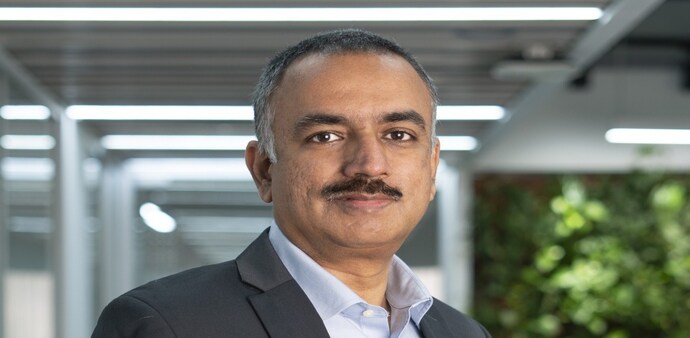
Philips' Bharath Sesha on how AI is helping Indian clinicians see more patients
Sesha talks about how clinicians report saving the equivalent of more than three working weeks annually through AI-enabled tools.
- Aug 12, 2026,
- Updated Aug 12, 2026 7:10 PM IST
Artificial intelligence is beginning to deliver measurable gains across India's healthcare system, with clinicians reporting higher productivity, improved workflow efficiency and more time for patient care, according to Philips' Future Health Index 2026 India Report.
The study also highlights gaps in training, governance and trust that need to be addressed before AI can be deployed at scale. In an interview with Business Today, Bharath Sesha, Managing Director, Philips Indian Subcontinent, explains why India is embracing AI faster than many global markets, how Philips is strengthening its AI capabilities in India, and what it will take to move AI from pilot projects to routine clinical practice.
BT: This year's report suggests AI is beginning to deliver measurable outcomes rather than remaining a future promise. What stood out most to you?
BS: The biggest difference from last year is that we are now seeing evidence of AI creating measurable value in healthcare. Last year, clinicians and patients in India expressed strong confidence in AI and its potential. This year, that optimism is translating into outcomes.
Clinicians report saving the equivalent of more than three working weeks annually through AI-enabled tools. More importantly, they are reinvesting that time in higher-value clinical work—spending more time with patients, thinking through diagnoses more carefully and improving the quality of care they deliver. Doctors studied medicine to care for patients, not to spend their day looking at computer screens or completing paperwork. AI is beginning to restore that balance.
Another important takeaway is clinician well-being. We often ask who cares for the caregivers. Doctors themselves report that AI is reducing stress, improving work-life balance and allowing them to focus on the part of medicine they trained for—patient care.
However, the report also identifies two areas that require attention. The first is readiness, as many clinicians still feel they do not receive adequate AI training. The second is trust. As AI becomes more deeply integrated into healthcare, clinicians and patients must have confidence that it is being deployed responsibly.
BT: Indian clinicians appear to be adopting AI faster than the global average. Is that because India is technologically ready, or because the country's healthcare challenges make AI a necessity?
BS: It is largely driven by the realities of India's healthcare system.
Doctors want to spend more meaningful time with patients while managing extremely high patient volumes. Any technology that reduces administrative work and allows them to focus on clinical decision-making is immediately valuable.
The second factor is equitable access to healthcare. There are still significant differences between metropolitan centres and smaller towns or rural areas. Clinicians see AI as a way to narrow those gaps by extending specialist expertise and improving the quality of care regardless of where a patient lives. Those two realities explain why Indian healthcare professionals are embracing AI much faster than many other markets.
BT: AI is often projected as a solution for improving healthcare access. How realistic is that expectation in a country as diverse as India?
BS: I think AI has a significant role to play, particularly in improving access to specialist care.
Take stroke care as an example. A patient arriving at a hospital in a smaller city may not immediately have access to a specialist. Through AI-enabled networks, scans can be transmitted instantly to specialists in larger centres, who can begin assessing the patient even before transfer takes place. By the time the patient reaches the intervention centre, doctors have already planned the treatment.
For us, AI is not simply about automation. It is about using technology to make quality healthcare more accessible, irrespective of geography.
BT: The report highlights gaps in AI training and governance. What needs to happen before AI can be adopted at scale?
BS: Technology alone will not transform healthcare. Nearly two-thirds of clinicians say structured AI training remains inadequate. At Philips, we train more than 1,000 clinicians every year, and AI education is becoming an increasingly important part of those programmes.
Governance is equally important because clinicians need confidence that AI systems are reliable, properly monitored and being used responsibly.
BT: Trust also extends to misinformation and human oversight. Can AI ever function without clinicians remaining at the centre of decision-making?
BS:
I don't think healthcare will ever move away from human judgement.
The report shows clinicians still need to correct AI-generated misinformation, while many patients remain uncomfortable if they believe decisions are being made entirely by AI.
AI should augment clinicians, not replace them. Technology can process information faster and identify patterns, but accountability, clinical judgement and patient relationships will always remain human responsibilities. Building trust requires both capable AI and responsible use of AI.
BT: Data privacy has become one of the biggest concerns around AI. How should the healthcare sector address it?
BS: Data privacy and trust go hand in hand.
Governments are putting in place stronger regulatory frameworks. In India, the SAHI guidelines clearly define issues such as patient consent and responsible use of healthcare data.
For Philips, patient safety, quality and data integrity have always been among our highest priorities. AI will only succeed if patients and clinicians know that their data is secure and being handled responsibly. As regulatory frameworks mature and organisations implement them consistently, confidence in AI will continue to grow.
BT: Healthcare has seen many AI pilot projects over the years, but relatively few have scaled. What has to change for AI to become part of routine clinical practice?
BS: Pilot projects need to demonstrate measurable clinical value.
We are working with institutions such as AIIMS and several private hospitals because they allow us to validate AI solutions at scale.
One example is SmartSpeed, our AI-enabled MRI technology. Every MRI equipped with SmartSpeed can scan five to six additional patients every day while maintaining image quality. Across hundreds of systems, that translates into thousands of additional scans annually.
Another example is our Hub-and-Stroke initiative. It connects CT scanners in smaller cities with specialist stroke centres so that diagnosis begins immediately and treatment planning starts while the patient is being transported.
These are practical examples where AI improves productivity, shortens treatment timelines and expands access to care. Once healthcare providers see measurable clinical benefits, adoption naturally accelerates.
BT: How is this AI transformation influencing Philips' strategy and investments in India?
BS: We have invested around ₹1,750 crore in India over the past four to five years, primarily in innovation, research and development, and manufacturing.
Our Bengaluru campus has become Philips' global AI Centre of Excellence. In fact, one in every two Philips devices sold anywhere in the world contains software developed in Bengaluru.
India already plays a central role in Philips' global innovation strategy, and we see that continuing as we strengthen our capabilities in AI, research and development, and manufacturing.
BT: Tier-2 and Tier-3 cities are expected to drive the next phase of healthcare growth. How important are these markets for Philips?
BS: They are a major growth opportunity. 80% of healthcare professionals believe AI can help improve access to quality healthcare in underserved and rural communities
Healthcare infrastructure is expanding rapidly, and initiatives such as the Ayushman Bharat Digital Mission are creating the digital backbone needed for connected healthcare.
Many of our AI innovations are designed specifically for these markets. Imagine one specialist hospital connected digitally to several smaller hospitals across neighbouring districts. Patients gain faster access to specialist expertise without travelling long distances.
AI gives us an opportunity to improve access to quality healthcare across the country, irrespective of geography, and that is a major part of our strategy.
BT: Looking ahead, what will be the key drivers of Philips' growth in India?
BS: No single organisation can solve healthcare challenges alone. That is why partnerships remain central to our strategy.
We work closely with governments, healthcare providers and technology partners to build integrated healthcare ecosystems. Our recent partnership with Bajaj Group, where we are providing the digital backbone for its healthcare business, and our collaboration with Medtronic in structural heart disease reflect this approach.
Going forward, we will continue building partnerships and strengthening technologies that improve patient outcomes while making healthcare more accessible and efficient.
Artificial intelligence is beginning to deliver measurable gains across India's healthcare system, with clinicians reporting higher productivity, improved workflow efficiency and more time for patient care, according to Philips' Future Health Index 2026 India Report.
The study also highlights gaps in training, governance and trust that need to be addressed before AI can be deployed at scale. In an interview with Business Today, Bharath Sesha, Managing Director, Philips Indian Subcontinent, explains why India is embracing AI faster than many global markets, how Philips is strengthening its AI capabilities in India, and what it will take to move AI from pilot projects to routine clinical practice.
BT: This year's report suggests AI is beginning to deliver measurable outcomes rather than remaining a future promise. What stood out most to you?
BS: The biggest difference from last year is that we are now seeing evidence of AI creating measurable value in healthcare. Last year, clinicians and patients in India expressed strong confidence in AI and its potential. This year, that optimism is translating into outcomes.
Clinicians report saving the equivalent of more than three working weeks annually through AI-enabled tools. More importantly, they are reinvesting that time in higher-value clinical work—spending more time with patients, thinking through diagnoses more carefully and improving the quality of care they deliver. Doctors studied medicine to care for patients, not to spend their day looking at computer screens or completing paperwork. AI is beginning to restore that balance.
Another important takeaway is clinician well-being. We often ask who cares for the caregivers. Doctors themselves report that AI is reducing stress, improving work-life balance and allowing them to focus on the part of medicine they trained for—patient care.
However, the report also identifies two areas that require attention. The first is readiness, as many clinicians still feel they do not receive adequate AI training. The second is trust. As AI becomes more deeply integrated into healthcare, clinicians and patients must have confidence that it is being deployed responsibly.
BT: Indian clinicians appear to be adopting AI faster than the global average. Is that because India is technologically ready, or because the country's healthcare challenges make AI a necessity?
BS: It is largely driven by the realities of India's healthcare system.
Doctors want to spend more meaningful time with patients while managing extremely high patient volumes. Any technology that reduces administrative work and allows them to focus on clinical decision-making is immediately valuable.
The second factor is equitable access to healthcare. There are still significant differences between metropolitan centres and smaller towns or rural areas. Clinicians see AI as a way to narrow those gaps by extending specialist expertise and improving the quality of care regardless of where a patient lives. Those two realities explain why Indian healthcare professionals are embracing AI much faster than many other markets.
BT: AI is often projected as a solution for improving healthcare access. How realistic is that expectation in a country as diverse as India?
BS: I think AI has a significant role to play, particularly in improving access to specialist care.
Take stroke care as an example. A patient arriving at a hospital in a smaller city may not immediately have access to a specialist. Through AI-enabled networks, scans can be transmitted instantly to specialists in larger centres, who can begin assessing the patient even before transfer takes place. By the time the patient reaches the intervention centre, doctors have already planned the treatment.
For us, AI is not simply about automation. It is about using technology to make quality healthcare more accessible, irrespective of geography.
BT: The report highlights gaps in AI training and governance. What needs to happen before AI can be adopted at scale?
BS: Technology alone will not transform healthcare. Nearly two-thirds of clinicians say structured AI training remains inadequate. At Philips, we train more than 1,000 clinicians every year, and AI education is becoming an increasingly important part of those programmes.
Governance is equally important because clinicians need confidence that AI systems are reliable, properly monitored and being used responsibly.
BT: Trust also extends to misinformation and human oversight. Can AI ever function without clinicians remaining at the centre of decision-making?
BS:
I don't think healthcare will ever move away from human judgement.
The report shows clinicians still need to correct AI-generated misinformation, while many patients remain uncomfortable if they believe decisions are being made entirely by AI.
AI should augment clinicians, not replace them. Technology can process information faster and identify patterns, but accountability, clinical judgement and patient relationships will always remain human responsibilities. Building trust requires both capable AI and responsible use of AI.
BT: Data privacy has become one of the biggest concerns around AI. How should the healthcare sector address it?
BS: Data privacy and trust go hand in hand.
Governments are putting in place stronger regulatory frameworks. In India, the SAHI guidelines clearly define issues such as patient consent and responsible use of healthcare data.
For Philips, patient safety, quality and data integrity have always been among our highest priorities. AI will only succeed if patients and clinicians know that their data is secure and being handled responsibly. As regulatory frameworks mature and organisations implement them consistently, confidence in AI will continue to grow.
BT: Healthcare has seen many AI pilot projects over the years, but relatively few have scaled. What has to change for AI to become part of routine clinical practice?
BS: Pilot projects need to demonstrate measurable clinical value.
We are working with institutions such as AIIMS and several private hospitals because they allow us to validate AI solutions at scale.
One example is SmartSpeed, our AI-enabled MRI technology. Every MRI equipped with SmartSpeed can scan five to six additional patients every day while maintaining image quality. Across hundreds of systems, that translates into thousands of additional scans annually.
Another example is our Hub-and-Stroke initiative. It connects CT scanners in smaller cities with specialist stroke centres so that diagnosis begins immediately and treatment planning starts while the patient is being transported.
These are practical examples where AI improves productivity, shortens treatment timelines and expands access to care. Once healthcare providers see measurable clinical benefits, adoption naturally accelerates.
BT: How is this AI transformation influencing Philips' strategy and investments in India?
BS: We have invested around ₹1,750 crore in India over the past four to five years, primarily in innovation, research and development, and manufacturing.
Our Bengaluru campus has become Philips' global AI Centre of Excellence. In fact, one in every two Philips devices sold anywhere in the world contains software developed in Bengaluru.
India already plays a central role in Philips' global innovation strategy, and we see that continuing as we strengthen our capabilities in AI, research and development, and manufacturing.
BT: Tier-2 and Tier-3 cities are expected to drive the next phase of healthcare growth. How important are these markets for Philips?
BS: They are a major growth opportunity. 80% of healthcare professionals believe AI can help improve access to quality healthcare in underserved and rural communities
Healthcare infrastructure is expanding rapidly, and initiatives such as the Ayushman Bharat Digital Mission are creating the digital backbone needed for connected healthcare.
Many of our AI innovations are designed specifically for these markets. Imagine one specialist hospital connected digitally to several smaller hospitals across neighbouring districts. Patients gain faster access to specialist expertise without travelling long distances.
AI gives us an opportunity to improve access to quality healthcare across the country, irrespective of geography, and that is a major part of our strategy.
BT: Looking ahead, what will be the key drivers of Philips' growth in India?
BS: No single organisation can solve healthcare challenges alone. That is why partnerships remain central to our strategy.
We work closely with governments, healthcare providers and technology partners to build integrated healthcare ecosystems. Our recent partnership with Bajaj Group, where we are providing the digital backbone for its healthcare business, and our collaboration with Medtronic in structural heart disease reflect this approach.
Going forward, we will continue building partnerships and strengthening technologies that improve patient outcomes while making healthcare more accessible and efficient.