
Volkswagen 'Future Plan' approved, 50,000 jobs to be cut in biggest overhaul: Report
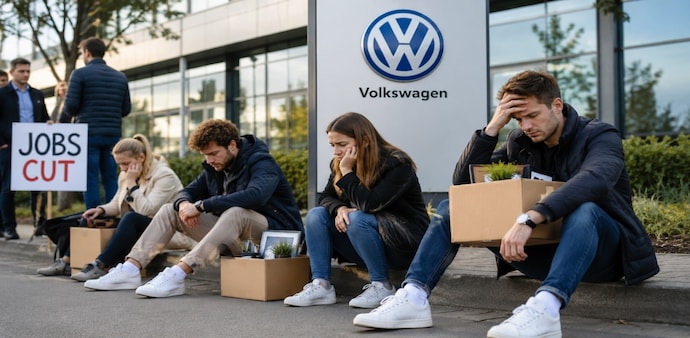
The overhaul, known as the Future Plan, includes an additional 50,000 job cuts worldwide, far fewer models and a smaller industrial footprint as the company tries to reset its business.
- Sep 4, 2026,
- Updated Sep 4, 2026 8:16 AM IST
Volkswagen is set to cut another 50,000 jobs worldwide as the German auto giant battles US tariffs, excess capacity and mounting competition from Chinese carmakers. The sweeping restructuring, approved by the company’s supervisory board on Thursday, marks the biggest overhaul in Volkswagen’s 89-year history, Reuters reported.
The plan also puts the future of four German plants — in Emden, Zwickau, Neckarsulm and Hannover — under review as they face a staggered loss of models from 2031 onwards.
The agreement helps Volkswagen avoid an immediate showdown with its powerful unions and Lower Saxony, its second-largest shareholder. Management had considered calling an extraordinary general meeting to push through its restructuring plans despite opposition from workers and the state.
The deal will also simplify Volkswagen’s complex conglomerate structure and reduce the supervisory board’s influence over key decisions. Unions and Lower Saxony currently hold a majority on the board.
"This is a strong signal for the future of the Volkswagen Group. We are taking responsibility for our entire workforce, for our partners and for industrial jobs worldwide," CEO Oliver Blume said in a statement.
Volkswagen shares surged 7.9% in Frankfurt on Thursday following the announcement, reflecting investor relief over a deal that sources said helped avert a potentially unprecedented crisis at Europe’s largest automaker.
What happens to Volkswagen’s German plants?
Industry analyst Ferdinand Dudenhoeffer said the next 10 months will be critical as Volkswagen discusses the future of its plants in Emden, Zwickau, Neckarsulm and Hannover.
All four plants are expected to face a staggered phase-out of models from 2031 onwards, raising questions over their long-term viability and the jobs linked to them.
"A certain sense of calm is returning, but it is far from 'peace'. In politics, one would call it a 'ceasefire'. That's a good thing, because now the focus can be on the business," Dudenhoeffer said.
Why is Volkswagen cutting 50,000 more jobs?
The "Future Plan" comes as Volkswagen faces pressure in two of its most important markets. US import tariffs are squeezing the automaker, while its business in China — the world’s biggest car market and once a major source of cash for the group — has weakened.
Volkswagen did not disclose when the latest job cuts will take place or how they will be distributed across its brands and regions.
The company said "a further fundamental adjustment of the global workforce capacity" was necessary. The latest plan involves cutting around 50,000 positions worldwide, in addition to the 50,000-job reduction already under way.
The agreement follows weeks of tense negotiations between Volkswagen’s board and majority owner Porsche SE and its unions and Lower Saxony. A previously discussed plan to spin off Volkswagen’s passenger car and components businesses is no longer part of the proposal.
Volkswagen is set to cut another 50,000 jobs worldwide as the German auto giant battles US tariffs, excess capacity and mounting competition from Chinese carmakers. The sweeping restructuring, approved by the company’s supervisory board on Thursday, marks the biggest overhaul in Volkswagen’s 89-year history, Reuters reported.
The plan also puts the future of four German plants — in Emden, Zwickau, Neckarsulm and Hannover — under review as they face a staggered loss of models from 2031 onwards.
The agreement helps Volkswagen avoid an immediate showdown with its powerful unions and Lower Saxony, its second-largest shareholder. Management had considered calling an extraordinary general meeting to push through its restructuring plans despite opposition from workers and the state.
The deal will also simplify Volkswagen’s complex conglomerate structure and reduce the supervisory board’s influence over key decisions. Unions and Lower Saxony currently hold a majority on the board.
"This is a strong signal for the future of the Volkswagen Group. We are taking responsibility for our entire workforce, for our partners and for industrial jobs worldwide," CEO Oliver Blume said in a statement.
Volkswagen shares surged 7.9% in Frankfurt on Thursday following the announcement, reflecting investor relief over a deal that sources said helped avert a potentially unprecedented crisis at Europe’s largest automaker.
What happens to Volkswagen’s German plants?
Industry analyst Ferdinand Dudenhoeffer said the next 10 months will be critical as Volkswagen discusses the future of its plants in Emden, Zwickau, Neckarsulm and Hannover.
All four plants are expected to face a staggered phase-out of models from 2031 onwards, raising questions over their long-term viability and the jobs linked to them.
"A certain sense of calm is returning, but it is far from 'peace'. In politics, one would call it a 'ceasefire'. That's a good thing, because now the focus can be on the business," Dudenhoeffer said.
Why is Volkswagen cutting 50,000 more jobs?
The "Future Plan" comes as Volkswagen faces pressure in two of its most important markets. US import tariffs are squeezing the automaker, while its business in China — the world’s biggest car market and once a major source of cash for the group — has weakened.
Volkswagen did not disclose when the latest job cuts will take place or how they will be distributed across its brands and regions.
The company said "a further fundamental adjustment of the global workforce capacity" was necessary. The latest plan involves cutting around 50,000 positions worldwide, in addition to the 50,000-job reduction already under way.
The agreement follows weeks of tense negotiations between Volkswagen’s board and majority owner Porsche SE and its unions and Lower Saxony. A previously discussed plan to spin off Volkswagen’s passenger car and components businesses is no longer part of the proposal.