
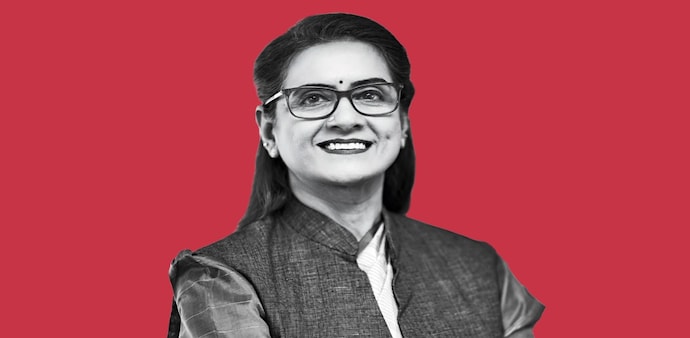
“Companies are overlooking mid-career and senior executives”, says Saundarya Rajesh, Managing Director, Avtar Career Creators Ltd
“More women at work delivers results. The mindset must shift from charity to competitiveness,” says Saundarya Rajesh, Managing Director, Avtar Career Creators Ltd.
- Sep 25, 2026,
- Updated Sep 25, 2026 12:44 PM IST
What is the one piece of advice you would give CEOs who want to build a genuinely inclusive organisation and not just meet diversity targets?
Let’s get something clear: Diversity targets are already a thing of the past. Today, the Best companies for Women in India are looking at impact.
When CEOs meet, exchange notes and share best practices with each other, the discussion moves on from measuring representation to measuring influence. Avtar’s Circle of Inclusive Cultures is one such forum which looks at inclusion as a tough, strategic imperative. Track influence—track who gets heard, who gets promoted and who gets to make decisions and you leave a genuine legacy behind.
What is stopping Indian companies from turning their DEI (diversity, equity, and inclusion) commitments into measurable outcomes?
First off, I think we need to understand that DEI is not politicised kindness, it is the growth engine India needs for Viksit Bharat. China’s economic secret lay in creating avenues for women to work at scale. Having more women in the workplace is a requirement for every organisation that wants to compete.
More women at work delivers results. The mindset must shift from charity to competitiveness.
Are companies really hiring and promoting for merit, or are their talent systems still filtering out diverse talent?
If talent were advancing purely on merit, women—a key diversity group—would be better represented in leadership. However, women hold only about 20% of leadership roles in corporate India. But the talent is clearly there—for instance, India’s female enrolment in higher education has been higher than men’s since 2017–18. It is non-conscious bias in hiring/promotion that is filtering out diverse talent, and organisations need to address it systematically.
What is the biggest untapped talent pool Indian companies are overlooking today, and why?
Mid-career and senior women. Firms invest in entry-level women and miss those who exit after years of experience. Returnships and childcare help, but senior women also juggle teenage children, eldercare, menopause, and health needs.
What is the one piece of advice you would give CEOs who want to build a genuinely inclusive organisation and not just meet diversity targets?
Let’s get something clear: Diversity targets are already a thing of the past. Today, the Best companies for Women in India are looking at impact.
When CEOs meet, exchange notes and share best practices with each other, the discussion moves on from measuring representation to measuring influence. Avtar’s Circle of Inclusive Cultures is one such forum which looks at inclusion as a tough, strategic imperative. Track influence—track who gets heard, who gets promoted and who gets to make decisions and you leave a genuine legacy behind.
What is stopping Indian companies from turning their DEI (diversity, equity, and inclusion) commitments into measurable outcomes?
First off, I think we need to understand that DEI is not politicised kindness, it is the growth engine India needs for Viksit Bharat. China’s economic secret lay in creating avenues for women to work at scale. Having more women in the workplace is a requirement for every organisation that wants to compete.
More women at work delivers results. The mindset must shift from charity to competitiveness.
Are companies really hiring and promoting for merit, or are their talent systems still filtering out diverse talent?
If talent were advancing purely on merit, women—a key diversity group—would be better represented in leadership. However, women hold only about 20% of leadership roles in corporate India. But the talent is clearly there—for instance, India’s female enrolment in higher education has been higher than men’s since 2017–18. It is non-conscious bias in hiring/promotion that is filtering out diverse talent, and organisations need to address it systematically.
What is the biggest untapped talent pool Indian companies are overlooking today, and why?
Mid-career and senior women. Firms invest in entry-level women and miss those who exit after years of experience. Returnships and childcare help, but senior women also juggle teenage children, eldercare, menopause, and health needs.