
India's luxury watch market is booming. Global brands want a bigger share
India's luxury watch market is booming. Global brands want a bigger share
As Swiss watch exports struggle in several established markets, India is emerging as a bright spot for global watchmakers.
Smita Tripathi
- Nov 11, 2026,
- Updated Nov 11, 2026 3:21 PM IST
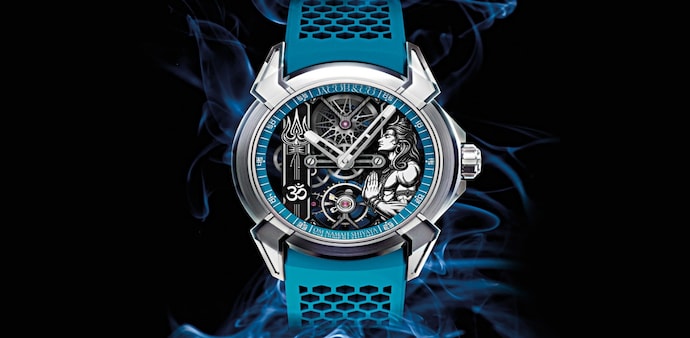
I don’t wear a watch to tell the time. I wear it as an object,” American artist Andy Warhol had famously said. The said object—a watch—has become an object of desire, and India, a desirable inspiration and a booming market. Swiss luxury watchmaker Jacob & Co.’s latest India-exclusive limited-edition timepiece is a telling example of how seriously global watch brands are taking the Indian market. Unveiled in September 2026, the Epic X Mahadev Edition draws inspiration from Lord Shiva, incorporating his imagery alongside the trishul, damru, and the Om symbol into the watch’s intricate skeletonised dial. Housed in a 44-mm titanium case, and priced at Rs. 35.88 lakh, the mechanical watch is available exclusively through watch retailer Ethos.
Hey!
Already a subscriber? Sign In
THIS IS A PREMIUM STORY FROM BUSINESS TODAY.
Subscribe to Business Today Digital and continue enjoying India's premier business offering uninterrupted.
only FOR
₹999 / Year
Unlimited Digital Access + Ad Lite Experience
Cancel Anytime
-
 Unlimited access to Business Today website
- Exclusive insights on Corporate India's working, every quarter
- Access to our special editions, features, and priceless archives
- Get front-seat access to events such as BT Best Banks, Best CEOs and Mindrush
I don’t wear a watch to tell the time. I wear it as an object,” American artist Andy Warhol had famously said. The said object—a watch—has become an object of desire, and India, a desirable inspiration and a booming market. Swiss luxury watchmaker Jacob & Co.’s latest India-exclusive limited-edition timepiece is a telling example of how seriously global watch brands are taking the Indian market. Unveiled in September 2026, the Epic X Mahadev Edition draws inspiration from Lord Shiva, incorporating his imagery alongside the trishul, damru, and the Om symbol into the watch’s intricate skeletonised dial. Housed in a 44-mm titanium case, and priced at Rs. 35.88 lakh, the mechanical watch is available exclusively through watch retailer Ethos.
Advertisement
This is not the first time the luxury watchmaker has turned to Indian culture for inspiration. Its earlier limited editions of Ram Janmabhoomi (49 pieces at Rs.34 lakh each) and Sher-e-Punjab (22 pieces in 18k rose gold at Rs.84 lakh each) celebrated religious and cultural identities through elaborate designs.
For an industry long accustomed to Indian collectors travelling abroad to buy its coveted timepieces, India is increasingly becoming a market that global watchmakers cannot afford to overlook.
The numbers explain why. According to the Federation of the Swiss Watch Industry, Swiss watch exports, during the first six months of 2026, declined 0.7% globally to CHF 12.8 billion. Shipments to the US fell 14.8% and China, 5%.
India, however, moved in the opposite direction. Swiss watch exports to the country surged 31.5% during January-June 2026, reaching a total import value of CHF168.7 million (approx. Rs.1,991 crore), making it one of the industry’s fastest-growing markets. India imported 200,000 Swiss watches during this period, a nearly 37% increase year-on-year.
Advertisement
India’s overall watch market is estimated at around $4.19 billion, according to Mordor Intelligence’s report ‘India Watch Market’ and likely to increase to $7.52 billion by 2031. While affordable and mid-range watches continue to account for a substantial part of the market, the premium end is expanding rapidly. Mordor Intelligence expects premium models to rise by 11.54% CAGR between 2025-31. A June 2026 HDFC Securities report estimates the wider Rs.1 lakh to Rs.10 lakh watch segment at approximately Rs.6,500 crore. These estimates, although based on different segment definitions, indicate the scale of the opportunity.
“India has been one of the most dynamic markets in the region over the last few years,” says Guillaume Boilot, Managing Director of TAG Heuer for the Middle East, India, Africa, and Turkey. While India is not yet among the brand’s largest markets in absolute terms, Boilot expects it to become a key pillar of the region over the next five years.
Advertisement
Neeraj Walia, MD & CEO at Montblanc India Retail Private Ltd, echoes the optimism. Its watch business is also expanding strongly, supported by new launches, collector engagement, and investments in boutique experiences.
The Montblanc Star Legacy Nicolas Rieussec Chronograph, priced at approximately Rs.8.5 lakh, is one of the most popular watches in India.
“Customers are no longer looking only at the name on the dial; they are asking about movements, complications, production quantities, craftsmanship, rarity, and the story,” says Erol Baliyan, CEO of Franck Muller for the Middle East, Africa, and India. The brand is available at 16 retail locations across 10 Indian cities, including two Franck Muller boutiques.
In mid-October, Franck Muller launched the Vanguard “Ram Lalla” Limited Edition, created specifically for India and limited to 108 pieces. Priced at Rs.31,25,000, the watch is a tribute to Lord Ram in his childhood form. Previously, in 2022, the Swiss luxury watch manufacturer had introduced India specific watches such as the Vanguard India Limited Edition (priced between Rs.11.70 lakh and Rs.18.72 lakh) to mark India’s 75th year of Independence.
The edition comprised 150 pieces, with each individually numbered piece featuring a map of India engraved on the caseback. It also launched the Vanguard Slim “Men in Blue” Special Edition (Rs.13.41 lakh), limited to 47 pieces, featuring a sky-blue dial with distinctive 3D-embossed Devanagari numerals, in 2023.
Advertisement
Boilot says TAG Heuer’s Indian customers are becoming noticeably younger, frequently in their late twenties and thirties.
They arrive at stores already familiar with the collections, technical specifications, and racing heritage. Its Carrera remains a particularly strong performer, while the Formula 1 collection appeals to younger buyers. The Monaco attracts enthusiasts seeking distinctive designs.
“India has the potential to become one of our most important markets over the next five years. The growth we are seeing is significant, but what excites me most is what is driving that growth. There is a new generation of collectors with strong knowledge, confidence in their taste, and an appetite for complicated and distinctive watchmaking,” says Benjamin Arabov, CEO of Jacob & Co. The brand has three boutiques in India—in Mumbai and Delhi.
Yashovardhan Saboo, Founder and Chairman of Ethos Watches, identifies several distinct consumer groups: wealthy families, serious enthusiasts, wedding- and occasion-led buyers, and first-time professionals graduating from smartwatches to mechanical timepieces.
“The average age of someone who’s buying a watch is going down,” he says.
Advertisement
Interestingly, India is also demonstrating strength at price points that have faced pressure internationally. Saboo says demand for watches priced between Rs.2 lakh and Rs. 5 lakh remains particularly robust, driven by aspirational consumers entering the market.
At the higher end, buyers are becoming adventurous. Rather than restricting themselves to familiar international names, collectors are exploring independent manufacturers and specialist watchmakers. Today, brands such as H. Moser & Cie., Bell & Ross, Frederique Constant, etc., are gaining popularity.
“India has moved from being a watch market to a watch culture,” says Ulrich Herzog, Chairman, Oris.
Based in Holstein where it was founded in 1904, Oris continues to be an independent watchmaker. “Over the past five years, we have doubled our business in India. It is our fastest-growing market,” says Herzog.
The retail revolution
Ethos reported consolidated revenue from operations of Rs.1,612.2 crore in FY26, a 28.8% YoY increase. Luxury and high-luxury watches account for approximately 71% of sales; the average selling price per watch increased 6.1% to Rs 2.26 lakh. Ethos operates 103 boutiques in 34 cities.
Advertisement
An important part of this expansion is taking luxury-watch retail beyond its traditional metropolitan strongholds to cities such as Guwahati, Lucknow, Dehradun, Mangalore, Srinagar, Patna, and Agra. Saboo says the response has been encouraging. The demand in these cities is not restricted to relatively affordable watches. The company often gets buyers willing to spend up to Rs. 30 lakh on a timepiece. “If a buyer asks for a watch that we do not have in that store, we fly it in from our other store along with a few more options,” says Saboo.
He believes the watch-buying experience remains integral to the product. Ethos therefore encourages customers to research watches online but complete the purchase in-store.
Luxury goes digital
Yet physical retail is only one part of the story. Online platforms are increasingly demonstrating that consumers are willing to make substantial purchases without visiting a boutique. “Luxury watches is one of the strongest-performing categories on Tata CLiQ Luxury and continues to be a key scale-driver,” says CEO Gopal Asthana. Luxury watch sales have recorded a compound annual growth rate of more than 35% over five years.
The platform has focused on overcoming the trust deficit traditionally associated with buying expensive products online. Authorised brand partnerships, authenticity assurance, detailed product information, and assisted sales services enable customers to consult specialists before and after the purchase. Its launch of TimeVallée’s first digital boutique in India reflects the growing importance of online luxury retail.
Tata CLiQ Luxury has also entered the pre-owned watch category through The Pre-Owned Timeless Icons, offering timepieces from brands including Rolex, Omega, and Breitling.
In February 2026, it hosted a digital auction of 75 pre-owned watches; 75% of the collection was sold, with the highest bid reaching Rs. 64 lakh. Notably, the highest-value watch was purchased by a person from Nagpur, and not from a metro city.
If a buyer asks for a watch that we do not have in that store, we fly it in from our other store along with a few more options
-YASHOVARDHAN SABOO,FOUNDER & CHAIRMAN, ETHOS
Tata CLiQ Luxury reports strong watch demand from Coimbatore, Nagpur, Lucknow, Surat, Jaipur, and Guwahati. People from smaller locations, including Godhra, Bareilly, and Katni, also purchase online.
For brands, digital retail offers access to affluent customers in markets where opening an exclusive boutique may not yet make commercial sense.
Montblanc’s experience reinforces the point.
Walia says the company serves customers in approximately 325 Indian cities through its wider product business and has reached more than 800 cities since 2018, when it went live on Tata CLiQ Luxury. Its first order came from Kanpur Dehat, although that purchase was a wallet rather than a watch.
The future, Asthana believes, will be increasingly omnichannel.
An Indian identity emerges
As international watchmakers expand their presence, domestic luxury-watch brands are also beginning to benefit from the Indian consumer’s growing appetite for craftsmanship, exclusivity, and distinctive design.
Titan’s luxury brand Nebula is drawing on Indian art, jewellery, and cultural traditions to develop an identity that differs from conventional Swiss watchmaking.
Its collaboration with designer Tarun Tahiliani for the Phool Chadar collection translates the Indian wedding ritual into watches featuring intricate jaali work, Polki-inspired settings, and traditional finishes.
“The luxury consumer here no longer sees Indian identity and global sophistication as opposing ideas,” says Kalpana Rangamani, Chief Sales and Marketing Officer, Titan Premium Watches.
Nebula is also advancing beyond ornamental design into complicated mechanical watchmaking. Its JALSA timepiece combines an 18-karat gold flying tourbillon with a hand-painted marble dial inspired by Jaipur’s Hawa Mahal. Rangamani believes Indian watchmakers must compete on craftsmanship, engineering, and ownership experience rather than simply position themselves as alternatives to Swiss brands.
Jaipur Watch Company is witnessing a similar change in consumer attitudes. Founder and CEO Gaurav Mehta says that when the company launched in 2013, convincing Indian customers to spend `50,000 on a domestic watch was difficult. Today, watches priced between Rs. 50,000 and Rs.1 lakh attract substantial demand, while bespoke creations can cost anywhere from Rs.1.5 lakh to more than `10 lakh.
The company has reached the `10-crore revenue milestone, supported by an expanding portfolio and distribution through exclusive stores, luxury hotels and premium retail partners. Its collections incorporate British-era coins, vintage stamps, Pichwai paintings, and traditional filigree work.
Bangalore Watch Company, founded by Nirupesh Joshi and his wife Mercy in 2018, is pursuing a different strategy: building an Indian independent watch brand with international appeal.
Operating primarily between $1,500 and $3,000, the company produces watches using distinctive materials such as meteorites, reclaimed aircraft metal and carbon recovered from the atmosphere.
More than half its business comes from overseas, particularly the US. The company has raised $1.4 million from 10 existing customers, including wealthy individuals and family-office principals, to finance its next stage of growth.
Joshi says the brand has already exceeded its previous year’s revenue during the first half of the current financial year. It currently has annual production capacity of approximately 1,500 watches and plans to quadruple that over three years.
Rather than pursue mass distribution, the company intends to retain exclusivity with a Bengaluru flagship boutique and plans to explore international retail locations such as the UAE.
Challenges remain, including taxation, expensive luxury retail space, limited product availability, and the need for better-trained sales and servicing professionals.
Luxury watches is one of the strongest-performing categories on Tata CLiQ Luxury and continues to be a key scale driver”
-GOPAL ASTHANA ,CEO, TATA CLIQ LUXURY
The phased reduction of duties under the India-EFTA trade agreement could improve the industry’s economics, although it may not automatically translate into lower retail prices.
“Pricing in India is one of the most competitive in the world because brands want the Indian market to grow. With EFTA, prices will remain the same but there will be more money for customer servicing, marketing, brand building etc.,” says Saboo.
The time is right for India.
Read more!