
Large Manufacturing Universe: Why Indian manufacturing must build a distinct advantage
Large Manufacturing Universe: Why Indian manufacturing must build a distinct advantage
To compete globally, Indian manufacturing must build a distinct advantage and not rely only on being the cheapest producer.
Krishna Gopalan
- Aug 24, 2026,
- Updated Aug 26, 2026 1:33 PM IST
Try and look up the meaning of manufacturing in a dictionary. What you get is a fairly simple definition: it’s the business or industry of producing goods in large quantities.
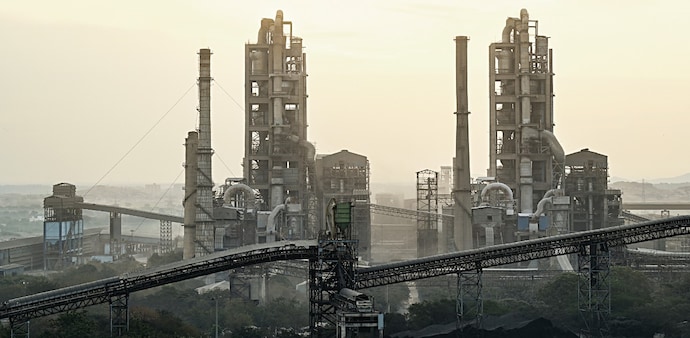
On the face of it, the meaning is easy to grasp. Almost instantly, you see visions of a steel or a cement plant. Top that up with Industry 5.0—the phase of industrialisation bringing together human creativity and skills with a generous dollop of Artificial Intelligence (AI) and automation. In one stroke, shop floors become all about robotics, with limited human involvement.
Advertisement
Cut to India. Go through the data spanning 5,728 manufacturing companies, both listed and unlisted, as we did with our knowledge partner Deloitte India, and interesting findings emerge. Refineries are the largest in terms of turnover, for one. Auto ancillaries account for the largest share of companies, for another.
The data clearly shows that manufacturing is an integral part of India’s growth story but it still needs to make the big moves to become even larger. If India is to sit at the big table, it isn’t a choice; it’s a compulsion.
Advertisement
Unique Story
You are spoilt for choice when it comes to homemade solutions. Vishal Sharma, Executive Director and CEO of Godrej Industries (Chemicals) and Chairperson of Astec LifeSciences, says most successful manufacturing nations have built their model around one dominant idea. “For China, it was about scale and state-directed capital while Germany did it through precision engineering and vocational depth,” he says. “Vietnam and Bangladesh took the cost-arbitrage route in labour-intensive segments.”
India has not had the luxury of picking just one idea, which is now turning out to be an advantage, says Sharma. “Our model is more plural. We have strong information technology and engineering talent sitting well with genuine capabilities in complex chemistry and pharmaceuticals. All this is with a domestic consumption base large enough to make plants viable even before exports are considered.”
Advertisement
It is hard to miss the uniqueness of manufacturing in India by way of evolution along with services and technology. Sharma says it gives Indian companies access to digital capabilities, engineering talent, scientific expertise and research and development (R&D) strengths.
Competing only on cost is neither sustainable nor desirable. India’s strength lies in engineering excellence.
-Sandip Ghose,MD & CEO, Birla Corporation
“That accelerates competitiveness across sectors. In industries such as specialty chemicals, biotechnology and advanced materials, this convergence becomes a meaningful differentiator,” he adds.
How the conversation has moved over time—from diffidence to confidence about mastering latest technologies and processes—is startling. A lot more needs to be done when one inevitably compares India with China, but there is reason to be happy.
Abhijit Roy, MD & CEO of Berger Paints India, says Indian manufacturing is at an infection point. “For many years, we spoke about its potential and, today, that conversation is shifting towards manufacturing leadership,” he says.
Improve, innovate
Roy says a few factors have come together at the right time and presented India a big opportunity; India is one of the fastest growing major economies, investment in infrastructure is improving connectivity, digital technologies are becoming more accessible and policy initiatives are underway to create a stronger manufacturing ecosystem. This at a time when global businesses are looking for supply chains that are dependable, resilient and diversified. “Unlike many economies that first built factories and then created demand, India has the benefit of a large and growing domestic market,” he says.
Advertisement
“That gives manufacturers an opportunity to learn, improve, innovate and scale in a highly competitive environment before taking these capabilities to global markets. In many ways, India’s domestic market has become a training ground for building globally competitive businesses,” adds Roy.
The complexity
True, India’s domestic market throws up infinite possibilities but cracking the code is not easy even in the best of times. Complexities exist given the heterogeneity of the market. But that often makes companies extremely robust.
“Those operating in India have to cater to multiple income segments, regional preferences and consumption habits, which drives innovation and adaptability,” says Saugata Gupta, MD & CEO of Marico, the maker of Parachute hair oil.
India’s favourable demographics, resource base and diverse talent pool need to be made future-ready.
-Santosh Iyer,MD & CEO, Mercedes-Benz India
Over time, that story has matured and is today a reflection of a changing and more confident India. “As we consciously diversified our portfolio beyond traditional FMCG (fast moving consumer goods) categories into healthy foods, men’s grooming, nutraceuticals and premium personal care, our manufacturing capabilities also evolved alongside,” says Gupta.
Advertisement
Food products, as he puts it, require greater innovation, specialised processes and sharper understanding of changing consumer preferences. “In many ways, this can also mirror India’s broader manufacturing evolution, from scale-led production towards value-added, innovation-driven manufacturing that is better equipped to compete globally,” adds Gupta.
It is impossible to miss the talk on moving up the value chain, a constant in today’s manufacturing lexicon. To most people, it’s about more sophisticated products. Berger Paints’ Roy insists it means creating greater value through design, innovation, knowledge, sustainability, consistency and service.
“Increasingly, customers are buying complete solutions rather than just products and that is an area where Indian companies can differentiate themselves,” he says. In the case of his industry, the expectation is not just a can of paint but products that can solve problems alongside technical support and consistency.
The Leadership Zone
Not only is India unique for multiple reasons, it also has a strange advantage—it cannot pick a success from another market and move it here. The copy and paste model is a recipe for disaster, as many companies have learnt. How can one create a model that must gain scale in its own, indigenous way? Here is what some multinationals say.
Advertisement
Santosh Iyer, MD & CEO of Mercedes-Benz India, says that for Indian manufacturing to go global and attain leadership, it is essential to leverage free-trade agreements and an open economy with no trade barriers. “India’s favourable demographics, resource base and diverse talent pool need to be made future-ready. Our workforce must be aligned with emerging technologies, AI, robotics and latest industrial production processes,” he says.
Iyer believes India can be leveraged for manufacturing of both products and services. “We have all the right ingredients to transform into a world-class manufacturing hub,” he says. Mercedes-Benz has made luxury cars in India since 1995 and today offers 11 models.
That’s really where the Indian model of manufacturing comes into play. Iyer says Mercedes-Benz focuses on flexibility of production, with internal combustion engine and electric vehicles being made under one roof. “Our local production ensures a faster response to dynamic market demand with a strong focus on shop-floor digitisation, people, diversity and developing a talent base for the future.”
The large multinationals have the advantage of learnings from other markets. The management of Siemens, which has been in India for nearly 160 years, thinks it is “deeply integrated into the country’s growth story.” According to Sunil Mathur, Siemens India MD & CEO, a key differentiator is the ability to bring together electrification, automation and digitalisation on one integrated platform.
Steel plants require continuous investment in technology, safety, decarbonisation and new products.
-Amit Harlalka,CEO, ArcelorMittal Nippon Steel India
Strengths, Weaknesses
“This allows us to address customer problems end-to-end —from energy efficiency and smart grids to factory automation, industrial AI, digital twins, mobility and smart infrastructure,” says Mathur.
As India moves into different segments of manufacturing, identifying that niche seems increasingly like a good idea. Subhabrata Sengupta, Partner at Avalon Consulting, says India does well in components that have significant engineering content. “That includes process innovation in areas like chemicals, forging and machining,” he says. Of course, there are other challenges as well. He picks out wage disparity between permanent and temporary workers. “If not for temporary workers, much of India’s manufacturing competitiveness would disappear.”
However hard our manufacturing sector works, that helping hand from the government makes a difference. Plus, if one speaks of Micro, Small and Medium enterprises (MSMEs), the heartbeat of industry, it becomes even more important.
Anil.V.Parab, Whole-Time Director and Senior Executive Vice President (Manufacturing) at Larsen & Toubro, says government initiatives such as Make in India, PM Gati Shakti, Digital India and Skill India, industrial corridors and free-trade agreements have laid a strong foundation for manufacturing growth.
For years, we spoke about Indian manufacturing’s potential and today, that conversation is shifting towards leadership.
-Abhijit Roy,MD & CEO, Berger Paints India
The next steps, according to him, should be AI-enabled single-window clearances, plug-and-play industrial ecosystems to overcome land-related challenges, and globally competitive logistics and energy costs. MSMEs are at a critical juncture and Parab points to the need to offer them targeted support to gain global market access, adopt digital technologies and undertake sustainability and skilling programmes.
With all that comes niggling execution issues and problems that are, unfortunately, unique to India. Sengupta points to infrastructure and policy bottlenecks like high logistics costs and the need to build power backup systems that entail capital expenditure. “In some cases, inverted duties prevail and at the local level, policy decisions can be ad hoc,” he says.
The Cost Game
To many in the industry, manufacturing really comes down to how to how little money can be spent. Perhaps at some limited level, it makes sense. Truth be told, India did well when it comes to costs at one point. Over time, its relevance has diminished.
“Competing only on cost is neither sustainable nor desirable. India’s real strength lies in engineering excellence, process innovation, operational flexibility and the ability to deliver reliable solutions across diverse markets,” says Sandip Ghose, MD & CEO of Birla Corporation, the flagship of the MP Birla Group with a cement capacity of over 20 million tonnes per year. From a customer standpoint, it is about quality, adaptability, sustainability and trusted partnerships.
The future of competitiveness, says Mathur, cannot depend on protecting margins through price or cost structures alone. As Indian manufacturing integrates more deeply with global supply chains, companies will need to benchmark themselves against global productivity, quality and efficiency standards, among other things, he says.
“The more important point on margins is that it must come from technology, resource efficiency and value creation, rather than from inefficiencies in the system or lower levels of competition,” says Mathur.
Competitiveness cannot depend on protecting margins through price or cost structures alone.
-Sunil Mathur,MD & CEO, Siemens Limited
Adapting to Cycles
If India wants to compete globally, manufacturers will need to invest in automation, AI, energy optimisation and digital manufacturing systems to reduce waste, improve throughput and enhance quality.
Plus, the margin profile in manufacturing varies, depending on factors that include product mix, access to raw materials, overall cost structure and the markets being targeted. Take the case of steel, for instance, where economic cycles play a big role. “It’s a capital-intensive industry where prices, input costs and demand can move significantly over time. Looking at margins at a single point in the cycle rarely gives a complete picture,” says Amit Harlalka, CEO of ArcelorMittal Nippon Steel India. In late 2019, the joint venture bought Essar Steel to gain a foothold in India.
A more prudent way to look at this is whether returns generated allow companies to keep investing. Steel plants, Harlalka points out, require continuous investment in technology, safety, decarbonisation and new products. “Sustainable returns make those investments possible, strengthen competitiveness and support long-term growth,” says Harlalka.
For China, it was about scale and state-directed capital while Germany did it through precision engineering and vocational depth.
-Vishal Sharma,ED & CEO, Godrej Industries (Chemicals)
Cracking The Game
Without a doubt, global manufacturing leadership will require more than expanded capacity. Birla Corporation’s Ghose says it calls for continuous investment in technology, research and development, advanced manufacturing, skilled talent and sustainable operations.
The million-dollar question is what it will take to enter the manufacturing leadership zone. L&T’s Parab says a positive is India having moved from the tenth rank to fifth. “Our contribution needs to grow ten times to reach China’s current manufacturing contribution. To bridge this gap, India will have to focus on energy transition opportunities and new technologies like AI,” he says. It also needs to double down on R&D. “Today, that accounts for 0.84% of our GDP and needs to be at least 3% if we want to be amongst the top three manufacturing countries,” says Parab.
It is ample proof of not just how much more needs to be done but a reinforcement of the belief that it is indeed achievable.
@krishnagopalan
Try and look up the meaning of manufacturing in a dictionary. What you get is a fairly simple definition: it’s the business or industry of producing goods in large quantities.
On the face of it, the meaning is easy to grasp. Almost instantly, you see visions of a steel or a cement plant. Top that up with Industry 5.0—the phase of industrialisation bringing together human creativity and skills with a generous dollop of Artificial Intelligence (AI) and automation. In one stroke, shop floors become all about robotics, with limited human involvement.
Advertisement
Cut to India. Go through the data spanning 5,728 manufacturing companies, both listed and unlisted, as we did with our knowledge partner Deloitte India, and interesting findings emerge. Refineries are the largest in terms of turnover, for one. Auto ancillaries account for the largest share of companies, for another.
The data clearly shows that manufacturing is an integral part of India’s growth story but it still needs to make the big moves to become even larger. If India is to sit at the big table, it isn’t a choice; it’s a compulsion.
Advertisement
Unique Story
You are spoilt for choice when it comes to homemade solutions. Vishal Sharma, Executive Director and CEO of Godrej Industries (Chemicals) and Chairperson of Astec LifeSciences, says most successful manufacturing nations have built their model around one dominant idea. “For China, it was about scale and state-directed capital while Germany did it through precision engineering and vocational depth,” he says. “Vietnam and Bangladesh took the cost-arbitrage route in labour-intensive segments.”
India has not had the luxury of picking just one idea, which is now turning out to be an advantage, says Sharma. “Our model is more plural. We have strong information technology and engineering talent sitting well with genuine capabilities in complex chemistry and pharmaceuticals. All this is with a domestic consumption base large enough to make plants viable even before exports are considered.”
Advertisement
It is hard to miss the uniqueness of manufacturing in India by way of evolution along with services and technology. Sharma says it gives Indian companies access to digital capabilities, engineering talent, scientific expertise and research and development (R&D) strengths.
Competing only on cost is neither sustainable nor desirable. India’s strength lies in engineering excellence.
-Sandip Ghose,MD & CEO, Birla Corporation
“That accelerates competitiveness across sectors. In industries such as specialty chemicals, biotechnology and advanced materials, this convergence becomes a meaningful differentiator,” he adds.
How the conversation has moved over time—from diffidence to confidence about mastering latest technologies and processes—is startling. A lot more needs to be done when one inevitably compares India with China, but there is reason to be happy.
Abhijit Roy, MD & CEO of Berger Paints India, says Indian manufacturing is at an infection point. “For many years, we spoke about its potential and, today, that conversation is shifting towards manufacturing leadership,” he says.
Improve, innovate
Roy says a few factors have come together at the right time and presented India a big opportunity; India is one of the fastest growing major economies, investment in infrastructure is improving connectivity, digital technologies are becoming more accessible and policy initiatives are underway to create a stronger manufacturing ecosystem. This at a time when global businesses are looking for supply chains that are dependable, resilient and diversified. “Unlike many economies that first built factories and then created demand, India has the benefit of a large and growing domestic market,” he says.
Advertisement
“That gives manufacturers an opportunity to learn, improve, innovate and scale in a highly competitive environment before taking these capabilities to global markets. In many ways, India’s domestic market has become a training ground for building globally competitive businesses,” adds Roy.
The complexity
True, India’s domestic market throws up infinite possibilities but cracking the code is not easy even in the best of times. Complexities exist given the heterogeneity of the market. But that often makes companies extremely robust.
“Those operating in India have to cater to multiple income segments, regional preferences and consumption habits, which drives innovation and adaptability,” says Saugata Gupta, MD & CEO of Marico, the maker of Parachute hair oil.
India’s favourable demographics, resource base and diverse talent pool need to be made future-ready.
-Santosh Iyer,MD & CEO, Mercedes-Benz India
Over time, that story has matured and is today a reflection of a changing and more confident India. “As we consciously diversified our portfolio beyond traditional FMCG (fast moving consumer goods) categories into healthy foods, men’s grooming, nutraceuticals and premium personal care, our manufacturing capabilities also evolved alongside,” says Gupta.
Advertisement
Food products, as he puts it, require greater innovation, specialised processes and sharper understanding of changing consumer preferences. “In many ways, this can also mirror India’s broader manufacturing evolution, from scale-led production towards value-added, innovation-driven manufacturing that is better equipped to compete globally,” adds Gupta.
It is impossible to miss the talk on moving up the value chain, a constant in today’s manufacturing lexicon. To most people, it’s about more sophisticated products. Berger Paints’ Roy insists it means creating greater value through design, innovation, knowledge, sustainability, consistency and service.
“Increasingly, customers are buying complete solutions rather than just products and that is an area where Indian companies can differentiate themselves,” he says. In the case of his industry, the expectation is not just a can of paint but products that can solve problems alongside technical support and consistency.
The Leadership Zone
Not only is India unique for multiple reasons, it also has a strange advantage—it cannot pick a success from another market and move it here. The copy and paste model is a recipe for disaster, as many companies have learnt. How can one create a model that must gain scale in its own, indigenous way? Here is what some multinationals say.
Advertisement
Santosh Iyer, MD & CEO of Mercedes-Benz India, says that for Indian manufacturing to go global and attain leadership, it is essential to leverage free-trade agreements and an open economy with no trade barriers. “India’s favourable demographics, resource base and diverse talent pool need to be made future-ready. Our workforce must be aligned with emerging technologies, AI, robotics and latest industrial production processes,” he says.
Iyer believes India can be leveraged for manufacturing of both products and services. “We have all the right ingredients to transform into a world-class manufacturing hub,” he says. Mercedes-Benz has made luxury cars in India since 1995 and today offers 11 models.
That’s really where the Indian model of manufacturing comes into play. Iyer says Mercedes-Benz focuses on flexibility of production, with internal combustion engine and electric vehicles being made under one roof. “Our local production ensures a faster response to dynamic market demand with a strong focus on shop-floor digitisation, people, diversity and developing a talent base for the future.”
The large multinationals have the advantage of learnings from other markets. The management of Siemens, which has been in India for nearly 160 years, thinks it is “deeply integrated into the country’s growth story.” According to Sunil Mathur, Siemens India MD & CEO, a key differentiator is the ability to bring together electrification, automation and digitalisation on one integrated platform.
Steel plants require continuous investment in technology, safety, decarbonisation and new products.
-Amit Harlalka,CEO, ArcelorMittal Nippon Steel India
Strengths, Weaknesses
“This allows us to address customer problems end-to-end —from energy efficiency and smart grids to factory automation, industrial AI, digital twins, mobility and smart infrastructure,” says Mathur.
As India moves into different segments of manufacturing, identifying that niche seems increasingly like a good idea. Subhabrata Sengupta, Partner at Avalon Consulting, says India does well in components that have significant engineering content. “That includes process innovation in areas like chemicals, forging and machining,” he says. Of course, there are other challenges as well. He picks out wage disparity between permanent and temporary workers. “If not for temporary workers, much of India’s manufacturing competitiveness would disappear.”
However hard our manufacturing sector works, that helping hand from the government makes a difference. Plus, if one speaks of Micro, Small and Medium enterprises (MSMEs), the heartbeat of industry, it becomes even more important.
Anil.V.Parab, Whole-Time Director and Senior Executive Vice President (Manufacturing) at Larsen & Toubro, says government initiatives such as Make in India, PM Gati Shakti, Digital India and Skill India, industrial corridors and free-trade agreements have laid a strong foundation for manufacturing growth.
For years, we spoke about Indian manufacturing’s potential and today, that conversation is shifting towards leadership.
-Abhijit Roy,MD & CEO, Berger Paints India
The next steps, according to him, should be AI-enabled single-window clearances, plug-and-play industrial ecosystems to overcome land-related challenges, and globally competitive logistics and energy costs. MSMEs are at a critical juncture and Parab points to the need to offer them targeted support to gain global market access, adopt digital technologies and undertake sustainability and skilling programmes.
With all that comes niggling execution issues and problems that are, unfortunately, unique to India. Sengupta points to infrastructure and policy bottlenecks like high logistics costs and the need to build power backup systems that entail capital expenditure. “In some cases, inverted duties prevail and at the local level, policy decisions can be ad hoc,” he says.
The Cost Game
To many in the industry, manufacturing really comes down to how to how little money can be spent. Perhaps at some limited level, it makes sense. Truth be told, India did well when it comes to costs at one point. Over time, its relevance has diminished.
“Competing only on cost is neither sustainable nor desirable. India’s real strength lies in engineering excellence, process innovation, operational flexibility and the ability to deliver reliable solutions across diverse markets,” says Sandip Ghose, MD & CEO of Birla Corporation, the flagship of the MP Birla Group with a cement capacity of over 20 million tonnes per year. From a customer standpoint, it is about quality, adaptability, sustainability and trusted partnerships.
The future of competitiveness, says Mathur, cannot depend on protecting margins through price or cost structures alone. As Indian manufacturing integrates more deeply with global supply chains, companies will need to benchmark themselves against global productivity, quality and efficiency standards, among other things, he says.
“The more important point on margins is that it must come from technology, resource efficiency and value creation, rather than from inefficiencies in the system or lower levels of competition,” says Mathur.
Competitiveness cannot depend on protecting margins through price or cost structures alone.
-Sunil Mathur,MD & CEO, Siemens Limited
Adapting to Cycles
If India wants to compete globally, manufacturers will need to invest in automation, AI, energy optimisation and digital manufacturing systems to reduce waste, improve throughput and enhance quality.
Plus, the margin profile in manufacturing varies, depending on factors that include product mix, access to raw materials, overall cost structure and the markets being targeted. Take the case of steel, for instance, where economic cycles play a big role. “It’s a capital-intensive industry where prices, input costs and demand can move significantly over time. Looking at margins at a single point in the cycle rarely gives a complete picture,” says Amit Harlalka, CEO of ArcelorMittal Nippon Steel India. In late 2019, the joint venture bought Essar Steel to gain a foothold in India.
A more prudent way to look at this is whether returns generated allow companies to keep investing. Steel plants, Harlalka points out, require continuous investment in technology, safety, decarbonisation and new products. “Sustainable returns make those investments possible, strengthen competitiveness and support long-term growth,” says Harlalka.
For China, it was about scale and state-directed capital while Germany did it through precision engineering and vocational depth.
-Vishal Sharma,ED & CEO, Godrej Industries (Chemicals)
Cracking The Game
Without a doubt, global manufacturing leadership will require more than expanded capacity. Birla Corporation’s Ghose says it calls for continuous investment in technology, research and development, advanced manufacturing, skilled talent and sustainable operations.
The million-dollar question is what it will take to enter the manufacturing leadership zone. L&T’s Parab says a positive is India having moved from the tenth rank to fifth. “Our contribution needs to grow ten times to reach China’s current manufacturing contribution. To bridge this gap, India will have to focus on energy transition opportunities and new technologies like AI,” he says. It also needs to double down on R&D. “Today, that accounts for 0.84% of our GDP and needs to be at least 3% if we want to be amongst the top three manufacturing countries,” says Parab.
It is ample proof of not just how much more needs to be done but a reinforcement of the belief that it is indeed achievable.
@krishnagopalan
Read more!