
Once You Invest in Andhra, It Is No Longer Your Project. It Is Ours: AP's IT Minister Nara Lokesh
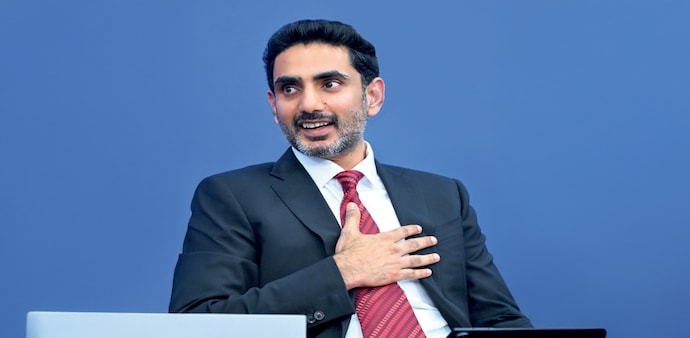
Nara Lokesh, Andhra Pradesh Minister for Information Technology, Electronics and Communications and Human Resource Development, on the state's journey to becoming a manufacturing hub till 2047.
- Aug 25, 2026,
- Updated Aug 25, 2026 8:45 AM IST
Andhra Pradesh is positioning itself as one of the frontrunners in manufacturing, banking on electronics, semiconductors, data centres, green energy and digital infrastructure to drive its next phase of growth. The state has been featured as the Fastest-growing Major State in GSVA from Manufacturing over the five-year period from FY20 to FY25, according to the BT study.
In an interview with Business Today, Andhra Pradesh Minister for Information Technology, Electronics & Communications and Human Resource Development, Nara Lokesh, outlines the state’s strategy to attract global investments, create jobs, strengthen its technology ecosystem and build Andhra Pradesh into a future-ready manufacturing hub. Edited Excerpts:
Q: What is your government’s long-term vision for making the state a manufacturing hub by 2047?
By 2047, when India celebrates 100 years of Independence, Andhra Pradesh will be one of the world’s most competitive manufacturing destinations. We are building an economy anchored in advanced manufacturing, AI, clean energy, and global exports. Manufacturing is not merely factories; it is about creating quality jobs, strengthening supply chains, driving innovation and raising incomes of millions of families. The state is developing world-class industrial nodes, logistics infrastructure, ports, airports, digital connectivity, and skilled talent simultaneously. We want companies to see Andhra Pradesh not just as a place to manufacture for India, but as a base to serve global markets. Our objective is to make Andhra Pradesh the preferred destination for companies looking for speed, scale, and long-term policy certainty.
Q: Which sectors will drive Andhra Pradesh’s next phase of industrial growth: electronics, semiconductors, defence, EVs, renewable energy, food processing, or others?
The future belongs to integrated industrial ecosystems rather than isolated sectors. We are building 22 industrial clusters that are integrated both horizontally and vertically. Electronics and advanced manufacturing will be major growth drivers. Renewable energy and energy storage are creating a new industrial base. Defence and aerospace manufacturing offer significant opportunities given our strategic location and industrial capabilities. Food processing will continue to add value to our agricultural strengths.
We are also investing heavily in data centres, AI infrastructure, quantum technologies, and advanced manufacturing because these sectors reinforce each other.
For example, reliable clean energy supports data centres; data centres attract AI companies; AI improves manufacturing productivity. Our goal is to create multiple engines of growth that complement one another rather than relying on a single sector.
Q: The state enjoys a strategic coastline and several ports. How do you plan to leverage this advantage to attract export-oriented manufacturing?
Andhra Pradesh has one of India’s greatest natural advantages: a 1,000-kilometre coastline with multiple ports strategically located along major international shipping routes.
Our strategy is to integrate ports with industrial parks, manufacturing clusters, multimodal logistics, warehousing, and dedicated freight connectivity. This significantly reduces logistics costs and improves export competitiveness.
Whether it is electronics, renewable energy equipment, automobiles, food processing or advanced manufacturing, exporters increasingly value reliable logistics as much as policy incentives.
Andhra Pradesh can offer both. As global supply chains continue to diversify, efficient logistics will become a decisive competitive advantage, and we are investing accordingly.
Q: How is Andhra Pradesh integrating technology, AI and digital governance into its industrial ecosystem to improve ease of doing business?
Technology is central to our governance philosophy. We are digitising approvals, reducing physical interfaces, and using technology to deliver predictable and transparent services to investors. Our focus is on making the government faster, more responsive, and more accountable. Beyond governance, Andhra Pradesh is emerging as an AI infrastructure hub. We are building large-scale data centre capacity, promoting AI adoption across government and industry,
And creating a broader innovation ecosystem that includes quantum computing, advanced research and start-up incubation.
We believe AI will transform manufacturing itself, from predictive maintenance and quality control to supply chain optimisation and energy efficiency. We want Andhra Pradesh to be where this transformation happens.
Q: The Centre is pushing electronics and semiconductor manufacturing. What role do you see for Andhra Pradesh in India’s ambition?
India’s electronics manufacturing story cannot succeed without strong regional manufacturing ecosystems, and Andhra Pradesh intends to play a leading role. We already have a large electronics manufacturing ecosystem in Sri City. One of LG Electronics’ largest factories is coming up in Andhra Pradesh. In addition, Sri City currently manufactures close to 50% of India’s air conditioners, and that is expected to increase to 70% over the next couple of years. In the same region, we are building an ecosystem spanning electronics manufacturing, component production, electronics system design, advanced packaging, AI infrastructure, and specialiased talent development.
Q: Global companies are diversifying supply chains beyond China. How successful has Andhra Pradesh been in attracting these Investments, and which geographies are you targeting?
The global supply chain realignment presents one of the biggest opportunities India has seen in decades.
We have witnessed strong investor interest from Japan, South Korea, Taiwan, Singapore, the UAE, Europe and the United States across electronics, advanced manufacturing, renewable energy, logistics and digital infrastructure.
Our approach is not to attract one-off investments but to build complete industrial ecosystems where suppliers, manufacturers, research institutions and skilled talent grow together.
As companies pursue a “China Plus One” strategy, Andhra Pradesh offers political stability, competitive infrastructure, abundant land, clean energy and a government committed to quick execution.
Q: Manufacturing growth depends on skilled manpower. What initiatives has the state undertaken to create a future-ready workforce for advanced manufacturing and Industry 4.0?
Talent is our most important competitive advantage.
We are aligning higher education, technical institutions, and skill development with industry requirements. Our universities are increasingly partnering with global technology companies to ensure students graduate with industry-relevant skills.
Recently, we launched Sri City International University, with a unique LEG (Learn, Earn, and Graduate) model. While they learn, students will undertake paid internships with companies in Sri City. We are focusing on AI, robotics, automation, semiconductor design, electronics manufacturing, advanced manufacturing technologies, and digital engineering.
Q: Investors today seek policy stability and faster approvals. What reforms has your government introduced to make Andhra Pradesh more competitive than other states?
Investors consistently tell us they value predictability more than promises. Our government’s philosophy is built around three principles, which I call the three S’s: Simple, Speed, and Stability.
We have streamlined approval processes, strengthened single-window systems, improved coordination across departments, and ensured faster decision-making at the highest levels. More importantly, we believe governments must behave like long-term partners in the industry. That means transparent policies, responsive administration, and consistent implementation. The ease of doing business is not just about rankings; it is about building investor confidence every single day.
Q: What are the biggest challenges you continue to face in attracting large-scale manufacturing investments, and how do you intend to address them?
Manufacturing investments are becoming increasingly competitive globally. States today compete not only with each other but also with countries across Asia and West Asia.
Our challenge is to continuously strengthen infrastructure, logistics, industrial ecosystems, and skilled talent while maintaining competitiveness.
The answer lies in long-term planning rather than short-term incentives. We are investing ahead of demand, i.e in ports, roads, power, digital infrastructure, industrial parks and workforce development—so investors can scale with confidence. We see every challenge as an opportunity to build stronger institutions and better infrastructure.
Q: Looking ahead to 2030, what would you consider the biggest milestone for Andhra Pradesh’s manufacturing and technology ecosystem?
By 2030, I would like Andhra Pradesh to be recognised globally as one of Asia’s fastest-growing destinations for advanced manufacturing, digital infrastructure, and clean energy.
Success would mean globally competitive manufacturing clusters, large-scale electronics production, thriving renewable energy industries, world-class AI infrastructure, strong exports and, above all, millions of quality jobs for our youth. Ultimately, our success will not be measured by investment announcements alone, but by the opportunities created for the people of Andhra Pradesh.
Q: If you had to convince a global CEO to invest in Andhra Pradesh over any other Indian state, what would be your strongest pitch?
I would say this: If you are looking for a government that treats your investment as a long-term partnership rather than a transaction, come to Andhra Pradesh.
As I always say, once you invest in Andhra Pradesh, it is no longer your project. It is our project. Most importantly, we move with purpose. Decisions are faster, coordination is stronger, and implementation is closely monitored. It is this speed, stability and service that sets Andhra Pradesh apart.
@tweettokarishma
Andhra Pradesh is positioning itself as one of the frontrunners in manufacturing, banking on electronics, semiconductors, data centres, green energy and digital infrastructure to drive its next phase of growth. The state has been featured as the Fastest-growing Major State in GSVA from Manufacturing over the five-year period from FY20 to FY25, according to the BT study.
In an interview with Business Today, Andhra Pradesh Minister for Information Technology, Electronics & Communications and Human Resource Development, Nara Lokesh, outlines the state’s strategy to attract global investments, create jobs, strengthen its technology ecosystem and build Andhra Pradesh into a future-ready manufacturing hub. Edited Excerpts:
Q: What is your government’s long-term vision for making the state a manufacturing hub by 2047?
By 2047, when India celebrates 100 years of Independence, Andhra Pradesh will be one of the world’s most competitive manufacturing destinations. We are building an economy anchored in advanced manufacturing, AI, clean energy, and global exports. Manufacturing is not merely factories; it is about creating quality jobs, strengthening supply chains, driving innovation and raising incomes of millions of families. The state is developing world-class industrial nodes, logistics infrastructure, ports, airports, digital connectivity, and skilled talent simultaneously. We want companies to see Andhra Pradesh not just as a place to manufacture for India, but as a base to serve global markets. Our objective is to make Andhra Pradesh the preferred destination for companies looking for speed, scale, and long-term policy certainty.
Q: Which sectors will drive Andhra Pradesh’s next phase of industrial growth: electronics, semiconductors, defence, EVs, renewable energy, food processing, or others?
The future belongs to integrated industrial ecosystems rather than isolated sectors. We are building 22 industrial clusters that are integrated both horizontally and vertically. Electronics and advanced manufacturing will be major growth drivers. Renewable energy and energy storage are creating a new industrial base. Defence and aerospace manufacturing offer significant opportunities given our strategic location and industrial capabilities. Food processing will continue to add value to our agricultural strengths.
We are also investing heavily in data centres, AI infrastructure, quantum technologies, and advanced manufacturing because these sectors reinforce each other.
For example, reliable clean energy supports data centres; data centres attract AI companies; AI improves manufacturing productivity. Our goal is to create multiple engines of growth that complement one another rather than relying on a single sector.
Q: The state enjoys a strategic coastline and several ports. How do you plan to leverage this advantage to attract export-oriented manufacturing?
Andhra Pradesh has one of India’s greatest natural advantages: a 1,000-kilometre coastline with multiple ports strategically located along major international shipping routes.
Our strategy is to integrate ports with industrial parks, manufacturing clusters, multimodal logistics, warehousing, and dedicated freight connectivity. This significantly reduces logistics costs and improves export competitiveness.
Whether it is electronics, renewable energy equipment, automobiles, food processing or advanced manufacturing, exporters increasingly value reliable logistics as much as policy incentives.
Andhra Pradesh can offer both. As global supply chains continue to diversify, efficient logistics will become a decisive competitive advantage, and we are investing accordingly.
Q: How is Andhra Pradesh integrating technology, AI and digital governance into its industrial ecosystem to improve ease of doing business?
Technology is central to our governance philosophy. We are digitising approvals, reducing physical interfaces, and using technology to deliver predictable and transparent services to investors. Our focus is on making the government faster, more responsive, and more accountable. Beyond governance, Andhra Pradesh is emerging as an AI infrastructure hub. We are building large-scale data centre capacity, promoting AI adoption across government and industry,
And creating a broader innovation ecosystem that includes quantum computing, advanced research and start-up incubation.
We believe AI will transform manufacturing itself, from predictive maintenance and quality control to supply chain optimisation and energy efficiency. We want Andhra Pradesh to be where this transformation happens.
Q: The Centre is pushing electronics and semiconductor manufacturing. What role do you see for Andhra Pradesh in India’s ambition?
India’s electronics manufacturing story cannot succeed without strong regional manufacturing ecosystems, and Andhra Pradesh intends to play a leading role. We already have a large electronics manufacturing ecosystem in Sri City. One of LG Electronics’ largest factories is coming up in Andhra Pradesh. In addition, Sri City currently manufactures close to 50% of India’s air conditioners, and that is expected to increase to 70% over the next couple of years. In the same region, we are building an ecosystem spanning electronics manufacturing, component production, electronics system design, advanced packaging, AI infrastructure, and specialiased talent development.
Q: Global companies are diversifying supply chains beyond China. How successful has Andhra Pradesh been in attracting these Investments, and which geographies are you targeting?
The global supply chain realignment presents one of the biggest opportunities India has seen in decades.
We have witnessed strong investor interest from Japan, South Korea, Taiwan, Singapore, the UAE, Europe and the United States across electronics, advanced manufacturing, renewable energy, logistics and digital infrastructure.
Our approach is not to attract one-off investments but to build complete industrial ecosystems where suppliers, manufacturers, research institutions and skilled talent grow together.
As companies pursue a “China Plus One” strategy, Andhra Pradesh offers political stability, competitive infrastructure, abundant land, clean energy and a government committed to quick execution.
Q: Manufacturing growth depends on skilled manpower. What initiatives has the state undertaken to create a future-ready workforce for advanced manufacturing and Industry 4.0?
Talent is our most important competitive advantage.
We are aligning higher education, technical institutions, and skill development with industry requirements. Our universities are increasingly partnering with global technology companies to ensure students graduate with industry-relevant skills.
Recently, we launched Sri City International University, with a unique LEG (Learn, Earn, and Graduate) model. While they learn, students will undertake paid internships with companies in Sri City. We are focusing on AI, robotics, automation, semiconductor design, electronics manufacturing, advanced manufacturing technologies, and digital engineering.
Q: Investors today seek policy stability and faster approvals. What reforms has your government introduced to make Andhra Pradesh more competitive than other states?
Investors consistently tell us they value predictability more than promises. Our government’s philosophy is built around three principles, which I call the three S’s: Simple, Speed, and Stability.
We have streamlined approval processes, strengthened single-window systems, improved coordination across departments, and ensured faster decision-making at the highest levels. More importantly, we believe governments must behave like long-term partners in the industry. That means transparent policies, responsive administration, and consistent implementation. The ease of doing business is not just about rankings; it is about building investor confidence every single day.
Q: What are the biggest challenges you continue to face in attracting large-scale manufacturing investments, and how do you intend to address them?
Manufacturing investments are becoming increasingly competitive globally. States today compete not only with each other but also with countries across Asia and West Asia.
Our challenge is to continuously strengthen infrastructure, logistics, industrial ecosystems, and skilled talent while maintaining competitiveness.
The answer lies in long-term planning rather than short-term incentives. We are investing ahead of demand, i.e in ports, roads, power, digital infrastructure, industrial parks and workforce development—so investors can scale with confidence. We see every challenge as an opportunity to build stronger institutions and better infrastructure.
Q: Looking ahead to 2030, what would you consider the biggest milestone for Andhra Pradesh’s manufacturing and technology ecosystem?
By 2030, I would like Andhra Pradesh to be recognised globally as one of Asia’s fastest-growing destinations for advanced manufacturing, digital infrastructure, and clean energy.
Success would mean globally competitive manufacturing clusters, large-scale electronics production, thriving renewable energy industries, world-class AI infrastructure, strong exports and, above all, millions of quality jobs for our youth. Ultimately, our success will not be measured by investment announcements alone, but by the opportunities created for the people of Andhra Pradesh.
Q: If you had to convince a global CEO to invest in Andhra Pradesh over any other Indian state, what would be your strongest pitch?
I would say this: If you are looking for a government that treats your investment as a long-term partnership rather than a transaction, come to Andhra Pradesh.
As I always say, once you invest in Andhra Pradesh, it is no longer your project. It is our project. Most importantly, we move with purpose. Decisions are faster, coordination is stronger, and implementation is closely monitored. It is this speed, stability and service that sets Andhra Pradesh apart.
@tweettokarishma