
UP: The Road to Infra Boom
Good quality infrastructure is a precondition for investments. Capex is not just a priority of the Centre. States like UP, Bihar, and Assam are taking it forward.
Surabhi and Aishwarya Patil
- Aug 25, 2026,
- Updated Aug 25, 2026 6:40 PM IST
Indian states have come a long way from potholed roads and intermittent power supply as they focus on creating world-class infrastructure to improve lives of citizens and attract investments.
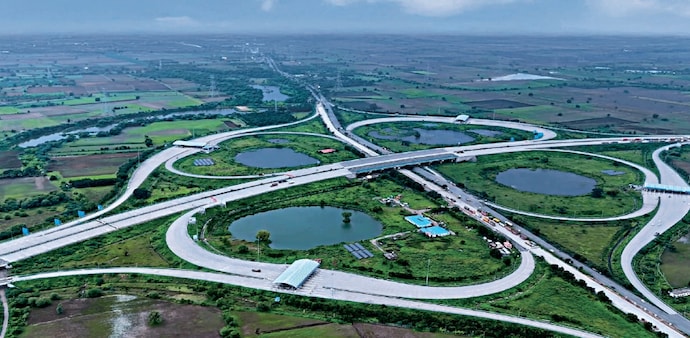
While the Centre’s focus on capital expenditure to sustain growth is well documented, states have been equally busy building expressways and airports, ensuring 24x7 electricity supply, implementing renewable energy projects, connecting waterways and setting up industrial and multimodal logistics parks.
Advertisement
“Infrastructure investments have a huge multiplier effect. But it is only a necessary, and not a sufficient, condition,” says NR Bhanumurthy, Director, Madras School of Economics.
A recent study by Bank of Baroda shows states spend almost 17% outlay on capex as against 23% by the Centre. This number is the highest for Gujarat at 30.3% and the lowest for Himachal at 6.2%. Interestingly, four states have a ratio higher than the Centre—Tripura, Meghalaya, Odisha and J&K, while Uttar Pradesh comes close to the mark.
An analysis by SBI Ecowrap reveals that Rs 4.5 lakh crore has been allocated to states under the Scheme for Special Assistance to States for Capital expenditure that was launched in October 2020 by the Centre to give 50-year interest-free loans to state governments. This has enabled them to increase capex from 2.2% of GDP in FY22 to 2.7% of GDP in FY25(RE).
Advertisement
To understand how infrastructure is giving wings to manufacturing ambitions, BT did a deep dive into data on gross value added from construction in state economies from the Handbook of State Finances by the Reserve Bank of India. The numbers show significant strides in the sector.
GSVA by the construction sector at constant prices in 33 states and UTs nearly doubled to Rs 15.58 lakh crore in FY25 from Rs 8.38 lakh crore in FY15. The sharpest growth was registered by Uttar Pradesh followed by Bihar and Assam.
Nand Gopal Gupta, UP Minister for Industrial Development, Export Promotion, NRI Affairs and Investment Promotion, says the state is now known as the “expressway state.”
“UP is the first state with 16 domestic and five international airports. We’ve built the Varanasi-Haldia waterway, which we plan to extend to Ayodhya via Saryu and Ganga rivers, up to Prayagraj,” he says.
Advertisement
Apart from industrial corridors, the state has conceived the UP Defence Industrial Corridor to move India closer to self-reliance in defence production by creating a concentrated manufacturing ecosystem. Unlike many industrial parks that rely on existing land banks, the UP government opted for greenfield land acquisition.
According to Col Sanjay Singh, Chief General Manager of UPEIDA, they have already allotted land to 64 companies, grounding investments worth nearly Rs 13,500 crore. The committed investment is Rs 39,000 crore with generation of more than 42,000 jobs. Nine companies, including BrahMos, Aeroloy Technologies, Adani Defence Systems and Veriwind Defence, have already started production.
The state wants to develop specialised strengths across different nodes. Lucknow is emerging as a hub for missile systems and advanced materials. Kanpur is positioning itself around ammunition and defence systems. Jhansi is expected to become a major centre for explosives and propulsion systems, anchored by Bharat Dynamics Ltd and other large manufacturers. Aligarh, leveraging its legacy of precision engineering, is increasingly transitioning into defence-grade component manufacturing.
Similarly, Bihar has given a huge boost to infrastructure over the last decade. Projects worth Rs 4 lakh crore have been allocated for roads and bridges, along with Rs 1 lakh crore for railway infrastructure and Rs 2,000 crore for aviation-related projects. “The state’s economy has grown 3.5 times since FY12, driven by investments in roads, railways, air connectivity, and energy,” says an official statement.
Advertisement
Assam, which has been attracting large-scale investments, including Tata’s OSAT facility, is also undergoing a major infrastructure upgrade. The recent state Budget allocated over Rs 72,000 crore to power projects, including thermal, hydro, solar and battery energy storage. It is also working with the Asian Development Bank on City Economic Region Development Plans that seeks to position Guwahati, Dibrugarh and Silchar as competitive and investment-ready growth hubs.
The states’ next task would be ensuring world-class quality and timely completion to give investors the confidence to set up manufacturing plants.
@surabhi_prasad; | @EyeshwaryaPatil
Indian states have come a long way from potholed roads and intermittent power supply as they focus on creating world-class infrastructure to improve lives of citizens and attract investments.
While the Centre’s focus on capital expenditure to sustain growth is well documented, states have been equally busy building expressways and airports, ensuring 24x7 electricity supply, implementing renewable energy projects, connecting waterways and setting up industrial and multimodal logistics parks.
Advertisement
“Infrastructure investments have a huge multiplier effect. But it is only a necessary, and not a sufficient, condition,” says NR Bhanumurthy, Director, Madras School of Economics.
A recent study by Bank of Baroda shows states spend almost 17% outlay on capex as against 23% by the Centre. This number is the highest for Gujarat at 30.3% and the lowest for Himachal at 6.2%. Interestingly, four states have a ratio higher than the Centre—Tripura, Meghalaya, Odisha and J&K, while Uttar Pradesh comes close to the mark.
An analysis by SBI Ecowrap reveals that Rs 4.5 lakh crore has been allocated to states under the Scheme for Special Assistance to States for Capital expenditure that was launched in October 2020 by the Centre to give 50-year interest-free loans to state governments. This has enabled them to increase capex from 2.2% of GDP in FY22 to 2.7% of GDP in FY25(RE).
Advertisement
To understand how infrastructure is giving wings to manufacturing ambitions, BT did a deep dive into data on gross value added from construction in state economies from the Handbook of State Finances by the Reserve Bank of India. The numbers show significant strides in the sector.
GSVA by the construction sector at constant prices in 33 states and UTs nearly doubled to Rs 15.58 lakh crore in FY25 from Rs 8.38 lakh crore in FY15. The sharpest growth was registered by Uttar Pradesh followed by Bihar and Assam.
Nand Gopal Gupta, UP Minister for Industrial Development, Export Promotion, NRI Affairs and Investment Promotion, says the state is now known as the “expressway state.”
“UP is the first state with 16 domestic and five international airports. We’ve built the Varanasi-Haldia waterway, which we plan to extend to Ayodhya via Saryu and Ganga rivers, up to Prayagraj,” he says.
Advertisement
Apart from industrial corridors, the state has conceived the UP Defence Industrial Corridor to move India closer to self-reliance in defence production by creating a concentrated manufacturing ecosystem. Unlike many industrial parks that rely on existing land banks, the UP government opted for greenfield land acquisition.
According to Col Sanjay Singh, Chief General Manager of UPEIDA, they have already allotted land to 64 companies, grounding investments worth nearly Rs 13,500 crore. The committed investment is Rs 39,000 crore with generation of more than 42,000 jobs. Nine companies, including BrahMos, Aeroloy Technologies, Adani Defence Systems and Veriwind Defence, have already started production.
The state wants to develop specialised strengths across different nodes. Lucknow is emerging as a hub for missile systems and advanced materials. Kanpur is positioning itself around ammunition and defence systems. Jhansi is expected to become a major centre for explosives and propulsion systems, anchored by Bharat Dynamics Ltd and other large manufacturers. Aligarh, leveraging its legacy of precision engineering, is increasingly transitioning into defence-grade component manufacturing.
Similarly, Bihar has given a huge boost to infrastructure over the last decade. Projects worth Rs 4 lakh crore have been allocated for roads and bridges, along with Rs 1 lakh crore for railway infrastructure and Rs 2,000 crore for aviation-related projects. “The state’s economy has grown 3.5 times since FY12, driven by investments in roads, railways, air connectivity, and energy,” says an official statement.
Advertisement
Assam, which has been attracting large-scale investments, including Tata’s OSAT facility, is also undergoing a major infrastructure upgrade. The recent state Budget allocated over Rs 72,000 crore to power projects, including thermal, hydro, solar and battery energy storage. It is also working with the Asian Development Bank on City Economic Region Development Plans that seeks to position Guwahati, Dibrugarh and Silchar as competitive and investment-ready growth hubs.
The states’ next task would be ensuring world-class quality and timely completion to give investors the confidence to set up manufacturing plants.
@surabhi_prasad; | @EyeshwaryaPatil
Read more!