
Will MDR strengthen the UPI ecosystem?
Since 2020, India's favourite payment mechanism has been free of charge. Will a potential levy of MDR strengthen the UPI ecosystem or slow down its adoption?
Nachiket Kelkar
- Sep 16, 2026,
- Updated Sep 16, 2026 3:51 PM IST
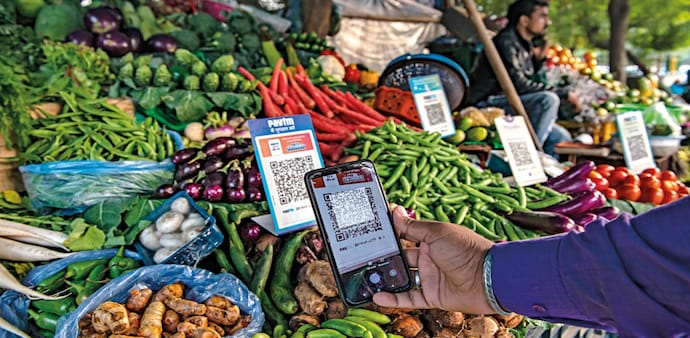
Whether you step out for tea or to buy groceries, you will find yourself reaching out for your phone to make the payment through UPI—whether the amount is Rs 50 or Rs 500. How did this payment system build such a strong base?
The homegrown ecosystem was launched by National Payments Corporation of India (NPCI) in July 2016. In the first month, there were just 90,000 transactions with a total value of Rs 38 lakh. Since then, UPI has grown by leaps and bounds to become almost the default option for digital payments. In August 2026 alone, there were 24.51 billion transactions, with their value totalling Rs 29.82 lakh crore.
Advertisement
The jump is monumental, to say the least. Annual transaction volumes have jumped a massive 13,000-fold to 241.62 billion in FY26 from 17.8 million in FY17. Transaction value has surged 4,000-fold to Rs 314 lakh crore from Rs 7,000 crore in the same period.
What is driving this surge is the fact that neither the consumer nor the merchant is charged any fee, since 2020. Before 2020, a merchant discount rate (MDR) of up to 0.3% of the transaction value was applicable on person-to-merchant transactions. The government, in fact, provides some financial subsidy to ensure small-value transactions remain free.
Advertisement
However, as the size and scale of UPI has grown massively, there is also a growing debate on how long the free model can be sustained. There is a section in the ecosystem that believes it’s time an MDR is levied on UPI transactions too, just as there is an MDR on credit and debit card payments. The argument is that the fee could be used for infrastructure enhancement and further development of UPI.
MDR is a fee that businesses pay to payment processors for accepting digital payments.
The discussion gained traction after the Taxation and Other Laws (Amendment) Bill, 2026, was passed by Parliament in August. The law itself doesn’t impose an MDR on UPI. However, as the finance ministry explained, it is an enabling provision designed to ensure UPI’s long-term sustainability, technological advancement, and resilience against emerging risks.
Advertisement
The government has also categorically stated that consumers making UPI payments will not have to pay any transaction charge. Person-to-person transactions will also remain free. As and when the charges are introduced, they will apply only to a limited set of merchant transactions, above a certain threshold, at a nominal rate, which the government says will be far lower than what is charged on debit or credit cards.
A likely possibility is that MDR will be applicable for transactions above Rs 2,000; and the merchant will pay, not the customer. However, the worry is whether merchants will accept such an MDR or simply go back to cash payments.
The MDR is one reason why even today many small and medium merchants are averse to accepting card payments; many don’t even have the point of sale machine.
According to a recent survey by community social media platform LocalCircles, only 17% merchants and businesses that it surveyed—about 33,000 respondents—were willing to pay MDR of 0.3% or higher on UPI payments above Rs 2,000.
Advertisement
Backers of zero MDR say affordability has been central to UPI’s rapid adoption and therefore want it to remain free.
Bikash Narayan Mishra, former senior advisor to the Indian Bank Association, feels that zero MDR had helped make digital payments accessible to small merchants and had supported wider access to formal financial services and credit.
Therefore, experts say, any change to the framework should also be evaluated on the overall impact on the merchant behaviour and financial inclusion, as well as the broader digital economy.
Dharmender Jhamb, partner and fintech industry leader at Grant Thornton Bharat, agrees that keeping UPI free will not be sustainable for a very long time. However, instead of charging MDR across the board above a certain transaction value, it would be better to do it for a certain category of merchants, he opines.
Therefore, he feels MDR should be levied based on merchant category codes (MCC) instead of a value-based threshold. MCC is a four-digit code that banks and payment processors assign to merchants to identify the type of business for card payments.
UPI is now at the core of India’s payments ecosystem.
According to data from analytical firm CareEdge, UPI accounted for 85.9% of the total retail payment volumes in FY26. It rose to 87.3% in the April-June quarter of FY27.
Advertisement
In comparison, NEFT and IMPS put together accounted for 5.3% of the total payment volumes in FY26, and credit cards and debit cards accounted for 2.1% and 0.5%, respectively.
In value terms too, UPI now accounts for a large chunk of the payment ecosystem—32.2% in FY26, which increased to 33.6% in Q1FY27. NEFT and IMPS together led in value terms last year, accounting for 59.2%, but have seen a slight drop to 58% in the first quarter.
The success of UPI has reached overseas too. Singapore, the UAE, Bhutan, Nepal, Sri Lanka, France, Mauritius, Qatar, and Cambodia accept UPI merchant payments.
“India’s UPI ecosystem has achieved remarkable scale and depth. This strong growth reflects increasing adoption, expanding reach, and robustness of India’s digital payments infrastructure, positioning UPI for continued expansion and deeper integration across use cases,” says Kalpesh Mantri, Assistant Director at CareEdge Advisory.
[After UPI] Small merchants receiving money digitally has not only improved their cash flow cycle, but importantly their transactional data has improved.
-DEBIPRASAD SARANGI,FOUNDER AND CEO, ISERVEU
MULTIPLIER EFFECT
According to a white paper that Grant Thornton Bharat released in 2025, reintroducing MDR on UPI transactions could increase costs for over 50 million merchants, particularly small and medium businesses that have increasingly adopted digital payments.
Advertisement
Jhamb points to the multiplier effect that UPI payments have had on the economy in terms of financial inclusion and taxation. UPI led to the inclusion of many unorganised vendors into the formal financial ecosystem.
“The tax that the government is now earning is much higher than the cost of UPI. So, an in-depth study is required before deciding the MDR bar. Otherwise, it will slow the adoption of UPI,” Jhamb tells Business Today.
Cross-country studies show that digital payments have transformed payments in many developing countries and broadened financial access, but even a small tax on such payments can have a big effect on its adoption.
In a paper, Taxing Mobile Money: Theory and Evidence, IMF Economists Michael Barczay, Shafik Hebous, Fayçal Sawadogo, and Jean-François Wen pointed that cross-country surveys documented systematic declines in mobile money usage following tax adoption across African countries.
Evidence indicated that reductions in mobile money use are accompanied by a shift back towards cash, reinforcing the view that the tax undermines both financial inclusion and formality, they said.
Importantly, where banking services were more penetrated, in urban areas, for instance, the decline in mobile money usage was stronger due to the presence of alternatives, and therefore the burden fell disproportionately on the unbanked and rural population where the banking penetration was lesser and hence fewer alternatives to mobile money.
“Mobile money taxation (on transaction value) is a poor policy instrument: inefficient and regressive. It also encourages a shift towards cash, compromising formality efforts by eroding transaction information that could otherwise be used to enforce other taxes and measure economic activity,” the IMF economists said. Back in India, UPI has spawned several other benefits to the broader financial ecosystem.
“Small merchants receiving money digitally has not only improved their cash flow cycle, but importantly, also improved their transactional data. Now banks and NBFCs can offer them working capital loans,” says Debiprasad Sarangi, the Co-founder and CEO of iServeU, a banking and financial infrastructure provider.
Sarangi states that movement of cash is inherently expensive and therefore the zero cost UPI model has fuelled the digital payment ecosystem. He believes the government should continue to incentivise smaller ticket UPI transactions. But at the same time, if there is an MDR on larger ticket transactions, the ecosystem will also start making money, whether it’s banks, aggregators or third-party application providers, he added.
Since 2021, India’s payments sector has seen $5.8 billion in investments across 371 equity funding rounds, according to data from Tracxn, which it says is the private sector’s answer to the demand UPI created.
More than half of that funding went to consumer fintechs, well ahead of the business payments applications, which attracted 38% of the funding. Five companies—CRED, PhonePe, Pine Labs, Razorpay, and BharatPe—got two-thirds of the disclosed funding which, according to Tracxn, was a sign of capital concentrating around category leaders.
Notably, as the industry has matured, eight companies in the payments sector have gone public, including Paytm, Zaggle, MobiKwik, and Pine Labs. There have been several acquisitions too.
Sonia Pankaj Asher, the executive chairperson of Paramotor Digital Technology, a Mumbai-based fintech focused on consumer spending, gifting, loyalty and rewards, also feels that given the huge infrastructure costs of UPI, MDR would make it viable for everyone.
Instead of charging MDR across the board above a certain transaction value, it would be better to do it for a certain category of merchants
-DHARMENDER JHAMB,PARTNER, GRANT THORNTON BHARAT
“Whether it’s the merchant or the customer, most are now used to UPI. If costs are reasonable, then I think many will continue with UPI. Also, should revenue streams emerge, it will open many new use cases for UPI,” says Asher.
She feels a differential MDR could be implemented, just like in the case of credit and debit cards. Typically, in the industry, since in debit card payments, money gets debited directly from the bank account, the MDR is lower at around 0.3-0.9%, compared with credit cards, where the MDR can range between 1-3%.
Perhaps, ultimately, given the need to continue to expand financial inclusion and formalisation of the economy, while also keeping in mind the sustainability of the broader ecosystem, a viable middle ground where there is a revenue generation, yet the burden is not significant, especially on the micro and small merchants, may be the answer to strong growth of the UPI ecosystem in future.
@TheNachiket
Whether you step out for tea or to buy groceries, you will find yourself reaching out for your phone to make the payment through UPI—whether the amount is Rs 50 or Rs 500. How did this payment system build such a strong base?
The homegrown ecosystem was launched by National Payments Corporation of India (NPCI) in July 2016. In the first month, there were just 90,000 transactions with a total value of Rs 38 lakh. Since then, UPI has grown by leaps and bounds to become almost the default option for digital payments. In August 2026 alone, there were 24.51 billion transactions, with their value totalling Rs 29.82 lakh crore.
Advertisement
The jump is monumental, to say the least. Annual transaction volumes have jumped a massive 13,000-fold to 241.62 billion in FY26 from 17.8 million in FY17. Transaction value has surged 4,000-fold to Rs 314 lakh crore from Rs 7,000 crore in the same period.
What is driving this surge is the fact that neither the consumer nor the merchant is charged any fee, since 2020. Before 2020, a merchant discount rate (MDR) of up to 0.3% of the transaction value was applicable on person-to-merchant transactions. The government, in fact, provides some financial subsidy to ensure small-value transactions remain free.
Advertisement
However, as the size and scale of UPI has grown massively, there is also a growing debate on how long the free model can be sustained. There is a section in the ecosystem that believes it’s time an MDR is levied on UPI transactions too, just as there is an MDR on credit and debit card payments. The argument is that the fee could be used for infrastructure enhancement and further development of UPI.
MDR is a fee that businesses pay to payment processors for accepting digital payments.
The discussion gained traction after the Taxation and Other Laws (Amendment) Bill, 2026, was passed by Parliament in August. The law itself doesn’t impose an MDR on UPI. However, as the finance ministry explained, it is an enabling provision designed to ensure UPI’s long-term sustainability, technological advancement, and resilience against emerging risks.
Advertisement
The government has also categorically stated that consumers making UPI payments will not have to pay any transaction charge. Person-to-person transactions will also remain free. As and when the charges are introduced, they will apply only to a limited set of merchant transactions, above a certain threshold, at a nominal rate, which the government says will be far lower than what is charged on debit or credit cards.
A likely possibility is that MDR will be applicable for transactions above Rs 2,000; and the merchant will pay, not the customer. However, the worry is whether merchants will accept such an MDR or simply go back to cash payments.
The MDR is one reason why even today many small and medium merchants are averse to accepting card payments; many don’t even have the point of sale machine.
According to a recent survey by community social media platform LocalCircles, only 17% merchants and businesses that it surveyed—about 33,000 respondents—were willing to pay MDR of 0.3% or higher on UPI payments above Rs 2,000.
Advertisement
Backers of zero MDR say affordability has been central to UPI’s rapid adoption and therefore want it to remain free.
Bikash Narayan Mishra, former senior advisor to the Indian Bank Association, feels that zero MDR had helped make digital payments accessible to small merchants and had supported wider access to formal financial services and credit.
Therefore, experts say, any change to the framework should also be evaluated on the overall impact on the merchant behaviour and financial inclusion, as well as the broader digital economy.
Dharmender Jhamb, partner and fintech industry leader at Grant Thornton Bharat, agrees that keeping UPI free will not be sustainable for a very long time. However, instead of charging MDR across the board above a certain transaction value, it would be better to do it for a certain category of merchants, he opines.
Therefore, he feels MDR should be levied based on merchant category codes (MCC) instead of a value-based threshold. MCC is a four-digit code that banks and payment processors assign to merchants to identify the type of business for card payments.
UPI is now at the core of India’s payments ecosystem.
According to data from analytical firm CareEdge, UPI accounted for 85.9% of the total retail payment volumes in FY26. It rose to 87.3% in the April-June quarter of FY27.
Advertisement
In comparison, NEFT and IMPS put together accounted for 5.3% of the total payment volumes in FY26, and credit cards and debit cards accounted for 2.1% and 0.5%, respectively.
In value terms too, UPI now accounts for a large chunk of the payment ecosystem—32.2% in FY26, which increased to 33.6% in Q1FY27. NEFT and IMPS together led in value terms last year, accounting for 59.2%, but have seen a slight drop to 58% in the first quarter.
The success of UPI has reached overseas too. Singapore, the UAE, Bhutan, Nepal, Sri Lanka, France, Mauritius, Qatar, and Cambodia accept UPI merchant payments.
“India’s UPI ecosystem has achieved remarkable scale and depth. This strong growth reflects increasing adoption, expanding reach, and robustness of India’s digital payments infrastructure, positioning UPI for continued expansion and deeper integration across use cases,” says Kalpesh Mantri, Assistant Director at CareEdge Advisory.
[After UPI] Small merchants receiving money digitally has not only improved their cash flow cycle, but importantly their transactional data has improved.
-DEBIPRASAD SARANGI,FOUNDER AND CEO, ISERVEU
MULTIPLIER EFFECT
According to a white paper that Grant Thornton Bharat released in 2025, reintroducing MDR on UPI transactions could increase costs for over 50 million merchants, particularly small and medium businesses that have increasingly adopted digital payments.
Advertisement
Jhamb points to the multiplier effect that UPI payments have had on the economy in terms of financial inclusion and taxation. UPI led to the inclusion of many unorganised vendors into the formal financial ecosystem.
“The tax that the government is now earning is much higher than the cost of UPI. So, an in-depth study is required before deciding the MDR bar. Otherwise, it will slow the adoption of UPI,” Jhamb tells Business Today.
Cross-country studies show that digital payments have transformed payments in many developing countries and broadened financial access, but even a small tax on such payments can have a big effect on its adoption.
In a paper, Taxing Mobile Money: Theory and Evidence, IMF Economists Michael Barczay, Shafik Hebous, Fayçal Sawadogo, and Jean-François Wen pointed that cross-country surveys documented systematic declines in mobile money usage following tax adoption across African countries.
Evidence indicated that reductions in mobile money use are accompanied by a shift back towards cash, reinforcing the view that the tax undermines both financial inclusion and formality, they said.
Importantly, where banking services were more penetrated, in urban areas, for instance, the decline in mobile money usage was stronger due to the presence of alternatives, and therefore the burden fell disproportionately on the unbanked and rural population where the banking penetration was lesser and hence fewer alternatives to mobile money.
“Mobile money taxation (on transaction value) is a poor policy instrument: inefficient and regressive. It also encourages a shift towards cash, compromising formality efforts by eroding transaction information that could otherwise be used to enforce other taxes and measure economic activity,” the IMF economists said. Back in India, UPI has spawned several other benefits to the broader financial ecosystem.
“Small merchants receiving money digitally has not only improved their cash flow cycle, but importantly, also improved their transactional data. Now banks and NBFCs can offer them working capital loans,” says Debiprasad Sarangi, the Co-founder and CEO of iServeU, a banking and financial infrastructure provider.
Sarangi states that movement of cash is inherently expensive and therefore the zero cost UPI model has fuelled the digital payment ecosystem. He believes the government should continue to incentivise smaller ticket UPI transactions. But at the same time, if there is an MDR on larger ticket transactions, the ecosystem will also start making money, whether it’s banks, aggregators or third-party application providers, he added.
Since 2021, India’s payments sector has seen $5.8 billion in investments across 371 equity funding rounds, according to data from Tracxn, which it says is the private sector’s answer to the demand UPI created.
More than half of that funding went to consumer fintechs, well ahead of the business payments applications, which attracted 38% of the funding. Five companies—CRED, PhonePe, Pine Labs, Razorpay, and BharatPe—got two-thirds of the disclosed funding which, according to Tracxn, was a sign of capital concentrating around category leaders.
Notably, as the industry has matured, eight companies in the payments sector have gone public, including Paytm, Zaggle, MobiKwik, and Pine Labs. There have been several acquisitions too.
Sonia Pankaj Asher, the executive chairperson of Paramotor Digital Technology, a Mumbai-based fintech focused on consumer spending, gifting, loyalty and rewards, also feels that given the huge infrastructure costs of UPI, MDR would make it viable for everyone.
Instead of charging MDR across the board above a certain transaction value, it would be better to do it for a certain category of merchants
-DHARMENDER JHAMB,PARTNER, GRANT THORNTON BHARAT
“Whether it’s the merchant or the customer, most are now used to UPI. If costs are reasonable, then I think many will continue with UPI. Also, should revenue streams emerge, it will open many new use cases for UPI,” says Asher.
She feels a differential MDR could be implemented, just like in the case of credit and debit cards. Typically, in the industry, since in debit card payments, money gets debited directly from the bank account, the MDR is lower at around 0.3-0.9%, compared with credit cards, where the MDR can range between 1-3%.
Perhaps, ultimately, given the need to continue to expand financial inclusion and formalisation of the economy, while also keeping in mind the sustainability of the broader ecosystem, a viable middle ground where there is a revenue generation, yet the burden is not significant, especially on the micro and small merchants, may be the answer to strong growth of the UPI ecosystem in future.
@TheNachiket
Read more!