
Disruptions Drive Core Innovation Potential: Honeywell International's Suresh Venkatarayalu
Honeywell International Inc.'s Senior VP & CTO Suresh Venkatarayalu says large companies have become more agile these days
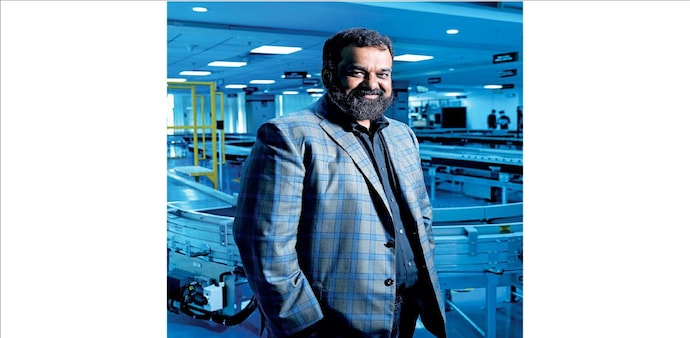
- Jul 19, 2022,
- Updated Jul 19, 2022 12:54 PM IST
Suresh Venkatarayalu, Honeywell International Inc.’s Senior VP & Chief Technology Officer, is in the midst of an interesting phase in the $34-billion industrial software major’s history, powered by the convergence of technology, disruption and unpredictability. The US-based executive spoke to BT at Honeywell’s Bengaluru office on a range of topics. Edited excerpts:
BT: How has technology changed in the backdrop of the pandemic?
A: Honeywell has been around for 136 years and for the first 120, we spoke of being a control systems company. That meant being in an aircraft or a commercial building or in an industrial plant. The last 10-15 years have been about virtualising control systems. With AI and ML, these will become self-learning systems.
For the first 100 years, the skills and road map were consistent for [every] five years. In the last 10, we have had to change [the skills and road map] every year or two; the way forward [would be to] refresh them twice a year. There are more disruptions today and we will need to pivot and shift towards making agile decisions.
BT: This period has been disrupted by technology. How have you had to reorient the business?
A: Honeywell pivoted faster by innovating for our customers. That meant speaking to CXOs to understand their pain points and to co-innovate with them. To us, the reboot pushed best-in-class companies to adapt to the new normal. An example was healthy buildings... That was done in three to six months. We also looked at warehouse automation. Companies faced labour shortages while the throughput went through the roof since people were ordering online. Robotic automation systems became key and we worked closely with one of our large retail customers [on this]. It was piloted in six months.
BT: Has decision-making become faster?
A: Large companies have to move quickly... What would have taken two to three years is now about me getting a call with a query on a value chain transformation agenda—we have to get together in the next four to six weeks, and in the next 90 days we will get to a point where the road map for the way forward is ready. That’s the redefined clock speed.
BT: Is it true across firms and nations?
A: Top leaders are pressed for time. When I speak to CXOs of large companies, it is like talking to a start-up CEO... There is no difference [across] the world. Having conversations on disruption is mutually beneficial and drives the core innovation potential.
BT: How much has your approach towards R&D budgets changed?
A: Honeywell spends around 10 per cent of its sales on R&D. [In terms of] new product vitality [products launched in the last 36 months and the proportion of sales that comes from them], we were at 23 per cent five years ago; the number will be 31-32 per cent this year... How much of that is cannibalising your old products and how much is breakthrough innovation? The latter refers to anything that can generate $100 million of revenue in three years. This is the future and if we have 10 such products... [then] we are on the right innovation path.
@krishnagopalan
Suresh Venkatarayalu, Honeywell International Inc.’s Senior VP & Chief Technology Officer, is in the midst of an interesting phase in the $34-billion industrial software major’s history, powered by the convergence of technology, disruption and unpredictability. The US-based executive spoke to BT at Honeywell’s Bengaluru office on a range of topics. Edited excerpts:
BT: How has technology changed in the backdrop of the pandemic?
A: Honeywell has been around for 136 years and for the first 120, we spoke of being a control systems company. That meant being in an aircraft or a commercial building or in an industrial plant. The last 10-15 years have been about virtualising control systems. With AI and ML, these will become self-learning systems.
For the first 100 years, the skills and road map were consistent for [every] five years. In the last 10, we have had to change [the skills and road map] every year or two; the way forward [would be to] refresh them twice a year. There are more disruptions today and we will need to pivot and shift towards making agile decisions.
BT: This period has been disrupted by technology. How have you had to reorient the business?
A: Honeywell pivoted faster by innovating for our customers. That meant speaking to CXOs to understand their pain points and to co-innovate with them. To us, the reboot pushed best-in-class companies to adapt to the new normal. An example was healthy buildings... That was done in three to six months. We also looked at warehouse automation. Companies faced labour shortages while the throughput went through the roof since people were ordering online. Robotic automation systems became key and we worked closely with one of our large retail customers [on this]. It was piloted in six months.
BT: Has decision-making become faster?
A: Large companies have to move quickly... What would have taken two to three years is now about me getting a call with a query on a value chain transformation agenda—we have to get together in the next four to six weeks, and in the next 90 days we will get to a point where the road map for the way forward is ready. That’s the redefined clock speed.
BT: Is it true across firms and nations?
A: Top leaders are pressed for time. When I speak to CXOs of large companies, it is like talking to a start-up CEO... There is no difference [across] the world. Having conversations on disruption is mutually beneficial and drives the core innovation potential.
BT: How much has your approach towards R&D budgets changed?
A: Honeywell spends around 10 per cent of its sales on R&D. [In terms of] new product vitality [products launched in the last 36 months and the proportion of sales that comes from them], we were at 23 per cent five years ago; the number will be 31-32 per cent this year... How much of that is cannibalising your old products and how much is breakthrough innovation? The latter refers to anything that can generate $100 million of revenue in three years. This is the future and if we have 10 such products... [then] we are on the right innovation path.
@krishnagopalan