
EAC-PM's Rakesh Mohan on why better labour regulations are required for higher productivity
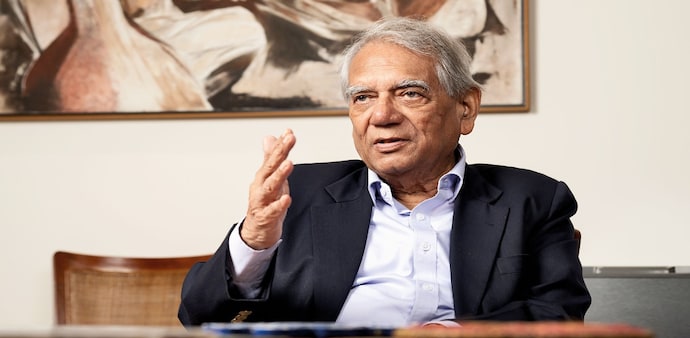
Rakesh Mohan, Part Time Member of EAC-PM and former Deputy Governor, RBI, says India needs to be more export oriented, produce at a much higher scale, and focus on quality.
- Aug 21, 2026,
- Updated Aug 21, 2026 4:11 PM IST
Rakesh Mohan, Part-Time Member of EAC-PM and former Deputy Governor, Reserve Bank of India, was closely associated with 1991 economic reforms as Economic Adviser in the Ministry of Industry. In an interview to BT, he talks about the reforms to boost manufacturing and what needs to be done now. Edited Excerpts:
Why has India’s share of manufacturing in GDP not increased?
It is a puzzle why the share of manufacturing in India’s GDP has not increased in the last 35 years. In fact, the growth rate of manufacturing has remained broadly constant at 6-6.5%, the same as the average GDP growth rate, over the last 35 years, although it was higher for some time in the 2000s.
The period prior to 1991 was characterised by the licence-control raj when almost all industries had to obtain a licence and many sectors were reserved for the public sector. Moreover, there was a high degree of protection with import controls and high tariffs. The real thrust of the 1991 reforms was on industrialisation, and a huge amount of industrial deregulation was done. One of the assumptions was that once these controls were lifted, production would rise in labour intensive sectors, given that Indian labour is much cheaper. With import liberalisation, increased domestic competition, and freer FDI, industry would also have a greater incentive to increase productivity. Industry was also expected to have more incentive to invest in research and development (R&D) and innovation.
Development experience and history demonstrate that, in this period of development, the share of manufacturing should have grown faster. But this has not been the case. There has been no significant movement in labour intensive industry and private sector R&D.
Till FY11, most labour-intensive industries were reserved for small scale enterprises. We had biased ourselves against labour intensive industries such as leather, textiles, footwear, furniture, all of which were reserved for small scale industry. So, we never got large industries in these sectors that would have enabled us to compete globally. Our competitors like China, Vietnam and Bangladesh have much larger units and hence export much more than us in these sectors. We also have much higher tariffs compared to other countries.
A crucial reason perhaps for our problems is also the fact that our exchange rate is heavily overvalued.
What are the policy measures needed to grow manufacturing?
We need to be more export oriented and produce much better quality at a much higher scale. All this requires better technology for which the private sector needs to invest more in R&D, which in turn will increase productivity.
For higher productivity, we also need better labour regulations. Most Indian factories employ contract labour. As a result, they have no incentive to train workers; neither are they interested in R&D and newer technology.
There is a huge difference in average wages in Indian factories compared to China and Vietnam. Our policies also need to re-look at skill development and vocational training. Much more needs to be done here by both the private sector and the government.
Historically, we have restricted industries in and around cities. My recent paper, ‘Indian Urbanisation is Slowing Down’, shows that the share of manufacturing in urban areas in total manufacturing was rising till the mid-2000s-2010, but has now declined. This has impacted the mobility of labour and made it difficult for them to get jobs if they are fired from one place. We need to see how we can provide land to industry more cheaply and easily in the Top 100 cities.
Can India still become a global or regional manufacturing centre?
Despite tariff reforms, India continues to have one of the highest average tariff rates globally. While the government is now looking outwards and signing a number of free trade agreements, the most meaningful ones are those signed with the UK and the EU. India needs to do more such deals.
Over the next few years, two thirds of incremental GDP and global growth will come from Asia (including South Asia). The region is clearly the future of global trade. Our imports from China, Japan and South Korea are already extremely high, in the range of $180 billion in all, and we export only about $30 billion to them. We need to export more to these countries. India needs to look at FTAs with China and other Asian countries. We need to join CPTPP and RCEP to be part of regional supply chains and access the huge market available for our exports to Asia. There are over four billion people in the region, and their average GDP and per capita income will rise in the coming couple of decades.
Can we become a hub for hi-tech manufacturing?
We do have niche sectors like space and atomic energy where we are doing very well. But these are largely with the public sector. But with investments of just 0.7% of GDP in R&D, becoming a hub for hi-tech manufacturing is highly improbable. We need high-quality universities with good R&D facilities and supply of high-level technology graduates. Only then can India think of becoming a high-tech manufacturing hub.
@surabhi
Rakesh Mohan, Part-Time Member of EAC-PM and former Deputy Governor, Reserve Bank of India, was closely associated with 1991 economic reforms as Economic Adviser in the Ministry of Industry. In an interview to BT, he talks about the reforms to boost manufacturing and what needs to be done now. Edited Excerpts:
Why has India’s share of manufacturing in GDP not increased?
It is a puzzle why the share of manufacturing in India’s GDP has not increased in the last 35 years. In fact, the growth rate of manufacturing has remained broadly constant at 6-6.5%, the same as the average GDP growth rate, over the last 35 years, although it was higher for some time in the 2000s.
The period prior to 1991 was characterised by the licence-control raj when almost all industries had to obtain a licence and many sectors were reserved for the public sector. Moreover, there was a high degree of protection with import controls and high tariffs. The real thrust of the 1991 reforms was on industrialisation, and a huge amount of industrial deregulation was done. One of the assumptions was that once these controls were lifted, production would rise in labour intensive sectors, given that Indian labour is much cheaper. With import liberalisation, increased domestic competition, and freer FDI, industry would also have a greater incentive to increase productivity. Industry was also expected to have more incentive to invest in research and development (R&D) and innovation.
Development experience and history demonstrate that, in this period of development, the share of manufacturing should have grown faster. But this has not been the case. There has been no significant movement in labour intensive industry and private sector R&D.
Till FY11, most labour-intensive industries were reserved for small scale enterprises. We had biased ourselves against labour intensive industries such as leather, textiles, footwear, furniture, all of which were reserved for small scale industry. So, we never got large industries in these sectors that would have enabled us to compete globally. Our competitors like China, Vietnam and Bangladesh have much larger units and hence export much more than us in these sectors. We also have much higher tariffs compared to other countries.
A crucial reason perhaps for our problems is also the fact that our exchange rate is heavily overvalued.
What are the policy measures needed to grow manufacturing?
We need to be more export oriented and produce much better quality at a much higher scale. All this requires better technology for which the private sector needs to invest more in R&D, which in turn will increase productivity.
For higher productivity, we also need better labour regulations. Most Indian factories employ contract labour. As a result, they have no incentive to train workers; neither are they interested in R&D and newer technology.
There is a huge difference in average wages in Indian factories compared to China and Vietnam. Our policies also need to re-look at skill development and vocational training. Much more needs to be done here by both the private sector and the government.
Historically, we have restricted industries in and around cities. My recent paper, ‘Indian Urbanisation is Slowing Down’, shows that the share of manufacturing in urban areas in total manufacturing was rising till the mid-2000s-2010, but has now declined. This has impacted the mobility of labour and made it difficult for them to get jobs if they are fired from one place. We need to see how we can provide land to industry more cheaply and easily in the Top 100 cities.
Can India still become a global or regional manufacturing centre?
Despite tariff reforms, India continues to have one of the highest average tariff rates globally. While the government is now looking outwards and signing a number of free trade agreements, the most meaningful ones are those signed with the UK and the EU. India needs to do more such deals.
Over the next few years, two thirds of incremental GDP and global growth will come from Asia (including South Asia). The region is clearly the future of global trade. Our imports from China, Japan and South Korea are already extremely high, in the range of $180 billion in all, and we export only about $30 billion to them. We need to export more to these countries. India needs to look at FTAs with China and other Asian countries. We need to join CPTPP and RCEP to be part of regional supply chains and access the huge market available for our exports to Asia. There are over four billion people in the region, and their average GDP and per capita income will rise in the coming couple of decades.
Can we become a hub for hi-tech manufacturing?
We do have niche sectors like space and atomic energy where we are doing very well. But these are largely with the public sector. But with investments of just 0.7% of GDP in R&D, becoming a hub for hi-tech manufacturing is highly improbable. We need high-quality universities with good R&D facilities and supply of high-level technology graduates. Only then can India think of becoming a high-tech manufacturing hub.
@surabhi