
Manipal's Ranjan Pai on what makes a hospital an attractive acquisition
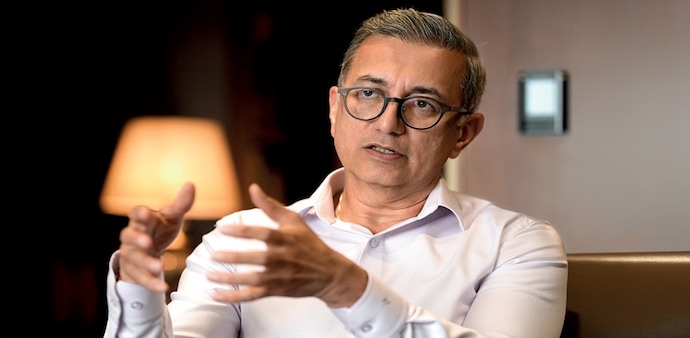
Ranjan Pai, Chairman, Manipal Education and Medical Group, on his professional journey, learning from failures, and what makes the group click.
- Aug 17, 2026,
- Updated Aug 17, 2026 7:14 PM IST
Manipal Health Enterprises debuted on stock exchanges on August 5 and listed at a 10.5% premium after raising over Rs 9,275 crore in India's second-largest IPO of 2026. The issue was subscribed five times, valuing the hospital chain around 85 times FY26 earnings, one of the highest multiples in the sector. But the listing is only the latest milestone in a journey that has transformed it into one of India's largest private healthcare networks.
In his first interview since the listing, Dr. Ranjan Pai, Chairman of the Manipal Education and Medical Group (MEMD), speaks to BT about the company’s next phase of growth, the rationale behind the valuation, capital allocation plans and the role of private equity in building a scalable healthcare business. He also reflects on his journey from medicine to institution building, lessons from failed acquisition bids, why attracting talent is central to Manipal’s strategy, and the future of India’s healthcare sector. Edited excerpts:
Q: You trained as a doctor but went on to build one of India’s largest healthcare groups. How did that journey begin?
A: After completing my medical degree, I went to the US to study hospital administration. I got an opportunity to join the group in Malaysia. A medical school was being set up there, and my father asked me if I would like to go and set it up. Setting up a college gave me full hands-on experience of doing everything away from India and Manipal.
MEMG was set up in 2000 as the holding company to assemble talent. We followed a model like the Tatas, bringing talent together and looking at new businesses to build. Education was one vertical and healthcare another. Today, the group also has businesses in health insurance and new-age investments through Claypond Capital.
Q: What were the defining decisions that shaped the journey?
A: The Malaysia experience gave me the confidence to build further, even though I was not sure I would be able to execute it. While I was living there, I used to spend about a week every month in Bengaluru, setting up the office and building the team.
The hospital business itself was at a fledgling stage. We always had good doctors, but the hospital was not doing well. The option was either to get out of the business or improve it. I told my father we should fix it. He gave me a free hand.
Earlier, retired people were running it. Bringing in professional managers was the turning point. Around 2004 or 2005, someone introduced me to private equity. We raised private equity in 2006 as capital was scarce.
Raising private equity helped us attract talent. The idea was to seed multiple businesses if we could get good people to execute. We kept replicating that model. In education, we eventually bought back our investors. In healthcare, we continued with multiple investors. In 2014, TPG came on board after three rounds of fund-raising. They encouraged us to think bigger. Temasek coming on board was another milestone. They brought long-term capital. TPG has now been with us for 11 years and Temasek for almost 10 years. Those partnerships helped us grow.
We had another failed attempt. But finally, we acquired Columbia Asia. After that, we have been able not only to acquire hospitals but also to integrate them well. In many cases, acquisition is the easy part. What makes the difference is how well you execute. Very few hospital networks in the country have executed acquisitions and integration so well.
Q: You made some acquisitions and failed to buy others. What did those experiences teach you about capital allocation and deal-making?
A: Our failures were more about capital. We just did not have the conviction to bid higher. Sometimes it is not a question of whether we were right or wrong. In hindsight, you might say we should have gone for it, but it is tough to say. At that time, everybody collectively felt it was the right price to pay. We must have the discipline to say “this is what we are going to pay” and it is fine if we lose it. As long as we are disciplined about an asset, we will be fine. We do not have to win at all costs, especially now that we are a public company.
Q: Has private equity strengthened healthcare or made it more expensive?
A: It is unfair to blame private equity for the rising cost of healthcare. That narrative may have emerged in the West where there is no growth in healthcare. So, the only way to create value is reducing costs. In India, the focus has never been on cutting costs or increasing prices. It is about improving efficiency, growing the business and building scale through acquisitions.
The narrative that private equity increases costs and reduces quality is wrong. Private equity investors want the best outcomes. They focus on governance and processes. Companies with private equity alongside promoters are often better run than companies run only by promoters because the limited capital available to a promoter sometimes leads to shortcuts.
Q: Hospital chains are expanding rapidly and competition for both assets and doctors has intensified. How does Manipal plan to stay ahead?
A: Competition has always been there. It was there five years ago. It was there ten years ago. There is more private equity and bigger chains now. The biggest differentiator is continuing to do what we have done in the past: attract and retain good-quality doctors. As your network grows, attracting doctors becomes easier. The brand also becomes an important factor.
Location is another important factor. Doctors look at whether the hospital is close to their residence. Our strategy is to go closer to where people, and hopefully doctors, are.
Q: What makes a hospital an attractive acquisition for Manipal?
A: We prefer a chain because you get a larger footprint. But it depends on where the network is located. Is it in an area where we do not have a presence? Does it add to our network?
Some buildings are old. We look at the cost of fixing them. If it is a running hospital, we look at whether we can attract good doctors and strengthen the areas where it is lacking.
Q: What will drive the group’s next phase of growth over the next five to ten years?
A: Healthcare will continue to be our flagship business. Our education vertical is also very strong. We have a tech company that is doing well. The health insurance industry is another area I am excited about.
There is a huge amount of secular growth in that sector. As India becomes more prosperous, insurance becomes a must-have. We believe there are strong tailwinds in that sector. These are the three areas we are focused on. We have not thought about anything new.
We are looking at Tier-II and Tier-III cities. We have some hospitals coming up, probably more in Tier-II cities and some in Tier-III cities. It will be a gradual progression. As we move into newer towns outside the capitals, we will naturally look at smaller towns as well.
Cancer is also a big area of focus for us. Pretty much all our new hospitals are going to have a bunker and linear accelerators.
Q: The IPO was subscribed nearly five times and listed at a premium. How do you justify Manipal Hospitals’ valuation?
A: The 85-times P/E multiple has been projected a little unfairly. Yes, it is 85 times, but that is because of the debt we had after acquiring Sahyadri. The right way to look at it is EV/EBITDA. On that basis, we are lower than some of our peers.
We did that deliberately because we wanted to leave some money on the table for investors. The money raised will be used to pay down the debt. The P/E will come down. That is how people should evaluate us post-IPO. It is unfair to look only at the P/E multiple.
Q: Do you think the IPO would have gone as well if the market had priced you on EV/EBITDA from Day One instead of the P/E multiple? How do you plan to deploy the proceeds?
A: I believe so. The fundamentals do not change depending on which multiple you look at first. Investors who did their homework were already looking at it that way. About Rs 5,500 crore will be used to pay down the debt we took for Sahyadri, and another Rs 500-odd crore will be used to buy the remaining 10% stake from the shareholder. We will keep the rest for future acquisitions. We also have a lot of greenfield hospitals coming up.
Q: As India expands its healthcare infrastructure, what policy reforms are needed to improve access to quality healthcare, and where do you see the biggest opportunity in health insurance?
A: : Health insurance penetration needs to keep increasing. Healthcare is expensive. Input costs, whether it is drugs or cutting-edge medical equipment, continue to rise. Healthcare will continue to become more expensive. That said, it is still a fraction of the cost of the Western world. But if people cannot afford it (even Rs 50,000), it is difficult for them to come to a hospital.
The government health insurance should probably be expanded, and more people should take private health insurance because it is not too expensive.
@neetu_csharma
Manipal Health Enterprises debuted on stock exchanges on August 5 and listed at a 10.5% premium after raising over Rs 9,275 crore in India's second-largest IPO of 2026. The issue was subscribed five times, valuing the hospital chain around 85 times FY26 earnings, one of the highest multiples in the sector. But the listing is only the latest milestone in a journey that has transformed it into one of India's largest private healthcare networks.
In his first interview since the listing, Dr. Ranjan Pai, Chairman of the Manipal Education and Medical Group (MEMD), speaks to BT about the company’s next phase of growth, the rationale behind the valuation, capital allocation plans and the role of private equity in building a scalable healthcare business. He also reflects on his journey from medicine to institution building, lessons from failed acquisition bids, why attracting talent is central to Manipal’s strategy, and the future of India’s healthcare sector. Edited excerpts:
Q: You trained as a doctor but went on to build one of India’s largest healthcare groups. How did that journey begin?
A: After completing my medical degree, I went to the US to study hospital administration. I got an opportunity to join the group in Malaysia. A medical school was being set up there, and my father asked me if I would like to go and set it up. Setting up a college gave me full hands-on experience of doing everything away from India and Manipal.
MEMG was set up in 2000 as the holding company to assemble talent. We followed a model like the Tatas, bringing talent together and looking at new businesses to build. Education was one vertical and healthcare another. Today, the group also has businesses in health insurance and new-age investments through Claypond Capital.
Q: What were the defining decisions that shaped the journey?
A: The Malaysia experience gave me the confidence to build further, even though I was not sure I would be able to execute it. While I was living there, I used to spend about a week every month in Bengaluru, setting up the office and building the team.
The hospital business itself was at a fledgling stage. We always had good doctors, but the hospital was not doing well. The option was either to get out of the business or improve it. I told my father we should fix it. He gave me a free hand.
Earlier, retired people were running it. Bringing in professional managers was the turning point. Around 2004 or 2005, someone introduced me to private equity. We raised private equity in 2006 as capital was scarce.
Raising private equity helped us attract talent. The idea was to seed multiple businesses if we could get good people to execute. We kept replicating that model. In education, we eventually bought back our investors. In healthcare, we continued with multiple investors. In 2014, TPG came on board after three rounds of fund-raising. They encouraged us to think bigger. Temasek coming on board was another milestone. They brought long-term capital. TPG has now been with us for 11 years and Temasek for almost 10 years. Those partnerships helped us grow.
We had another failed attempt. But finally, we acquired Columbia Asia. After that, we have been able not only to acquire hospitals but also to integrate them well. In many cases, acquisition is the easy part. What makes the difference is how well you execute. Very few hospital networks in the country have executed acquisitions and integration so well.
Q: You made some acquisitions and failed to buy others. What did those experiences teach you about capital allocation and deal-making?
A: Our failures were more about capital. We just did not have the conviction to bid higher. Sometimes it is not a question of whether we were right or wrong. In hindsight, you might say we should have gone for it, but it is tough to say. At that time, everybody collectively felt it was the right price to pay. We must have the discipline to say “this is what we are going to pay” and it is fine if we lose it. As long as we are disciplined about an asset, we will be fine. We do not have to win at all costs, especially now that we are a public company.
Q: Has private equity strengthened healthcare or made it more expensive?
A: It is unfair to blame private equity for the rising cost of healthcare. That narrative may have emerged in the West where there is no growth in healthcare. So, the only way to create value is reducing costs. In India, the focus has never been on cutting costs or increasing prices. It is about improving efficiency, growing the business and building scale through acquisitions.
The narrative that private equity increases costs and reduces quality is wrong. Private equity investors want the best outcomes. They focus on governance and processes. Companies with private equity alongside promoters are often better run than companies run only by promoters because the limited capital available to a promoter sometimes leads to shortcuts.
Q: Hospital chains are expanding rapidly and competition for both assets and doctors has intensified. How does Manipal plan to stay ahead?
A: Competition has always been there. It was there five years ago. It was there ten years ago. There is more private equity and bigger chains now. The biggest differentiator is continuing to do what we have done in the past: attract and retain good-quality doctors. As your network grows, attracting doctors becomes easier. The brand also becomes an important factor.
Location is another important factor. Doctors look at whether the hospital is close to their residence. Our strategy is to go closer to where people, and hopefully doctors, are.
Q: What makes a hospital an attractive acquisition for Manipal?
A: We prefer a chain because you get a larger footprint. But it depends on where the network is located. Is it in an area where we do not have a presence? Does it add to our network?
Some buildings are old. We look at the cost of fixing them. If it is a running hospital, we look at whether we can attract good doctors and strengthen the areas where it is lacking.
Q: What will drive the group’s next phase of growth over the next five to ten years?
A: Healthcare will continue to be our flagship business. Our education vertical is also very strong. We have a tech company that is doing well. The health insurance industry is another area I am excited about.
There is a huge amount of secular growth in that sector. As India becomes more prosperous, insurance becomes a must-have. We believe there are strong tailwinds in that sector. These are the three areas we are focused on. We have not thought about anything new.
We are looking at Tier-II and Tier-III cities. We have some hospitals coming up, probably more in Tier-II cities and some in Tier-III cities. It will be a gradual progression. As we move into newer towns outside the capitals, we will naturally look at smaller towns as well.
Cancer is also a big area of focus for us. Pretty much all our new hospitals are going to have a bunker and linear accelerators.
Q: The IPO was subscribed nearly five times and listed at a premium. How do you justify Manipal Hospitals’ valuation?
A: The 85-times P/E multiple has been projected a little unfairly. Yes, it is 85 times, but that is because of the debt we had after acquiring Sahyadri. The right way to look at it is EV/EBITDA. On that basis, we are lower than some of our peers.
We did that deliberately because we wanted to leave some money on the table for investors. The money raised will be used to pay down the debt. The P/E will come down. That is how people should evaluate us post-IPO. It is unfair to look only at the P/E multiple.
Q: Do you think the IPO would have gone as well if the market had priced you on EV/EBITDA from Day One instead of the P/E multiple? How do you plan to deploy the proceeds?
A: I believe so. The fundamentals do not change depending on which multiple you look at first. Investors who did their homework were already looking at it that way. About Rs 5,500 crore will be used to pay down the debt we took for Sahyadri, and another Rs 500-odd crore will be used to buy the remaining 10% stake from the shareholder. We will keep the rest for future acquisitions. We also have a lot of greenfield hospitals coming up.
Q: As India expands its healthcare infrastructure, what policy reforms are needed to improve access to quality healthcare, and where do you see the biggest opportunity in health insurance?
A: : Health insurance penetration needs to keep increasing. Healthcare is expensive. Input costs, whether it is drugs or cutting-edge medical equipment, continue to rise. Healthcare will continue to become more expensive. That said, it is still a fraction of the cost of the Western world. But if people cannot afford it (even Rs 50,000), it is difficult for them to come to a hospital.
The government health insurance should probably be expanded, and more people should take private health insurance because it is not too expensive.
@neetu_csharma