
Solution to the crisis is reforms to promote exports: Montek Singh Ahluwalia on the impact of the West Asia conflict
Solution to the crisis is reforms to promote exports: Montek Singh Ahluwalia on the impact of the West Asia conflict
Montek Singh Ahluwalia, former Deputy Chairman of the Planning Commission, on the impact of the West Asia conflict on the economy, reliance on imports, and how to boost growth.
Surabhi
- Jun 24, 2026,
- Updated Jun 24, 2026 5:10 PM IST
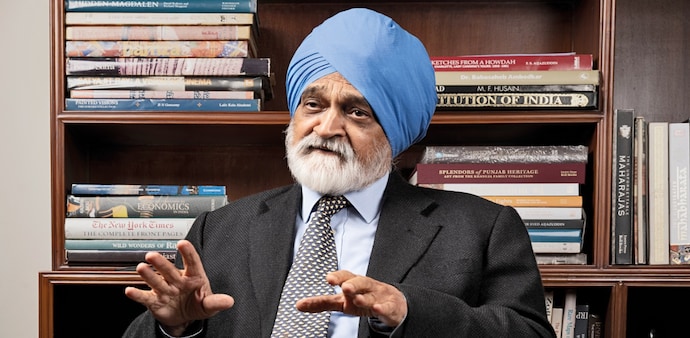
Veteran economist Montek Singh Ahluwalia has played a crucial role in shaping the modern Indian economy and was a key part of the government’s liberalisation efforts from 1991.
In an interview to Business Today, he spoke about the Indian economy and the West Asia crisis. He says the current account deficit (CAD) will be higher and GDP growth will be lower than current official forecasts and inflation will also be higher. But he warns that the balance of payments problem cannot be solved simply by cutting imports and relying on import substitution. “That can raise costs and make exports uncompetitive,” says Ahluwalia. He adds that having a large trade deficit with China should not lead India to adopt a closed-door attitude. Edited Excerpts:
Advertisement
Q. Does the West Asia crisis pose significant challenges to the economic outlook?
Yes, it does, for the whole world. Various international agencies have lowered growth estimates for all major groups of countries and India’s growth prospects have also been scaled down.
The extent of the damage remains subject to considerable uncertainty. It now looks like the US and Iran have come to an agreement and the Strait of Hormuz may be open soon. That is good news for everybody. Oil prices have already fallen below $90 per barrel. However, even if the Strait is effectively opened over the next two weeks, it will take time for supplies to normalise. Some supply sources have been damaged, and strategic oil reserves have been run down sharply. Most countries will want to rebuild these and perhaps even increase them.
Advertisement
If oil prices average around $85 per barrel in 2026-27, this is about 25% higher than last year. Our import bill will be correspondingly higher, and the CAD could rise to about 2% of GDP for FY27 compared with only 0.6% in FY26.
Financing this will require net capital inflows of around $70 billion. But, net capital flows were negligible in FY26 because of a sharp decline in both net FDI and net portfolio flows. These flows are unlikely to recover quickly. This means the rupee will remain under pressure.
Q. Is the sharp fall in the rupee a concern?
It hurts importers and those planning foreign holidays or paying for foreign education. But it also encourages exports. It is part of the process of bringing the balance of payments under control.
Advertisement
One reason why the depreciation has been sharp is that the rupee was held too stable for too long before that. There are good reasons for wanting to stabilise the real effective exchange rate, but the rupee remained stable in nominal terms for too long. That meant it had appreciated in real terms, and the recent depreciation has corrected for this.
Q. Will the measures of the RBI and finance ministry boost foreign capital inflows?
They are similar to the measures taken in 2013 which did stimulate some short-term flows. However, it is difficult to say how effective the current measures will be because there is much more global uncertainty. The AI frenzy is also a new phenomenon pulling large sums of money into the US.
If the measures raise around $50 billion, we will still need to find another $20 billion to cover the estimated CAD. Our forex reserves provide a sufficient cushion to deal with this provided we could be sure that the problem will disappear next year. If the CAD next year does not contract to the level that can be financed by sustainable long-term flows, it will be necessary to take steps to contract it.
Advertisement
Q. What can we do to reduce the CAD?
The classic response is to lower aggregate domestic demand. Passing on the oil price hike to consumers helps in this. This substitution effect is likely to be limited in the short run, but it will squeeze consumer budgets pushing them to reduce other expenditures. This will moderate total demand. Usually, aggregate demand contraction also requires an increase in interest rates and some squeezing of other government expenditure. Both pose their own problems.
Increasing exports will obviously help reduce the CAD and this should be a priority because export performance has been weak for several years. The currency depreciation will help, but there are many other things that need to be done. We could consider reducing import duties where they are currently relatively high, eg. steel, petrochemicals. The rupee depreciation provides room for reducing import duties and this will help MSMEs since these are key inputs.
Q. What does this mean for growth in FY27?
Our growth rate will be lower than earlier projected, but this will also be true for all countries. We could end up being with growth only a little over 6% in real terms.
Advertisement
A second factor that may affect growth in the current year is the unusually strong El Niño effect. Several international sources have predicted that its effect this year is super strong, which could mean a poor monsoon that would adversely affect agricultural growth and food production.
Lower growth in FY27 will lead to lower tax revenues and possibly also higher expenditure on the employment programme. This will lead to a slippage in the fiscal deficit. We will know more by the middle of the fiscal year. If the slippage is significant, it is worth acknowledging it up front. It may be unavoidable for the current year, but we will make up for it next year.
Q. The Indian economy is heavily dependent on imports. Why have measures to boost manufacturing not yielded the desired results? Is it true that India chose to focus on building services as an engine of growth as a result of which we have missed the bus on manufacturing?
You seem to imply that we could have solved our balance of payments problem through a simplistic import substitution approach, which would also have helped to expand manufacturing. I have a somewhat different view.
Advertisement
First, it is true that we have done well in services, mainly IT services, and that is because our policies have worked well in this sector, generating substantial forex earnings and high-quality employment. Some of this may now be under threat because of AI, but that is a separate challenge. Modern services are an important area for GDP growth, earning forex and creating high quality employment.
Second, it is not correct to say that manufacturing was ignored. All governments for the past 20 years have targeted raising the share of manufacturing in GDP. The UPA targeted raising it from 15% in 2004 to 25% by 2025. It was able to achieve only about 17% by 2014. The current government retained the 25% target, and the share actually rose a little to 18 % initially, but then it declined. It is down to 16% according to the latest GDP series!
Many people think the failure in our policies towards manufactured goods is that we did not push import substitution more vigorously. I think this is the wrong conclusion. The principal reason for our failure in manufacturing lies on the export side. China’s gradual withdrawal from the market for simpler manufactured goods provided a great opportunity for us to expand exports of these items. Bangladesh and Vietnam exploited it very successfully. We need to analyse why we failed.
If we had pushed for more import substitution, we would have made the economy more uncompetitive and taken a bigger hit on exports.
Q. India’s trade deficit with China has risen substantially over the past few years. Is this reliance on China a challenge for the Indian economy?
It is true we have a high trade deficit with China, but a deficit with a particular country doesn’t pose a problem as long as our overall deficit is manageable. China is a very competitive producer of many manufactured goods and if they are the cheapest, we should buy from them.
However, I agree there are some areas where imports from China do present problems. One relates to imports of sophisticated semiconductor chips used in defence and other networks, such as banking and the financial system, telecommunications, air traffic control. These can pose a threat to security if they allow unauthorised persons to access the network. Such items should either be produced domestically or if imports are unavoidable, they should be sourced only from trusted sources.
Another problem area is critical minerals, where China has exercised leverage by denying exports. The solution in such cases lies in diversifying our sources. Many countries face this problem, and we have common interests with them. We need to develop close cooperation with these countries.
@surabhi_prasad
Veteran economist Montek Singh Ahluwalia has played a crucial role in shaping the modern Indian economy and was a key part of the government’s liberalisation efforts from 1991.
In an interview to Business Today, he spoke about the Indian economy and the West Asia crisis. He says the current account deficit (CAD) will be higher and GDP growth will be lower than current official forecasts and inflation will also be higher. But he warns that the balance of payments problem cannot be solved simply by cutting imports and relying on import substitution. “That can raise costs and make exports uncompetitive,” says Ahluwalia. He adds that having a large trade deficit with China should not lead India to adopt a closed-door attitude. Edited Excerpts:
Advertisement
Q. Does the West Asia crisis pose significant challenges to the economic outlook?
Yes, it does, for the whole world. Various international agencies have lowered growth estimates for all major groups of countries and India’s growth prospects have also been scaled down.
The extent of the damage remains subject to considerable uncertainty. It now looks like the US and Iran have come to an agreement and the Strait of Hormuz may be open soon. That is good news for everybody. Oil prices have already fallen below $90 per barrel. However, even if the Strait is effectively opened over the next two weeks, it will take time for supplies to normalise. Some supply sources have been damaged, and strategic oil reserves have been run down sharply. Most countries will want to rebuild these and perhaps even increase them.
Advertisement
If oil prices average around $85 per barrel in 2026-27, this is about 25% higher than last year. Our import bill will be correspondingly higher, and the CAD could rise to about 2% of GDP for FY27 compared with only 0.6% in FY26.
Financing this will require net capital inflows of around $70 billion. But, net capital flows were negligible in FY26 because of a sharp decline in both net FDI and net portfolio flows. These flows are unlikely to recover quickly. This means the rupee will remain under pressure.
Q. Is the sharp fall in the rupee a concern?
It hurts importers and those planning foreign holidays or paying for foreign education. But it also encourages exports. It is part of the process of bringing the balance of payments under control.
Advertisement
One reason why the depreciation has been sharp is that the rupee was held too stable for too long before that. There are good reasons for wanting to stabilise the real effective exchange rate, but the rupee remained stable in nominal terms for too long. That meant it had appreciated in real terms, and the recent depreciation has corrected for this.
Q. Will the measures of the RBI and finance ministry boost foreign capital inflows?
They are similar to the measures taken in 2013 which did stimulate some short-term flows. However, it is difficult to say how effective the current measures will be because there is much more global uncertainty. The AI frenzy is also a new phenomenon pulling large sums of money into the US.
If the measures raise around $50 billion, we will still need to find another $20 billion to cover the estimated CAD. Our forex reserves provide a sufficient cushion to deal with this provided we could be sure that the problem will disappear next year. If the CAD next year does not contract to the level that can be financed by sustainable long-term flows, it will be necessary to take steps to contract it.
Advertisement
Q. What can we do to reduce the CAD?
The classic response is to lower aggregate domestic demand. Passing on the oil price hike to consumers helps in this. This substitution effect is likely to be limited in the short run, but it will squeeze consumer budgets pushing them to reduce other expenditures. This will moderate total demand. Usually, aggregate demand contraction also requires an increase in interest rates and some squeezing of other government expenditure. Both pose their own problems.
Increasing exports will obviously help reduce the CAD and this should be a priority because export performance has been weak for several years. The currency depreciation will help, but there are many other things that need to be done. We could consider reducing import duties where they are currently relatively high, eg. steel, petrochemicals. The rupee depreciation provides room for reducing import duties and this will help MSMEs since these are key inputs.
Q. What does this mean for growth in FY27?
Our growth rate will be lower than earlier projected, but this will also be true for all countries. We could end up being with growth only a little over 6% in real terms.
Advertisement
A second factor that may affect growth in the current year is the unusually strong El Niño effect. Several international sources have predicted that its effect this year is super strong, which could mean a poor monsoon that would adversely affect agricultural growth and food production.
Lower growth in FY27 will lead to lower tax revenues and possibly also higher expenditure on the employment programme. This will lead to a slippage in the fiscal deficit. We will know more by the middle of the fiscal year. If the slippage is significant, it is worth acknowledging it up front. It may be unavoidable for the current year, but we will make up for it next year.
Q. The Indian economy is heavily dependent on imports. Why have measures to boost manufacturing not yielded the desired results? Is it true that India chose to focus on building services as an engine of growth as a result of which we have missed the bus on manufacturing?
You seem to imply that we could have solved our balance of payments problem through a simplistic import substitution approach, which would also have helped to expand manufacturing. I have a somewhat different view.
Advertisement
First, it is true that we have done well in services, mainly IT services, and that is because our policies have worked well in this sector, generating substantial forex earnings and high-quality employment. Some of this may now be under threat because of AI, but that is a separate challenge. Modern services are an important area for GDP growth, earning forex and creating high quality employment.
Second, it is not correct to say that manufacturing was ignored. All governments for the past 20 years have targeted raising the share of manufacturing in GDP. The UPA targeted raising it from 15% in 2004 to 25% by 2025. It was able to achieve only about 17% by 2014. The current government retained the 25% target, and the share actually rose a little to 18 % initially, but then it declined. It is down to 16% according to the latest GDP series!
Many people think the failure in our policies towards manufactured goods is that we did not push import substitution more vigorously. I think this is the wrong conclusion. The principal reason for our failure in manufacturing lies on the export side. China’s gradual withdrawal from the market for simpler manufactured goods provided a great opportunity for us to expand exports of these items. Bangladesh and Vietnam exploited it very successfully. We need to analyse why we failed.
If we had pushed for more import substitution, we would have made the economy more uncompetitive and taken a bigger hit on exports.
Q. India’s trade deficit with China has risen substantially over the past few years. Is this reliance on China a challenge for the Indian economy?
It is true we have a high trade deficit with China, but a deficit with a particular country doesn’t pose a problem as long as our overall deficit is manageable. China is a very competitive producer of many manufactured goods and if they are the cheapest, we should buy from them.
However, I agree there are some areas where imports from China do present problems. One relates to imports of sophisticated semiconductor chips used in defence and other networks, such as banking and the financial system, telecommunications, air traffic control. These can pose a threat to security if they allow unauthorised persons to access the network. Such items should either be produced domestically or if imports are unavoidable, they should be sourced only from trusted sources.
Another problem area is critical minerals, where China has exercised leverage by denying exports. The solution in such cases lies in diversifying our sources. Many countries face this problem, and we have common interests with them. We need to develop close cooperation with these countries.
@surabhi_prasad
Read more!