
Temasek International’s Ravi Lambah on why India needs more investment in preventive care
Temasek International’s Ravi Lambah on why India needs more investment in preventive care
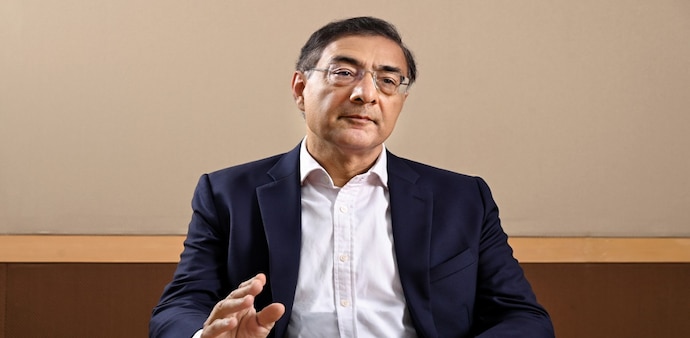
Ravi Lambah, Head, Strategic Initiatives, Temasek International; Head, India, Temasek Global Investments, on Indian healthcare, AI, medtech, and more.
Neetu Chandra Sharma
- Oct 13, 2026,
- Updated Oct 13, 2026 2:14 PM IST
Manipal Hospitals’ acquisition of Pune-based Sahyadri Hospitals highlights the consolidation and expansion underway in India’s healthcare sector. For Temasek, the deal is an example of how healthcare platforms can scale into strategically important geographies through mergers & acquisitions (M&As), while access to capital can support further organic expansion.
Advertisement
Temasek has invested in Indian healthcare for two decades and now counts the sector among its top three areas of investment in India. Its healthcare portfolio spans hospitals, diagnostics, pharmaceuticals, medical devices and digital health, with investments including Manipal Hospitals, Cloudnine, and PharmEasy, which has a significant diagnostics business through Thyrocare.
The investment firm sees a long runway for growth as rising incomes, changing disease patterns and demand for quality care drive the sector forward. It sees opportunities not only in multi-specialty hospitals but also in single-specialty care, diagnostics, affordable medical devices and digital health.
Ravi Lambah, Head, Strategic Initiatives, Temasek International, and Head, India, Temasek Global Investments, spoke with Business Today about Manipal’s expansion, the next phase of growth in Indian healthcare, opportunities across the ecosystem, the role of AI, and the gaps around capacity, affordability and access that still need to be addressed. Edited excerpts:
Advertisement
Q: Temasek has invested across multiple segments of India’s healthcare ecosystem. What is your view on the evolution of the sector?
A: We have invested in Indian healthcare for two decades, and our conviction has strengthened as the sector has matured. The opportunity was initially anchored in under-penetration, rising incomes, and growing demand from families seeking better care. Over time, that has grown into a much broader ecosystem opportunity. That is why healthcare is a structural, multi-decade opportunity, and is now one of our top three sectors in India.
Advertisement
Q: From an investor’s perspective, what will define the next phase of growth?
A: The next phase for us is about scaling our healthcare portfolio responsibly. The industry continues to evolve, with ongoing improvements in both access and affordability. We will work with our portfolio companies to scale organically and through M&As, focusing on building a high-quality presence across geographies. Manipal Hospital’s acquisition of Sahyadri Hospitals in Pune is an example of scaling in a strategically important geography. The sector has a long runway for growth, and we will continue to engage.
Q: Where do you see the biggest opportunities for value creation over the next decade?
A: We see opportunities across the healthcare services ecosystem. In multi-specialty chains, where we have deployed significant capital, growth will be driven both organically and through consolidation. Single-specialty models are scaling rapidly, while diagnostics and medical devices remain significant growth opportunities. We are invested in PharmEasy, which has a significant diagnostics business through Thyrocare. In medical devices, we see opportunities to scale businesses within the “Make in India” framework by accessing international IP for both domestic and global markets. Value creation will also be significantly driven by scaling and deployment of AI across the ecosystem.
Advertisement
Q: What are the biggest gaps that still need to be addressed to build a stronger and more resilient ecosystem?
A: Affordability is another. Insurance penetration is improving, but many families still face significant out-of-pocket costs. We also need more investment in primary and preventive care. There is also a significant opportunity in medical devices and higher-value consumables supply chain.
India has made real progress, but there is always more we can do. Capacity is one area, particularly in expanding the clinical workforce and reaching underserved Tier-II and Tier-III cities.
-Ravi Lambah,Head, Strategic Initiatives, Temasek International, and Head, India, Temasek Global Investments
Q: The sector is witnessing a new wave of expansion and consolidation. How do you see the competitive landscape evolving?
A: The sector has matured considerably, and we expect more organised platforms to emerge. There is also ample room for well-run single-specialty platforms to grow, especially where focused expertise and standardised care pathways can deliver strong outcomes. Our investment in Cloudnine Hospitals, which caters to the fast-growing mother and child opportunity, is a good example.
Q: India has established itself as a global force in pharmaceuticals and is expanding its footprint in healthcare services and life sciences. Where do you see the country’s next competitive advantage emerging from?
Advertisement
A: India is already well-established in pharmaceuticals. We see the next wave of opportunity in affordable medtech, digital health, and selected areas of biotech and life sciences. India has a combination of scientific talent and manufacturing depth, as well as a large domestic market. That is needed to build products for both domestic and international markets.
Q: Innovation is reshaping healthcare. How is it influencing investment decisions, and what opportunities does it create for Indian healthcare businesses?
A: We see healthcare as an industry that will be enabled by AI, whether through improved processes, customer experience, diagnostics, or drug discovery. For India, the most compelling opportunity is whether technology can help bring down the cost of good care or extend services into communities where specialists are harder to access. We are encouraging our portfolio companies to integrate AI effectively into their business models. Given the depth of tech talent in the country, I think Indian businesses can adapt well.
Q: What policy and regulatory reforms would have the greatest impact on attracting long-term capital and accelerating the growth of India’s healthcare sector?
A: Policy direction has been encouraging. Ayushman Bharat continues to widen access, health spending has risen steadily, and PLI schemes alongside FDI liberalisation are drawing more long-term capital into the sector. With this foundation in place, the next priority is to sustain momentum on workforce capacity, insurance coverage, and primary care.
Advertisement
Q: India’s healthcare needs are changing rapidly. How should healthcare businesses adapt to these shifts?
A: Delivery models will need to evolve with demand. As chronic conditions become more common, healthcare businesses will need to build more capacity in specialities where patients require ongoing management rather than one-off treatment. We also expect more investment in day-care, outpatient, and diagnostics-led formats. Elder care will also become increasingly important.
Q: As India moves towards becoming a developed economy by 2047, what kind of healthcare ecosystem should the country aspire to build?
A: By 2047, we would hope to see quality healthcare become much more accessible across India, not just in the major metros, but also in Tier-II and -III cities. Care delivered through robotic systems will become the norm. That means more capacity, stronger
Clinical talent, better diagnostics, and a stronger primary and preventive care layer. We would also hope to see India strengthen its global position across the spectrum.
@neetu_csharma
Manipal Hospitals’ acquisition of Pune-based Sahyadri Hospitals highlights the consolidation and expansion underway in India’s healthcare sector. For Temasek, the deal is an example of how healthcare platforms can scale into strategically important geographies through mergers & acquisitions (M&As), while access to capital can support further organic expansion.
Advertisement
Temasek has invested in Indian healthcare for two decades and now counts the sector among its top three areas of investment in India. Its healthcare portfolio spans hospitals, diagnostics, pharmaceuticals, medical devices and digital health, with investments including Manipal Hospitals, Cloudnine, and PharmEasy, which has a significant diagnostics business through Thyrocare.
The investment firm sees a long runway for growth as rising incomes, changing disease patterns and demand for quality care drive the sector forward. It sees opportunities not only in multi-specialty hospitals but also in single-specialty care, diagnostics, affordable medical devices and digital health.
Ravi Lambah, Head, Strategic Initiatives, Temasek International, and Head, India, Temasek Global Investments, spoke with Business Today about Manipal’s expansion, the next phase of growth in Indian healthcare, opportunities across the ecosystem, the role of AI, and the gaps around capacity, affordability and access that still need to be addressed. Edited excerpts:
Advertisement
Q: Temasek has invested across multiple segments of India’s healthcare ecosystem. What is your view on the evolution of the sector?
A: We have invested in Indian healthcare for two decades, and our conviction has strengthened as the sector has matured. The opportunity was initially anchored in under-penetration, rising incomes, and growing demand from families seeking better care. Over time, that has grown into a much broader ecosystem opportunity. That is why healthcare is a structural, multi-decade opportunity, and is now one of our top three sectors in India.
Advertisement
Q: From an investor’s perspective, what will define the next phase of growth?
A: The next phase for us is about scaling our healthcare portfolio responsibly. The industry continues to evolve, with ongoing improvements in both access and affordability. We will work with our portfolio companies to scale organically and through M&As, focusing on building a high-quality presence across geographies. Manipal Hospital’s acquisition of Sahyadri Hospitals in Pune is an example of scaling in a strategically important geography. The sector has a long runway for growth, and we will continue to engage.
Q: Where do you see the biggest opportunities for value creation over the next decade?
A: We see opportunities across the healthcare services ecosystem. In multi-specialty chains, where we have deployed significant capital, growth will be driven both organically and through consolidation. Single-specialty models are scaling rapidly, while diagnostics and medical devices remain significant growth opportunities. We are invested in PharmEasy, which has a significant diagnostics business through Thyrocare. In medical devices, we see opportunities to scale businesses within the “Make in India” framework by accessing international IP for both domestic and global markets. Value creation will also be significantly driven by scaling and deployment of AI across the ecosystem.
Advertisement
Q: What are the biggest gaps that still need to be addressed to build a stronger and more resilient ecosystem?
A: Affordability is another. Insurance penetration is improving, but many families still face significant out-of-pocket costs. We also need more investment in primary and preventive care. There is also a significant opportunity in medical devices and higher-value consumables supply chain.
India has made real progress, but there is always more we can do. Capacity is one area, particularly in expanding the clinical workforce and reaching underserved Tier-II and Tier-III cities.
-Ravi Lambah,Head, Strategic Initiatives, Temasek International, and Head, India, Temasek Global Investments
Q: The sector is witnessing a new wave of expansion and consolidation. How do you see the competitive landscape evolving?
A: The sector has matured considerably, and we expect more organised platforms to emerge. There is also ample room for well-run single-specialty platforms to grow, especially where focused expertise and standardised care pathways can deliver strong outcomes. Our investment in Cloudnine Hospitals, which caters to the fast-growing mother and child opportunity, is a good example.
Q: India has established itself as a global force in pharmaceuticals and is expanding its footprint in healthcare services and life sciences. Where do you see the country’s next competitive advantage emerging from?
Advertisement
A: India is already well-established in pharmaceuticals. We see the next wave of opportunity in affordable medtech, digital health, and selected areas of biotech and life sciences. India has a combination of scientific talent and manufacturing depth, as well as a large domestic market. That is needed to build products for both domestic and international markets.
Q: Innovation is reshaping healthcare. How is it influencing investment decisions, and what opportunities does it create for Indian healthcare businesses?
A: We see healthcare as an industry that will be enabled by AI, whether through improved processes, customer experience, diagnostics, or drug discovery. For India, the most compelling opportunity is whether technology can help bring down the cost of good care or extend services into communities where specialists are harder to access. We are encouraging our portfolio companies to integrate AI effectively into their business models. Given the depth of tech talent in the country, I think Indian businesses can adapt well.
Q: What policy and regulatory reforms would have the greatest impact on attracting long-term capital and accelerating the growth of India’s healthcare sector?
A: Policy direction has been encouraging. Ayushman Bharat continues to widen access, health spending has risen steadily, and PLI schemes alongside FDI liberalisation are drawing more long-term capital into the sector. With this foundation in place, the next priority is to sustain momentum on workforce capacity, insurance coverage, and primary care.
Advertisement
Q: India’s healthcare needs are changing rapidly. How should healthcare businesses adapt to these shifts?
A: Delivery models will need to evolve with demand. As chronic conditions become more common, healthcare businesses will need to build more capacity in specialities where patients require ongoing management rather than one-off treatment. We also expect more investment in day-care, outpatient, and diagnostics-led formats. Elder care will also become increasingly important.
Q: As India moves towards becoming a developed economy by 2047, what kind of healthcare ecosystem should the country aspire to build?
A: By 2047, we would hope to see quality healthcare become much more accessible across India, not just in the major metros, but also in Tier-II and -III cities. Care delivered through robotic systems will become the norm. That means more capacity, stronger
Clinical talent, better diagnostics, and a stronger primary and preventive care layer. We would also hope to see India strengthen its global position across the spectrum.
@neetu_csharma
Read more!