
BT Exclusive: Indian IT sector needs to rediscover its growth model, says Raamdeo Agrawal
"From this Samvat to next Samvat, we will have roaring earnings growth. And the year in which the earnings growth is highest, the market usually performs in that year itself the best," the market veteran told Business Today in an exclusive interaction.
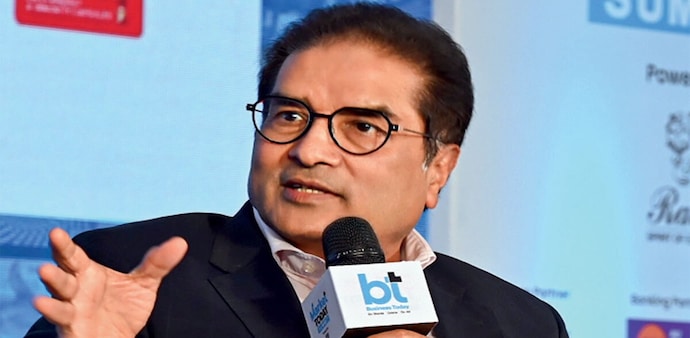
- Nov 3, 2026,
- Updated Nov 3, 2026 12:01 PM IST
Raamdeo Agrawal, Chairman and Co-Founder of Motilal Oswal Financial Services Ltd (MOFSL), expects strong earnings growth, saying Nifty could deliver 40-50 per cent returns over the next two to three years if earnings momentum sustains.
"From this Samvat to next Samvat, we will have roaring earnings growth. And the year in which the earnings growth is highest, the market usually performs in that year itself the best," the market veteran told Business Today in an exclusive interaction.
Agrawal said the market could still see some near-term downside, but the risk-reward equation appeared favourable for investors.
"Can indices go another 5-7 per cent lower? That is quite possible. I would say your downside-to-upside ratio is looking extremely favourable for investors. Your downside is maybe 5-7 per cent, or even 10 per cent, but upside is 40-50 per cent," he stated.
Discussing the factors influencing the Indian equity market, Agrawal said crude oil prices are not a long-term concern, while developments around artificial intelligence (AI) posed a more significant challenge, particularly for the Indian IT sector.
"Oil is not a very long-term problem, but AI trade is. India, on the other side of AI, where Indian IT was actually losing out to AI, is itself reversing. I don't see any force which is going particularly against India, but still the environment outside is challenging," he also said.
He also flagged the rupee's weakness as a factor to watch. "Rupee is still one thing to watch. And as the rupee becomes stronger and more stable, I think the confidence of foreign investors will come back, as earnings are already in place," Agrawal stated.
Indian IT sector needs to rediscover its growth model
Commenting on the outlook for IT stocks, Agrawal said, "IT stocks, like any other company, have two components: earnings and multiples. The multiples have seen a significant correction, and some recovery is now underway. Profitability and free cash flow have also remained resilient. So, I think the market could start valuing IT stocks more meaningfully as we move forward. The second aspect is growth. The headcount-driven growth model is clearly being questioned. Whether companies can grow from, let's say, a workforce of half a million to a million people while delivering IT services is becoming increasingly uncertain. So, after 30 years of building a headcount-driven IT model, I think the Indian IT sector will have to rediscover its growth model."
He also said, "This is a very challenging time, but I am optimistic that the sector will find its own way of servicing enterprises worldwide by acquiring new skills, retaining existing employees and strengthening its presence at the global enterprise level. However, what level of growth it can achieve remains to be seen. I am not particularly bullish on the growth outlook, but I believe the underlying franchise remains strong."
AI boom may continue, but correction could be deep
On the broader AI-driven market rally, Agrawal said, "The AI boom is going to continue in a slightly milder form, and hence, I do not think it is going to collapse. I would not call it a bubble, but I would say that it could correct, and the correction could be quite deep. That is my thinking because AI is not going anywhere. It is going to be there, and AI is very capital-intensive. Hence, as long as AI development continues, there will be capital investment and earnings opportunities because AI is being built. So, I would take a slightly more moderate view, but there could be a correction driven by AI deflation rather than a bubble burst."
He also said, "However, I think that if US earnings next year are not particularly encouraging on a year-on-year (YoY) basis, the market could slow down there and may even see a correction. In that situation, we might see some flows coming into emerging markets, particularly countries like India, where allocations have fallen significantly."