
BTTV Exclusive: Ashishkumar Chauhan explains why NSE went public now
Calling the IPO listing a formality, he said there was no mechanism in India to list without going through an IPO and, therefore, NSE decided to launch an offer for sale (OFS).
- Sep 24, 2026,
- Updated Sep 24, 2026 9:59 PM IST
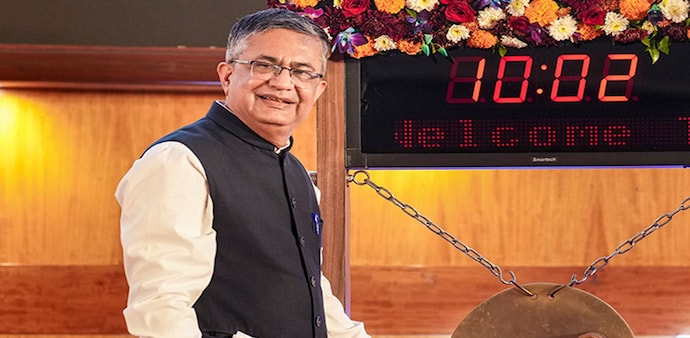
Ashishkumar Chauhan, Managing Director and CEO of the National Stock Exchange of India Ltd (NSE), on Thursday said India's largest stock exchange was effectively a listed company, as it had been reporting quarterly results and material events to the public, as any listed company would, for the past four-and-a-half years. He noted that NSE already had 2,00,000 investors even before its listing.
Calling the IPO listing a formality, he said there was no mechanism in India to list without going through an IPO and, therefore, NSE decided to launch an offer for sale (OFS).
Two options
"We had to do IPO, and we had two choices: to issue new shares, that brings a lot of capital in our book, or do the offer for sale. We did not require the new capital, because what will we do with that?" Chauhan said in an exclusive interview to BTTV.
Chauhan told Siddharth Zarabi, Group Editor at Business Today, that NSE was cash-rich and had already doled out Rs 8,000 crore worth of dividends each over the last two years and, thus, went for the OFS route.
Chauhan said the pricing decision in the OFS was more in the hands of the selling shareholders.
After roadshows in India and across the world and meeting insurance companies, pension funds and sovereign funds, merchant bankers suggested IPO offer price of Rs 1,785 apiece.
Cut in issue size
Chauhan said some of its shareholders told the exchange: "This number looks too small and we will reduce a bit of our offering. Therefore, we brought it down from 6.1 per cent to 5.1 per cent, something like that. And so the issue size came down on two counts. One is the number of shares being offered for the IPO reduced, and the value reduced a little bit. But overall, we have no promoters. Literally we have 100 per cent shares in public."
Lock-in shares
Chauhan's NSE settled at Rs 1,818 on listing day, up 1.85 per cent over its issue price of Rs 1,785. With its listing, it became the second most-valued Asian stock exchange. It also ended up as the 11th most-valued listed company in India, with a market capitalisation of Rs 4,49,955 crore at close.
On lock-in shares, Chauhan said since NSE has no promoter, 100 per cent of the float will be up for trade with the public after six months of lock-in period. That, he said, would reflect in the indices because free float does have a particular weight in the index selection process.
"This was the context and within which we had to take decisions on a dynamic basis, before getting listed," Chauhan said.
Ashishkumar Chauhan, Managing Director and CEO of the National Stock Exchange of India Ltd (NSE), on Thursday said India's largest stock exchange was effectively a listed company, as it had been reporting quarterly results and material events to the public, as any listed company would, for the past four-and-a-half years. He noted that NSE already had 2,00,000 investors even before its listing.
Calling the IPO listing a formality, he said there was no mechanism in India to list without going through an IPO and, therefore, NSE decided to launch an offer for sale (OFS).
Two options
"We had to do IPO, and we had two choices: to issue new shares, that brings a lot of capital in our book, or do the offer for sale. We did not require the new capital, because what will we do with that?" Chauhan said in an exclusive interview to BTTV.
Chauhan told Siddharth Zarabi, Group Editor at Business Today, that NSE was cash-rich and had already doled out Rs 8,000 crore worth of dividends each over the last two years and, thus, went for the OFS route.
Chauhan said the pricing decision in the OFS was more in the hands of the selling shareholders.
After roadshows in India and across the world and meeting insurance companies, pension funds and sovereign funds, merchant bankers suggested IPO offer price of Rs 1,785 apiece.
Cut in issue size
Chauhan said some of its shareholders told the exchange: "This number looks too small and we will reduce a bit of our offering. Therefore, we brought it down from 6.1 per cent to 5.1 per cent, something like that. And so the issue size came down on two counts. One is the number of shares being offered for the IPO reduced, and the value reduced a little bit. But overall, we have no promoters. Literally we have 100 per cent shares in public."
Lock-in shares
Chauhan's NSE settled at Rs 1,818 on listing day, up 1.85 per cent over its issue price of Rs 1,785. With its listing, it became the second most-valued Asian stock exchange. It also ended up as the 11th most-valued listed company in India, with a market capitalisation of Rs 4,49,955 crore at close.
On lock-in shares, Chauhan said since NSE has no promoter, 100 per cent of the float will be up for trade with the public after six months of lock-in period. That, he said, would reflect in the indices because free float does have a particular weight in the index selection process.
"This was the context and within which we had to take decisions on a dynamic basis, before getting listed," Chauhan said.