
Castrol India: EV sales surge a major risk for lubricant major? CFO explains
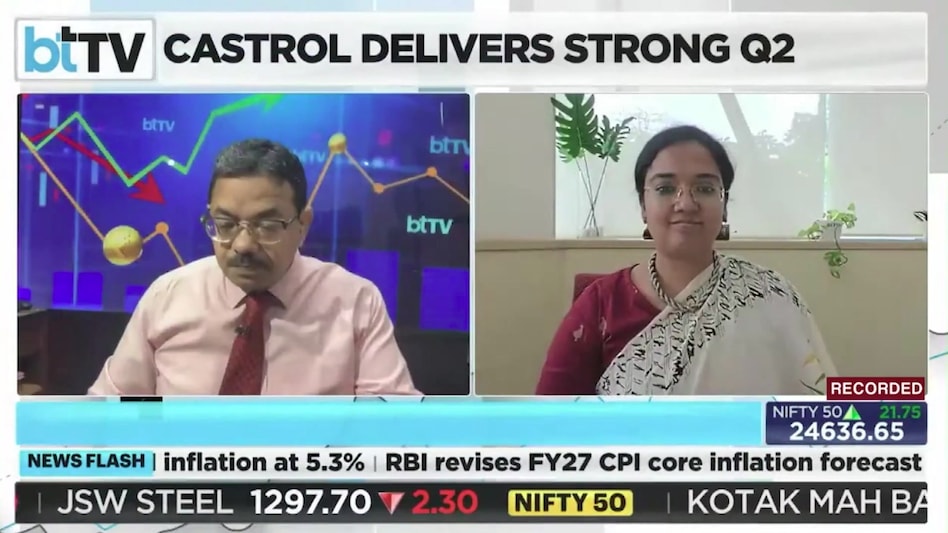
The EV sales data came at a time when Castrol India announced its Q2 earnings., Mrinalini Srinivasan, CFO & Whole-time Director spoke about the surge in electric vehicles sales and how the company plans to face the challenge going ahead.
- Aug 5, 2026,
- Updated Aug 5, 2026 5:02 PM IST
Castrol India, the automotives and industrial lubricants major, faces a major challenge as sales of EV vehicles surge across the country. According to a Nuvama report, registrations of electric passenger vehicles jumped 73% year-on-year to 31,138 units in July. In the first four months of FY27, electric passenger vehicle (E-PV) registrations have nearly doubled, surging 90% year-on-year to 119,343 units from 62,808 units in the corresponding period last year, brokerage Nuvama said.
The key data come at a time when Castrol India announced its Q2 earnings. In an exclusive interaction with BTTV, Mrinalini Srinivasan, CFO & Whole-time Director, Castrol India spoke about the surge in electric vehicles and how the company plans to face the challenge going ahead.
Srinivasan said the company has meaningful solutions for electrical mobility which it manufactures locally.
The company has worked very closely with EV OEMs to ensure growth within the EV space.
Srinivasan mentioned the company also has a MoU with Vietnam-based lead automotive EV manufacturer, VinFast.
Commenting on the journey out of the traditional fuels, she said the firm does not believe that the end state of electric vehicle is the only next step.
"We believe there will be a transition through many alternate fuels and we are really figuring out what the play for Castrol is in these alternate fuels. For example, auto industry results have just come out and CNG vehicles have actually led the path growth. I think CNG vehicle have grown 30%, uh, while the overall auto industry also saw a big peak in four-wheeler engines as well. And similarly, the transition will go through CNG, hybrids, potentially even other alternate fuels like for example hydrogen."
For that entire journey Castrol has joined hands with Original Equipment Manufacturers (OEMs) to make sure that its solutions are designed for those engines, Srinivasan said.
The company has a market share of 51% in lubricants in the car market, and a 28% share in the motorcycle, as well as a 20% share in commercial vehicles segment.
Q2 earnings
In Q2 of the current fiscal, net profit rose 42.5% year-on-year to Rs 347 crore from Rs 244 crore in the corresponding quarter last year. Revenue from operations rose 25% to Rs 1,871 crore in Q2 from rS 1,497 crore.
Castrol India reported a strong improvement in operating performance during the June quarter, led by higher profitability and expanding margins despite continued volatility in raw material costs.
Earnings before interest, tax, depreciation and amortisation (EBITDA) rose 40.8% year-on-year to Rs 599.4 crore, compared with Rs 425.7 crore in the corresponding quarter last year.
EBITDA margin expanded to 32.03% from 28.44% a year earlier, reflecting improved operating efficiency and effective cost management. The margin expansion indicates the company successfully mitigated the impact of fluctuating raw material prices, a key cost driver for lubricant manufacturers.
For the first half of calendar year 2026, Castrol India's revenue from operations increased 17% year-on-year to Rs 3,417 crore. EBITDA rose 25% to Rs 823 crore, while profit after tax climbed 24% to Rs 590 crore, highlighting sustained earnings momentum during the period.
Interim Dividend
The board approved an interim dividend of Rs 6.25 per equity share of face value Rs 5 each for the financial year ending December 31, 2026. The company fixed August 11, 2026, as the record date to determine shareholders eligible to receive the dividend. The interim dividend will be paid within 30 days of its declaration, in accordance with applicable regulations.
Castrol India, the automotives and industrial lubricants major, faces a major challenge as sales of EV vehicles surge across the country. According to a Nuvama report, registrations of electric passenger vehicles jumped 73% year-on-year to 31,138 units in July. In the first four months of FY27, electric passenger vehicle (E-PV) registrations have nearly doubled, surging 90% year-on-year to 119,343 units from 62,808 units in the corresponding period last year, brokerage Nuvama said.
The key data come at a time when Castrol India announced its Q2 earnings. In an exclusive interaction with BTTV, Mrinalini Srinivasan, CFO & Whole-time Director, Castrol India spoke about the surge in electric vehicles and how the company plans to face the challenge going ahead.
Srinivasan said the company has meaningful solutions for electrical mobility which it manufactures locally.
The company has worked very closely with EV OEMs to ensure growth within the EV space.
Srinivasan mentioned the company also has a MoU with Vietnam-based lead automotive EV manufacturer, VinFast.
Commenting on the journey out of the traditional fuels, she said the firm does not believe that the end state of electric vehicle is the only next step.
"We believe there will be a transition through many alternate fuels and we are really figuring out what the play for Castrol is in these alternate fuels. For example, auto industry results have just come out and CNG vehicles have actually led the path growth. I think CNG vehicle have grown 30%, uh, while the overall auto industry also saw a big peak in four-wheeler engines as well. And similarly, the transition will go through CNG, hybrids, potentially even other alternate fuels like for example hydrogen."
For that entire journey Castrol has joined hands with Original Equipment Manufacturers (OEMs) to make sure that its solutions are designed for those engines, Srinivasan said.
The company has a market share of 51% in lubricants in the car market, and a 28% share in the motorcycle, as well as a 20% share in commercial vehicles segment.
Q2 earnings
In Q2 of the current fiscal, net profit rose 42.5% year-on-year to Rs 347 crore from Rs 244 crore in the corresponding quarter last year. Revenue from operations rose 25% to Rs 1,871 crore in Q2 from rS 1,497 crore.
Castrol India reported a strong improvement in operating performance during the June quarter, led by higher profitability and expanding margins despite continued volatility in raw material costs.
Earnings before interest, tax, depreciation and amortisation (EBITDA) rose 40.8% year-on-year to Rs 599.4 crore, compared with Rs 425.7 crore in the corresponding quarter last year.
EBITDA margin expanded to 32.03% from 28.44% a year earlier, reflecting improved operating efficiency and effective cost management. The margin expansion indicates the company successfully mitigated the impact of fluctuating raw material prices, a key cost driver for lubricant manufacturers.
For the first half of calendar year 2026, Castrol India's revenue from operations increased 17% year-on-year to Rs 3,417 crore. EBITDA rose 25% to Rs 823 crore, while profit after tax climbed 24% to Rs 590 crore, highlighting sustained earnings momentum during the period.
Interim Dividend
The board approved an interim dividend of Rs 6.25 per equity share of face value Rs 5 each for the financial year ending December 31, 2026. The company fixed August 11, 2026, as the record date to determine shareholders eligible to receive the dividend. The interim dividend will be paid within 30 days of its declaration, in accordance with applicable regulations.