
PVR INOX CFO on growth outlook, screen expansion & debt reduction
Gaurav Sharma highlighted a strong upcoming film line-up, improving occupancy and premiumisation as key growth drivers. He also outlined plans to add 90-100 screens in FY27 through capital-light models while keeping capex under control.
- Nov 2, 2026,
- Updated Nov 2, 2026 3:11 PM IST
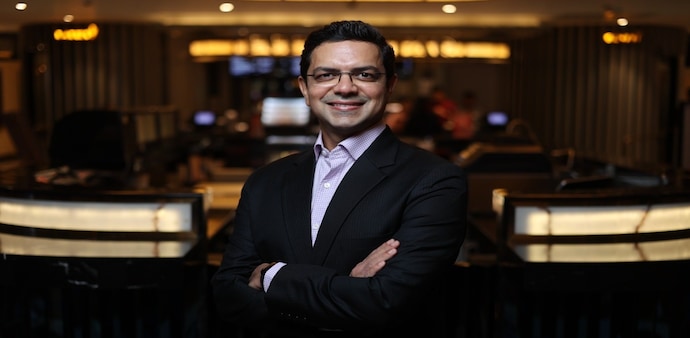
PVR INOX Chief Financial Officer (CFO) Gaurav Sharma, in an interaction with Business Today following the company's second-quarter (Q2 FY27) results, discussed its growth drivers, profitability outlook and expansion plans. He highlighted a strong upcoming film line-up, improving occupancy and premiumisation as key growth drivers. Sharma also outlined plans to add 90-100 screens in FY27 through capital-light models while keeping capex under control. He also discussed the company's improving cash position, debt reduction strategy and capital allocation policy.
Here are the edited excerpts from the interview:
Q) What are the key growth drivers for PVR INOX in the coming quarters, and how do you see the company's financial performance shaping up?
Sharma: The key growth drivers for us will be two-fold. One, of course, is the improvement in occupancy levels as we move forward. The line-up of films is very strong across Hindi, with Ramayana, Shah Rukh Khan's King, Love & War by Ranbir Kapoor, and many other small and mid-scale films.
There are also English films such as Avengers: Doomsday and Dune: Part Three. Some of the biggest regional films are also lined up for the remaining part of the financial year. So, admissions and occupancy will sustain.
That will be one piece of the growth. The second will be the new screens that we will add, which will contribute to additional footfalls and revenues for the business. So, both admission growth and improvement in occupancy, as well as new screen additions, will drive growth for the business.
Q) With rising operating costs and pressure on discretionary spending, how is PVR INOX working to improve profitability and margins?
Sharma: We are very focused on our costs and the discipline that the company has exhibited over the last two years after the merger to control costs and make our overall P&L leaner, which is now reflecting in the numbers. We will continue to be very focused on controlling all costs, especially the controllable fixed costs.
On discretionary spending, we don't think there is going to be any impact of the overall global macroeconomic environment on consumer spending in India, particularly for cinemas and the exhibition industry, because typically, spending is linked to people's appetite to go out and entertain themselves. Movie exhibition and cinema-going are among the most affordable forms of out-of-home entertainment for consumers in India.
So, while they may cut their spending on, let's say, travel and out-of-city trips for vacations and holidays, they may compensate for that with local spending on cinemas, going out, attending events or watching movies. And when people go out and watch movies, they want the best and most immersive experience. Whether it is IMAX, 4DX or other special formats, they tend to spend more on F&B. So, from our perspective, consumer discretionary spending will remain strong, and premiumisation will especially help us because, in the top cities in India, premium consumers are not affected by any pressure on discretionary spending.
Q) What is the outlook for screen additions and capital expenditure, and how does the company plan to balance expansion with debt reduction?
Sharma: We expect to open 90-100 screens in FY27, with most of the additions planned for the second half (H2) under capital-light models. We expect total capital expenditure (capex) to be in the range of Rs 300 crore to Rs 320 crore.
Overall, I think the way we have looked at our capex and screen additions is that, with our scale, size and very strong PVR and INOX brands, we have been able to leverage these strengths to move towards an asset-light model. In the new cinemas that we are opening, we are also seeing developers and landlords contributing to the capital expenditure.
As a result, the share of capex that PVR spends has reduced, and that is reflected in our capex numbers today. With the same amount of money, we can add more screens, and therefore, our capex intensity has come down. We expect that, with an increasing share of asset-light and franchise cinemas in our new screens, we will continue to open more screens while keeping our capex under control. Our capex intensity will be in the range of Rs 300 crore to Rs 350 crore every year.
Q) What are the key triggers investors should watch for in PVR INOX shares over the next 6–12 months, and what could drive a sustained recovery in the stock?
Sharma: I think, from a market perspective, financial performance will drive the overall performance of the business and also determine how the market and investors look at the company. Especially in the current global macroeconomic environment and given the way the Indian macroeconomic environment is shaping up, the exhibition business is doing very well.
Overall, I think that from a financial perspective also, we are doing exceptionally well. Our free cash flow is increasing.
In September, we announced our first share buyback, through which we distributed Rs 300 crore to our shareholders in the form of a share buyback. Our balance sheet is now nearly debt-free. We have net cash on our balance sheet, and cash generation will increase.
Now that the business has become net cash-positive, our board has approved our new capital allocation policy, which we have uploaded on the website. Investors should go through it, as we have laid out our capital allocation priorities.
The first priority is investing in growth, including new formats and new technology, and maintaining the circuit. The second is to continue maintaining the strength of our balance sheet and further reduce our gross debt levels. The third is that about 30 per cent of our surplus cash every year will be distributed to shareholders in the form of dividends or buybacks.
So, that will provide visibility to shareholders and the market in terms of receiving dividends and buybacks. Plus, it is a very strong signal from the company that cash flow generation in the business will be sustained in the medium to long term.
I think the first half (H1) of this year has been a very strong period for us and for the Indian box office as well, supported by a good mix of Hindi, Hollywood and regional films.
When I look at the second half, the line-up of films is also very strong, with several big films and major releases.
So, we expect the second half to be a strong period. Box office performance, at the end of the day, also depends on audience response to the movies. But, from a release perspective, there are a lot of big, small and medium-scale films lined up. The quality and scale of the upcoming films are very encouraging.
Based on the current slate and the industry momentum, we are very optimistic about the second half of the year, and we expect to build on our first-half performance.