
Capital markets must serve real economy, not the other way around: CEA
For India, the CEA said the challenge was particularly significant as the country entered a century increasingly defined by competition for energy, critical minerals, food, water, skilled people and capital.
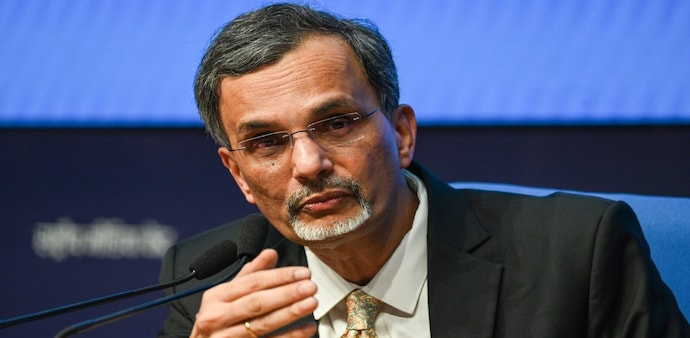
- Nov 20, 2026,
- Updated Nov 20, 2026 4:01 PM IST
The Chief Economic Adviser (CEA) has called for a fundamental shift in India's capital markets, arguing that financial markets must move away from short-term trading towards financing productive investment in manufacturing, agriculture and infrastructure.
Speaking at the CII DFS Financing Summit, the CEA said technology had made capital markets faster, safer and more accessible, but questioned whether these developments had brought them closer to their core purpose of converting household savings into productive investment.
"Finance stopped being the servant of production and became its master," the CEA said, arguing that financial markets globally had increasingly prioritised trading financial assets over supporting enterprises that build, manufacture and employ people.
The CEA identified five developments that contributed to this shift: advances in financial engineering, falling trading costs, shortening investment horizons, increased corporate share buybacks and the outsourcing of manufacturing. Together, these developments encouraged companies and investors to prioritise share prices and short-term returns over long-term productive capacity.
For India, the CEA said the challenge was particularly significant as the country entered a century increasingly defined by competition for energy, critical minerals, food, water, skilled people and capital.
While India had built a sizeable equity market, a credible regulator and digital public infrastructure, it had yet to develop a financial system capable of financing productive assets over 20–25 years, the CEA said.
India's equity market capitalisation stands at around 130% of GDP, while its corporate bond market is around 16% of GDP. The CEA pointed out that factories, power grids, ports and fabrication plants typically require long-term financing, highlighting the gap between the depth of India's financial markets and their ability to support capital-intensive investments.
The CEA also flagged the scale of activity in equity derivatives, noting that Sebi studies showed around 93% of individual traders in equity derivatives lost money in the three years up to March 2024, with combined losses of Rs 1.8 lakh crore.
"I am not against capital markets, I am for capital markets that does it regular job" he said.
Calling for a rethink of how market performance is measured, the CEA suggested focusing on capital raised for new investment rather than trading turnover. The CEA also called for longer investment horizons, greater stewardship by institutional investors and financial products that support businesses rather than speculation.