
FII outflows, market correction: Client Associates’ Himanshu Kohli on where investors should put their money now
Foreign investors have been increasing allocation in high-growth mid- and small-cap companies, while also actively participating in IPOs and QIPs. This suggests that FIIs are turning mildly constructive on India's earnings recovery
- Sep 10, 2026,
- Updated Sep 10, 2026 5:30 PM IST
Foreign investors have been increasing allocation in high-growth mid- and small-cap companies, while also actively participating in IPOs and QIPs. This suggests that FIIs are turning mildly constructive on India's earnings recovery
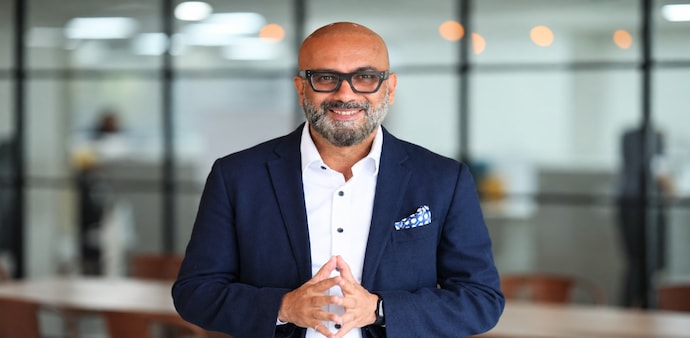
Foreign investors have pulled out nearly Rs 2.3 lakh crore from Indian equities in 2026, but domestic flows have helped cushion the impact. With FIIs turning buyers again in July and August, market sentiment is showing signs of improvement. In an interaction with BT, Himanshu Kohli, Co-founder of Client Associates, explains what is driving foreign investor flows, where he sees value after the market correction and how investors should approach equities, debt, gold and international assets. He also shares his outlook for Indian equities over the next 12–18 months and the triggers that could drive the next rally.
Q). Foreign investors have been pulling money out of Indian markets sharply. What is driving these FII outflows, and how concerned should retail investors be about their impact on Indian equities?
Himanshu Kohli: Foreign Institutional Investors (FIIs) have been significant sellers of Indian equities in 2026, with net outflows of approximately Rs 2.3 lakh crore during the calendar year, leading to a fall in FII ownership to 15.1% (NSE-listed companies), the lowest since 2009. This follows two years of FII outflows with Rs 1.9 lakh crore in 2025 and Rs 56,000 crore in 2024. However, there has been a notable improvement in sentiment recently, with FIIs turning net buyers in July and August 2026, investing nearly Rs 20,000 crore and Rs 27,000 crore, respectively.
FII outflows have been driven by a combination of factors, including the West Asia conflict, a steep rise in crude oil prices, sharp depreciation of the Indian rupee from around Rs 85 to Rs 96 per US dollar in FY26, elevated US interest rates, and a strong US dollar. Additionally, there has also been a broader global capital reallocation underway, with investors increasingly directing funds toward AI and high-growth, technology-driven opportunities in markets such as Taiwan, South Korea and the US.
Despite the large FII outflows, Indian markets have demonstrated remarkable resilience led by strong Domestic Institutional Investors (DIIs) flows supported by strong retail SIP contributions and insurance inflows. Domestic investors have deployed nearly Rs 5.0 lakh crore into the market this year, providing a strong liquidity cushion and reducing India's dependence on foreign capital.
Historically, FII flows have gravitated toward markets offering a combination of strong earnings growth, robust macro, and currency stability. The return of FII inflows in July and August coincides with improving macro conditions, including a more stable rupee, moderating external risks, and continued strength in corporate earnings. Notably, foreign investors have been increasing allocation in high-growth mid- and small-cap companies, while also actively participating in IPOs and QIPs. This suggests that FIIs are turning mildly constructive on India's earnings recovery and are selectively allocating capital to businesses capable of delivering superior earnings growth.
Q). After the recent market correction, where are you seeing the most attractive opportunities from a valuation and earnings perspective? Which sectors or themes are you most positive on at current levels?
Kohli: We remain positive on the Banking & Financial Services sector, supported by improving credit growth, healthy deposit growth, and valuations that remain attractive relative to historical averages. Additionally, the pressure on net interest margins (NIMs), which weighed on profitability over the past year, is expected to ease as the interest rate cycle stabilises and the benefits of FCNR-related inflows gradually flow through the system.
We also favour the Consumer Discretionary sector, which continues to benefit from fiscal support measures, including income tax and GST-related relief, alongside resilient consumer demand as reflected in various high-frequency economic indicators. The ongoing premiumization trend and improving household spending power further strengthen the sector's growth outlook.
In addition, we remain constructive on the Specialty Chemicals segment. The sector seems to be turning around after a prolonged low growth phase and is well positioned to benefit from a gradual recovery in demand, commercialisation of new products, ongoing capacity expansions, and global supply chain diversification away from China. These factors, coupled with a strong earnings growth trajectory, provide a favourable medium-term outlook for the sector.
Q). In the current environment of uncertainty around interest rates, the rupee and global tensions, how should investors allocate between equities, debt, gold and other asset classes?
Kohli: Asset allocation should be tailored to an investor's risk profile, cash flow requirements, investment horizon, and financial goals. The optimal mix of assets varies across individuals and should align with their risk appetite to withstand market volatility, meet liquidity needs, and achieve long-term investment objectives. We remain constructive on equities, supported by healthy earnings growth, robust macroeconomic fundamentals, and a more favourable valuation backdrop. Large-cap valuations are now close to their long-term averages, while mid- and small-cap valuations have moderated from recent peaks driven by strong earnings growth. Investors can consider gradually increasing equity exposure in a staggered manner and deploy a lump sum in case of a market dip while maintaining their long-term strategic allocation to debt. Generally, we have seen that many of our clients are under-allocated to international assets. They should look to align their global allocations to their strategic allocations along with maintaining a mid- to high-single-digit allocation to Gold.
Q). Are Indian HNIs, UHNIs and family offices currently holding unusually high levels of cash? If so, what are they waiting for before deploying that capital, and what could trigger a meaningful increase in investments?
Kohli: While HNIs, UHNIs and family offices were holding cash during the initial part of CY26, the March correction allowed them to deploy into equities. Currently, most of the large clients are holding cash as per their strategic asset allocation. Any new liquidity of clients, however, is being deployed in a staggered manner.
Q). After a strong rally in recent years, Indian equity markets are currently going through a consolidation phase. How important is global diversification for Indian investors, and which overseas markets or asset classes are attracting the most interest?
Kohli: Indian equities have historically moved through periods of consolidation followed by strong recoveries. We have seen this cycle play out multiple times in the last decade during Jan’18-Jan’20, Oct’21-Mar’23 or the current phase starting Sep’24. History suggests that market consolidation, whether driven by economic slowdown or FII outflows, is often followed by recovery phases over the subsequent 18-24 months, supported by macroeconomic recovery, earnings rebound, robust capital flows and improving investor sentiment.
Global diversification helps mitigate risks arising from domestic market underperformance, currency depreciation, or concentration in a single economy. A measured allocation to international equities can serve as an effective hedge against rupee depreciation and provide exposure to themes that are underrepresented in India. Global Markets have generated strong outperformance over domestic markets in the last 2 years, with the United States, Taiwan, Japan and South Korea leading the rally driven by global capital flows into AI-related opportunities and semiconductor-led growth. That said, these markets now trade at elevated valuations, and the eventual return on investments (ROI) of AI capex remains to be seen. Rather than chasing recent winners through concentrated bets, investors should maintain their strategic asset allocation and allocate to developed markets like the US through passives and emerging markets through a diversified fund.
Must Read: Bahrain Court rejects claims by investors in Credit Suisse AT1 bonds case against HDFC Bank
Q). What could be the next major trigger for a sustained rally in Indian equities?
Kohli: India’s macroeconomic fundamentals remain strong, supported by a fiscal deficit of 4.4%, the RBI’s GDP growth estimate of 6.7%, robust foreign exchange reserves, CPI inflation of 4.45% in July and a pickup in government capital expenditure. These factors provide a solid foundation for both investment- and consumption-led growth.
From an equity market perspective, earnings growth has remained robust across market-cap segments, while valuations have moderated following a time correction in markets in the last 2 years.
Looking ahead, the key drivers for Indian equities include reasonable valuations, robust credit growth in the economy, strong consumption demand reflected by high-frequency indicators and renewed FII inflows as witnessed in July and August. Any resolution to the West Asia conflict could prove to be a positive trigger for risk assets. However, key risks remain the elevated crude prices leading to high commodity inflation, hawkish global and local central banks and below-normal monsoon.
Q). Looking ahead over the next 12–18 months, what is your broad outlook for Indian equities?
Kohli: Aggregate earnings of the Nifty-500 universe grew 13% YoY in 1QFY27; however, excluding OMCs, which had losses due to rising oil prices, earnings growth was significantly stronger at 23% YoY. Small caps led the 1QFY27 earnings performance of the Nifty-500, with the Nifty Smallcap-250 Index reporting 35% YoY growth. Nifty Midcap-150 Index (ex-OMC) also delivered a strong 30% YoY growth, while large caps (ex-OMCs) reported 20% YoY growth, the highest in 10 quarters.
After a relatively subdued earnings phase over the past 6-8 quarters, corporate profitability has regained momentum, driven by broad-based earnings growth across sectors and improving operating metrics. With valuations having moderated from previously elevated levels and earnings outlook remaining healthy, the long-term outlook for Indian equities continues to remain constructive.
Looking ahead, forward earnings growth for FY27 is expected to remain robust, as Nifty 50 is expected to deliver earnings growth upwards of 15% and mid- and small-cap segments are projected to deliver over 20% earnings growth, with small caps potentially growing at a slightly faster pace than mid-caps. While valuations across the broader universe remain elevated relative to historical averages, attractive opportunities continue to exist in select pockets where strong earnings growth is supported by reasonable valuations.
Foreign investors have been increasing allocation in high-growth mid- and small-cap companies, while also actively participating in IPOs and QIPs. This suggests that FIIs are turning mildly constructive on India's earnings recovery
Foreign investors have pulled out nearly Rs 2.3 lakh crore from Indian equities in 2026, but domestic flows have helped cushion the impact. With FIIs turning buyers again in July and August, market sentiment is showing signs of improvement. In an interaction with BT, Himanshu Kohli, Co-founder of Client Associates, explains what is driving foreign investor flows, where he sees value after the market correction and how investors should approach equities, debt, gold and international assets. He also shares his outlook for Indian equities over the next 12–18 months and the triggers that could drive the next rally.
Q). Foreign investors have been pulling money out of Indian markets sharply. What is driving these FII outflows, and how concerned should retail investors be about their impact on Indian equities?
Himanshu Kohli: Foreign Institutional Investors (FIIs) have been significant sellers of Indian equities in 2026, with net outflows of approximately Rs 2.3 lakh crore during the calendar year, leading to a fall in FII ownership to 15.1% (NSE-listed companies), the lowest since 2009. This follows two years of FII outflows with Rs 1.9 lakh crore in 2025 and Rs 56,000 crore in 2024. However, there has been a notable improvement in sentiment recently, with FIIs turning net buyers in July and August 2026, investing nearly Rs 20,000 crore and Rs 27,000 crore, respectively.
FII outflows have been driven by a combination of factors, including the West Asia conflict, a steep rise in crude oil prices, sharp depreciation of the Indian rupee from around Rs 85 to Rs 96 per US dollar in FY26, elevated US interest rates, and a strong US dollar. Additionally, there has also been a broader global capital reallocation underway, with investors increasingly directing funds toward AI and high-growth, technology-driven opportunities in markets such as Taiwan, South Korea and the US.
Despite the large FII outflows, Indian markets have demonstrated remarkable resilience led by strong Domestic Institutional Investors (DIIs) flows supported by strong retail SIP contributions and insurance inflows. Domestic investors have deployed nearly Rs 5.0 lakh crore into the market this year, providing a strong liquidity cushion and reducing India's dependence on foreign capital.
Historically, FII flows have gravitated toward markets offering a combination of strong earnings growth, robust macro, and currency stability. The return of FII inflows in July and August coincides with improving macro conditions, including a more stable rupee, moderating external risks, and continued strength in corporate earnings. Notably, foreign investors have been increasing allocation in high-growth mid- and small-cap companies, while also actively participating in IPOs and QIPs. This suggests that FIIs are turning mildly constructive on India's earnings recovery and are selectively allocating capital to businesses capable of delivering superior earnings growth.
Q). After the recent market correction, where are you seeing the most attractive opportunities from a valuation and earnings perspective? Which sectors or themes are you most positive on at current levels?
Kohli: We remain positive on the Banking & Financial Services sector, supported by improving credit growth, healthy deposit growth, and valuations that remain attractive relative to historical averages. Additionally, the pressure on net interest margins (NIMs), which weighed on profitability over the past year, is expected to ease as the interest rate cycle stabilises and the benefits of FCNR-related inflows gradually flow through the system.
We also favour the Consumer Discretionary sector, which continues to benefit from fiscal support measures, including income tax and GST-related relief, alongside resilient consumer demand as reflected in various high-frequency economic indicators. The ongoing premiumization trend and improving household spending power further strengthen the sector's growth outlook.
In addition, we remain constructive on the Specialty Chemicals segment. The sector seems to be turning around after a prolonged low growth phase and is well positioned to benefit from a gradual recovery in demand, commercialisation of new products, ongoing capacity expansions, and global supply chain diversification away from China. These factors, coupled with a strong earnings growth trajectory, provide a favourable medium-term outlook for the sector.
Q). In the current environment of uncertainty around interest rates, the rupee and global tensions, how should investors allocate between equities, debt, gold and other asset classes?
Kohli: Asset allocation should be tailored to an investor's risk profile, cash flow requirements, investment horizon, and financial goals. The optimal mix of assets varies across individuals and should align with their risk appetite to withstand market volatility, meet liquidity needs, and achieve long-term investment objectives. We remain constructive on equities, supported by healthy earnings growth, robust macroeconomic fundamentals, and a more favourable valuation backdrop. Large-cap valuations are now close to their long-term averages, while mid- and small-cap valuations have moderated from recent peaks driven by strong earnings growth. Investors can consider gradually increasing equity exposure in a staggered manner and deploy a lump sum in case of a market dip while maintaining their long-term strategic allocation to debt. Generally, we have seen that many of our clients are under-allocated to international assets. They should look to align their global allocations to their strategic allocations along with maintaining a mid- to high-single-digit allocation to Gold.
Q). Are Indian HNIs, UHNIs and family offices currently holding unusually high levels of cash? If so, what are they waiting for before deploying that capital, and what could trigger a meaningful increase in investments?
Kohli: While HNIs, UHNIs and family offices were holding cash during the initial part of CY26, the March correction allowed them to deploy into equities. Currently, most of the large clients are holding cash as per their strategic asset allocation. Any new liquidity of clients, however, is being deployed in a staggered manner.
Q). After a strong rally in recent years, Indian equity markets are currently going through a consolidation phase. How important is global diversification for Indian investors, and which overseas markets or asset classes are attracting the most interest?
Kohli: Indian equities have historically moved through periods of consolidation followed by strong recoveries. We have seen this cycle play out multiple times in the last decade during Jan’18-Jan’20, Oct’21-Mar’23 or the current phase starting Sep’24. History suggests that market consolidation, whether driven by economic slowdown or FII outflows, is often followed by recovery phases over the subsequent 18-24 months, supported by macroeconomic recovery, earnings rebound, robust capital flows and improving investor sentiment.
Global diversification helps mitigate risks arising from domestic market underperformance, currency depreciation, or concentration in a single economy. A measured allocation to international equities can serve as an effective hedge against rupee depreciation and provide exposure to themes that are underrepresented in India. Global Markets have generated strong outperformance over domestic markets in the last 2 years, with the United States, Taiwan, Japan and South Korea leading the rally driven by global capital flows into AI-related opportunities and semiconductor-led growth. That said, these markets now trade at elevated valuations, and the eventual return on investments (ROI) of AI capex remains to be seen. Rather than chasing recent winners through concentrated bets, investors should maintain their strategic asset allocation and allocate to developed markets like the US through passives and emerging markets through a diversified fund.
Must Read: Bahrain Court rejects claims by investors in Credit Suisse AT1 bonds case against HDFC Bank
Q). What could be the next major trigger for a sustained rally in Indian equities?
Kohli: India’s macroeconomic fundamentals remain strong, supported by a fiscal deficit of 4.4%, the RBI’s GDP growth estimate of 6.7%, robust foreign exchange reserves, CPI inflation of 4.45% in July and a pickup in government capital expenditure. These factors provide a solid foundation for both investment- and consumption-led growth.
From an equity market perspective, earnings growth has remained robust across market-cap segments, while valuations have moderated following a time correction in markets in the last 2 years.
Looking ahead, the key drivers for Indian equities include reasonable valuations, robust credit growth in the economy, strong consumption demand reflected by high-frequency indicators and renewed FII inflows as witnessed in July and August. Any resolution to the West Asia conflict could prove to be a positive trigger for risk assets. However, key risks remain the elevated crude prices leading to high commodity inflation, hawkish global and local central banks and below-normal monsoon.
Q). Looking ahead over the next 12–18 months, what is your broad outlook for Indian equities?
Kohli: Aggregate earnings of the Nifty-500 universe grew 13% YoY in 1QFY27; however, excluding OMCs, which had losses due to rising oil prices, earnings growth was significantly stronger at 23% YoY. Small caps led the 1QFY27 earnings performance of the Nifty-500, with the Nifty Smallcap-250 Index reporting 35% YoY growth. Nifty Midcap-150 Index (ex-OMC) also delivered a strong 30% YoY growth, while large caps (ex-OMCs) reported 20% YoY growth, the highest in 10 quarters.
After a relatively subdued earnings phase over the past 6-8 quarters, corporate profitability has regained momentum, driven by broad-based earnings growth across sectors and improving operating metrics. With valuations having moderated from previously elevated levels and earnings outlook remaining healthy, the long-term outlook for Indian equities continues to remain constructive.
Looking ahead, forward earnings growth for FY27 is expected to remain robust, as Nifty 50 is expected to deliver earnings growth upwards of 15% and mid- and small-cap segments are projected to deliver over 20% earnings growth, with small caps potentially growing at a slightly faster pace than mid-caps. While valuations across the broader universe remain elevated relative to historical averages, attractive opportunities continue to exist in select pockets where strong earnings growth is supported by reasonable valuations.