
What will it take for a sustained bull run on Dalal Street? Kotak Life CIO weighs in
After months of sell-off, foreign portfolio investors turned net buyers in July, which are encouraging signs, but perhaps still not a start of a sustained trend, according to Deshpande
- Aug 4, 2026,
- Updated Aug 4, 2026 6:07 PM IST
India’s equity market has been among some of the worst performing markets this year, amid ongoing geopolitical tensions, a massive sell-off by foreign institutional investors and worries over how the war in West Asia will impact India’s economy and government finances. Year-to-date the BSE Sensex is down around 8%, while the NSE Nifty50 has shed 6%. In contrast, the US S&P 500 is up around 11% and the Nikkei 225 has gained over 23%. The Taiwan Index (TAIEX) has jumped 48%.
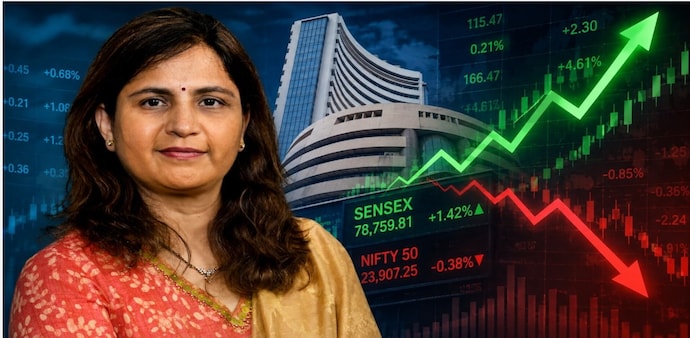
Radhavi Deshpande, the chief investment officer of Kotak Mahindra Life Insurance, remains optimistic like many others, on the medium-term prospects of India’s equity market. However, strong corporate earnings and reduction in geopolitical tensions among other things will be key to a sustainable market recovery, she stressed.
“India already has strong domestic institutional participation, but a durable bull market will be driven by improving earnings, stable macro conditions and renewed foreign participation and not by liquidity alone. Over the medium term, I remain optimistic because India’s structural growth drivers' formalisation, manufacturing expansion, financialisation of savings and rising domestic consumption remain firmly in place,” she pointed.
Amid the global uncertainty and AI-related opportunities in markets from Taiwan to Korea and the United States, FIIs have been heavily selling from the Indian market. So far in 2026, up to August 4, foreign portfolio investors have offloaded more than Rs 2.51 lakh crore from India’s equity market, according to data from NSDL.
However, the tide seemed to be turning, with FPIs turning net buyers of late. In July, FPIs invested Rs 20,200 crore in the equity market and have further added Rs 2,782 crore so far in August.
While the signs are encouraging, Deshpande still doesn’t see it as a start of a sustained trend.
“Global investors are still weighing several important variables: US interest rates, geopolitical risks, and relative valuations across emerging markets. India continues to trade at a premium, so the future flows will hinge much more on earnings performance rather than just liquidity,” she said.
What gives her confidence in this backdrop is India’s strong macro fundamentals, which remain among the best in the emerging market universe, according to her.
“We are seeing moderating inflation, a healthy banking system, robust domestic savings, and ongoing government capital expenditure. These factors make India a preferred structural allocation for investors, even if tactical FII flows stay volatile for now,” said Deshpande.
Where does she find opportunities right now? The financial sector continues to remain attractive given improving credit quality and healthy balance sheets, she noted.
“We also like areas linked to manufacturing, infrastructure, premium consumption and digital transformation where long-term growth drivers remain intact,” Deshpande said.
She also remains selective in pockets where valuations already discount several years of growth, leaving very little room for disappointment. Businesses facing margin pressure, weak pricing power or excessive leverage also deserve greater scrutiny, she added.
“The market is increasingly rewarding earnings quality and balance sheet strength rather than simply high growth,” according to Deshpande.
The Reserve Bank of India’s monetary policy committee (MPC) will announce its decision on interest rates on Wednesday. Deshpande feels the central bank will continue to remain data dependent and any possible rate action was only likely in the January-March quarter of 2027.
“If inflation remains broadly within the target range and any food price pressures turn out to be temporary, the RBI has the flexibility to keep rates on hold,” she felt. She pointed that the MPC has repeatedly shown a preference for maintaining macro stability, instead of reacting hastily to short-term fluctuations.
“Even if inflation sees a slight uptick due to commodity price changes, we expect the RBI to carefully distinguish between those temporary supply-side shocks and more persistent demand-driven inflation. Only if the latter scenario becomes evident would they seriously consider tightening earlier in this year,” stated Deshpande.
India’s equity market has been among some of the worst performing markets this year, amid ongoing geopolitical tensions, a massive sell-off by foreign institutional investors and worries over how the war in West Asia will impact India’s economy and government finances. Year-to-date the BSE Sensex is down around 8%, while the NSE Nifty50 has shed 6%. In contrast, the US S&P 500 is up around 11% and the Nikkei 225 has gained over 23%. The Taiwan Index (TAIEX) has jumped 48%.
Radhavi Deshpande, the chief investment officer of Kotak Mahindra Life Insurance, remains optimistic like many others, on the medium-term prospects of India’s equity market. However, strong corporate earnings and reduction in geopolitical tensions among other things will be key to a sustainable market recovery, she stressed.
“India already has strong domestic institutional participation, but a durable bull market will be driven by improving earnings, stable macro conditions and renewed foreign participation and not by liquidity alone. Over the medium term, I remain optimistic because India’s structural growth drivers' formalisation, manufacturing expansion, financialisation of savings and rising domestic consumption remain firmly in place,” she pointed.
Amid the global uncertainty and AI-related opportunities in markets from Taiwan to Korea and the United States, FIIs have been heavily selling from the Indian market. So far in 2026, up to August 4, foreign portfolio investors have offloaded more than Rs 2.51 lakh crore from India’s equity market, according to data from NSDL.
However, the tide seemed to be turning, with FPIs turning net buyers of late. In July, FPIs invested Rs 20,200 crore in the equity market and have further added Rs 2,782 crore so far in August.
While the signs are encouraging, Deshpande still doesn’t see it as a start of a sustained trend.
“Global investors are still weighing several important variables: US interest rates, geopolitical risks, and relative valuations across emerging markets. India continues to trade at a premium, so the future flows will hinge much more on earnings performance rather than just liquidity,” she said.
What gives her confidence in this backdrop is India’s strong macro fundamentals, which remain among the best in the emerging market universe, according to her.
“We are seeing moderating inflation, a healthy banking system, robust domestic savings, and ongoing government capital expenditure. These factors make India a preferred structural allocation for investors, even if tactical FII flows stay volatile for now,” said Deshpande.
Where does she find opportunities right now? The financial sector continues to remain attractive given improving credit quality and healthy balance sheets, she noted.
“We also like areas linked to manufacturing, infrastructure, premium consumption and digital transformation where long-term growth drivers remain intact,” Deshpande said.
She also remains selective in pockets where valuations already discount several years of growth, leaving very little room for disappointment. Businesses facing margin pressure, weak pricing power or excessive leverage also deserve greater scrutiny, she added.
“The market is increasingly rewarding earnings quality and balance sheet strength rather than simply high growth,” according to Deshpande.
The Reserve Bank of India’s monetary policy committee (MPC) will announce its decision on interest rates on Wednesday. Deshpande feels the central bank will continue to remain data dependent and any possible rate action was only likely in the January-March quarter of 2027.
“If inflation remains broadly within the target range and any food price pressures turn out to be temporary, the RBI has the flexibility to keep rates on hold,” she felt. She pointed that the MPC has repeatedly shown a preference for maintaining macro stability, instead of reacting hastily to short-term fluctuations.
“Even if inflation sees a slight uptick due to commodity price changes, we expect the RBI to carefully distinguish between those temporary supply-side shocks and more persistent demand-driven inflation. Only if the latter scenario becomes evident would they seriously consider tightening earlier in this year,” stated Deshpande.