
Where should investors put their money? PL Wealth CEO has some tips
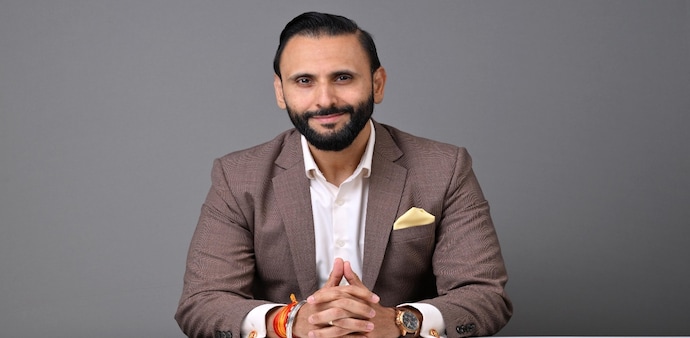
PL Wealth CEO Inderbir Singh Jolly discusses market valuations, earnings outlook, sectoral opportunities, gold, and investment strategies that can help investors build long-term wealth
- Jun 29, 2026,
- Updated Jun 29, 2026 6:01 PM IST
Markets may have recovered from their recent lows, but volatility in crude oil prices, geopolitical tensions, rising inflation and sustained foreign fund outflows continue to cloud the outlook. With valuations turning reasonable but uncertainty still elevated, investors are grappling with one key question: should they invest aggressively or wait for more clarity?
In an interaction with Business Today, Inderbir Singh Jolly, CEO of PL Wealth, shares his outlook on market valuations, earnings, sectoral opportunities, gold investments and the ideal investment strategy for navigating the next phase of the market.
Don't Miss | Sensex, Nifty close in the red: Why markets fell and what to expect next
Edited excerpts
Q. Do you think current market valuations are attractive enough for fresh investments, or should investors stagger their investments more cautiously over the next few months?
I would say both, but with a clear preference for staggered investing.
After a strong April rally, the market has recovered meaningfully from its lows. Even so, the Nifty remains around 15% below its 52-week high and is trading at nearly 16.5x one-year forward earnings, about a 13–14% discount to its 15-year average. Valuations are reasonable, but not cheap enough to justify aggressive lumpsum investing.
The current recovery appears to be driven more by liquidity and positioning than by a broad improvement in fundamentals. Our 12-month base-case target for the Nifty is 26,449 points, but the wide gap between our bull and bear case reflects uncertainty around crude oil prices, the West Asia conflict, El Niño and FII flows.
Rather than trying to time the market, investors should adopt a disciplined SIP approach and stagger fresh investments over the next three to six months, especially into quality large-cap and flexi-cap strategies. I would remain selective in mid- and small-cap stocks, where pockets of expensive valuations still exist.
India's long-term fundamentals remain strong. Manufacturing and services PMIs continue to outperform most major economies, making India one of the most attractive structural growth stories globally. The opportunity is compelling, but the near-term calls for patience and selectivity.
Q. After the sharp rally in gold and silver, can these still be considered safe-haven investments? How should investors balance the allocation between equities and precious metals?
Gold has evolved beyond being just an inflation or currency hedge. It has become a strategic reserve asset, supported by sustained central bank buying and sovereign diversification away from the US dollar. That structural demand provides a much stronger floor than in previous cycles.
The fact that gold has held above $4,000 an ounce despite elevated US yields and a firm dollar highlights this shift. While a hawkish US Federal Reserve could push prices towards the $3,800–4,000 range, we would view such corrections as buying opportunities rather than a structural reversal.
Silver, on the other hand, remains a tactical play. Although the physical supply deficit is supportive, its industrial nature makes it far more volatile and suitable only for investors who can tolerate sharp price swings.
For long-term investors, a strategic allocation of 10–15% to gold continues to make sense as a portfolio diversifier. Equities remain the primary driver of wealth creation, while gold provides stability during periods of uncertainty.
Q. What is the biggest mistake investors make during volatile phases, and how should they approach such periods instead?
The biggest mistake investors make is allowing short-term market movements to dictate long-term investment decisions. They often buy when sentiment is euphoric and sell when fear dominates—the exact opposite of successful investing.
We saw this earlier this year when the Nifty corrected nearly 15%. Many investors exited mid- and small-cap funds at losses, only to miss the sharp recovery that followed in April.
Another common mistake is confusing volatility with risk. Volatility reflects temporary price fluctuations, while real risk is the permanent loss of capital. A fundamentally strong business does not lose its long-term value simply because crude oil prices rise or foreign investors turn cautious for a few months.
My advice is simple. Continue your SIPs regardless of market conditions, avoid tracking your portfolio every day, and review it periodically with your financial advisor. Corrections often create attractive opportunities to accumulate quality businesses. Investors can also use fixed-income products to improve portfolio stability during uncertain periods.
The investors who created the most wealth over the past two decades were not those who perfectly timed the market. They were the ones who remained invested through every major correction—from the global financial crisis and the 2013 currency turmoil to the Covid-19 crash.
Q. Which pockets of the market currently look more attractive from a long-term perspective—large-caps, midcaps, or select themes/sectors?
Our preference remains firmly tilted towards quality large-cap companies as the core of portfolios, complemented by selective exposure to structural growth themes. At the same time, we remain cautious on broad-based participation in the mid- and small-cap space, where valuations continue to look stretched in pockets.
Among sectors, we are constructive on private sector banks and NBFCs, supported by healthy credit growth and strong balance sheets. Capital goods, infrastructure and defence continue to benefit from sustained government capex, rising investments across power transmission, railways, renewables, semiconductors and data centres, along with the long-term opportunity from defence indigenisation.
We also like telecom, where industry consolidation and improving ARPU (Average Revenue Per User) are supporting earnings growth, as well as healthcare and pharmaceuticals, backed by steady demand and improving domestic prospects. Metals are becoming attractive as infrastructure spending supports demand and cost pressures ease.
Over the next five to ten years, themes such as data centres, renewables, railways, ports, shipbuilding and semiconductors offer compelling long-term growth potential as India's investment cycle continues to strengthen.
On the other hand, we remain cautious about IT services due to weak global demand and AI-related uncertainty. Consumer discretionary, chemicals and parts of the auto sector could also face near-term challenges from rising input costs and moderating demand.
Our investment philosophy remains unchanged: focus on companies with strong balance sheets, visible earnings and sustainable growth rather than chasing momentum across sectors or market capitalisations.
Q. For a first-time retail investor starting today, what would an ideal long-term wealth creation strategy look like in equities over the next 5–10 years?
For a first-time investor, simplicity and consistency are far more valuable than trying to time the market.
India's long-term growth story remains compelling, driven by favourable demographics, rising consumption, manufacturing, infrastructure spending, digital adoption and the increasing financialisation of household savings. These structural drivers are likely to outlast short-term market corrections and geopolitical uncertainties.
I would recommend building the portfolio in layers. Start with diversified large-cap index funds or flexi-cap funds, which offer broad market exposure, professional management and a strong foundation for long-term wealth creation.
As the investment corpus grows, investors can gradually add exposure to structural themes such as manufacturing, infrastructure, banking and financial services, and healthcare through well-managed mutual funds or PMS strategies. Alongside equities, maintaining a strategic allocation of 10–15% to gold can provide diversification and improve portfolio resilience.
Above all, remain disciplined with SIPs. History shows that investors who continued investing through every market cycle have consistently outperformed those who stayed on the sidelines waiting for the perfect entry point.
Finally, understand your own risk appetite before deciding your asset allocation. The best portfolio is not the most aggressive one, it is the one you can stay invested in through market volatility without panicking.
Q. How would you assess Corporate India's earnings performance so far in FY26 and the latest quarter? What trends are emerging across sectors?
Corporate India's FY26 earnings reflect resilience, although the quality of growth has become increasingly selective across sectors.
Our coverage universe reported sales growth of about 10.3% year-on-year in Q4FY26, broadly in line with expectations. EBITDA rose 7.6%, while PBT grew 8.7%, both modestly ahead of estimates. Excluding BFSI, EBITDA and PAT grew 8.8% and 13.5%, respectively. However, Nifty free-float EPS increased just 1.6% for the full year, highlighting the drag from oil-sensitive and globally exposed sectors.
Sector-wise, autos, ports, real estate, renewable equipment, EMS and financial services delivered strong revenue growth. Logistics, renewable equipment and building materials stood out on profitability, while hospitals, asset management companies and financial services also reported healthy earnings.
At the same time, earnings downgrades significantly outnumbered upgrades, particularly in capital goods, IT, consumer durables and chemicals. In many cases, this reflected rich valuations after a strong rally rather than any meaningful deterioration in business fundamentals.
Looking ahead, we expect Nifty EPS to grow at nearly 16% CAGR over FY26–28. The outlook remains constructive, provided external risks such as higher crude prices, El Niño and a global slowdown do not intensify.
Q. What do recent earnings trends and other factors indicate about the market outlook going forward?
The earnings trend, combined with the macro environment, suggests an economy that remains fundamentally strong but is navigating an increasingly challenging global backdrop.
India continues to stand out among major economies, with robust manufacturing and services activity, healthy credit growth and sustained government capital expenditure. Domestic institutional inflows have remained resilient despite continued FPI selling, highlighting the growing role of domestic liquidity in supporting markets.
That said, investors cannot ignore the risks. Higher crude oil prices are adding pressure on inflation and the current account. The RBI has revised its FY27 GDP growth forecast lower while raising its inflation outlook, and weather-related risks such as El Niño could further complicate the inflation trajectory. Rising subsidy requirements, currency pressure and sustained FPI outflows also remain key headwinds.
Our base-case 12-month Nifty target is 26,449. While we do not expect the market to revisit recent lows, geopolitical developments and global macro uncertainties could continue to drive near-term volatility.
At current valuations, the market is reasonably priced rather than expensive. However, a meaningful re-rating will require greater stability in external factors, many of which remain beyond India's control.
For investors, the strategy remains unchanged: maintain disciplined asset allocation, focus on quality businesses with strong earnings visibility and stay invested for the long term. History has repeatedly shown that patient investors who remain committed through market cycles are the ones who create lasting wealth.
Markets may have recovered from their recent lows, but volatility in crude oil prices, geopolitical tensions, rising inflation and sustained foreign fund outflows continue to cloud the outlook. With valuations turning reasonable but uncertainty still elevated, investors are grappling with one key question: should they invest aggressively or wait for more clarity?
In an interaction with Business Today, Inderbir Singh Jolly, CEO of PL Wealth, shares his outlook on market valuations, earnings, sectoral opportunities, gold investments and the ideal investment strategy for navigating the next phase of the market.
Don't Miss | Sensex, Nifty close in the red: Why markets fell and what to expect next
Edited excerpts
Q. Do you think current market valuations are attractive enough for fresh investments, or should investors stagger their investments more cautiously over the next few months?
I would say both, but with a clear preference for staggered investing.
After a strong April rally, the market has recovered meaningfully from its lows. Even so, the Nifty remains around 15% below its 52-week high and is trading at nearly 16.5x one-year forward earnings, about a 13–14% discount to its 15-year average. Valuations are reasonable, but not cheap enough to justify aggressive lumpsum investing.
The current recovery appears to be driven more by liquidity and positioning than by a broad improvement in fundamentals. Our 12-month base-case target for the Nifty is 26,449 points, but the wide gap between our bull and bear case reflects uncertainty around crude oil prices, the West Asia conflict, El Niño and FII flows.
Rather than trying to time the market, investors should adopt a disciplined SIP approach and stagger fresh investments over the next three to six months, especially into quality large-cap and flexi-cap strategies. I would remain selective in mid- and small-cap stocks, where pockets of expensive valuations still exist.
India's long-term fundamentals remain strong. Manufacturing and services PMIs continue to outperform most major economies, making India one of the most attractive structural growth stories globally. The opportunity is compelling, but the near-term calls for patience and selectivity.
Q. After the sharp rally in gold and silver, can these still be considered safe-haven investments? How should investors balance the allocation between equities and precious metals?
Gold has evolved beyond being just an inflation or currency hedge. It has become a strategic reserve asset, supported by sustained central bank buying and sovereign diversification away from the US dollar. That structural demand provides a much stronger floor than in previous cycles.
The fact that gold has held above $4,000 an ounce despite elevated US yields and a firm dollar highlights this shift. While a hawkish US Federal Reserve could push prices towards the $3,800–4,000 range, we would view such corrections as buying opportunities rather than a structural reversal.
Silver, on the other hand, remains a tactical play. Although the physical supply deficit is supportive, its industrial nature makes it far more volatile and suitable only for investors who can tolerate sharp price swings.
For long-term investors, a strategic allocation of 10–15% to gold continues to make sense as a portfolio diversifier. Equities remain the primary driver of wealth creation, while gold provides stability during periods of uncertainty.
Q. What is the biggest mistake investors make during volatile phases, and how should they approach such periods instead?
The biggest mistake investors make is allowing short-term market movements to dictate long-term investment decisions. They often buy when sentiment is euphoric and sell when fear dominates—the exact opposite of successful investing.
We saw this earlier this year when the Nifty corrected nearly 15%. Many investors exited mid- and small-cap funds at losses, only to miss the sharp recovery that followed in April.
Another common mistake is confusing volatility with risk. Volatility reflects temporary price fluctuations, while real risk is the permanent loss of capital. A fundamentally strong business does not lose its long-term value simply because crude oil prices rise or foreign investors turn cautious for a few months.
My advice is simple. Continue your SIPs regardless of market conditions, avoid tracking your portfolio every day, and review it periodically with your financial advisor. Corrections often create attractive opportunities to accumulate quality businesses. Investors can also use fixed-income products to improve portfolio stability during uncertain periods.
The investors who created the most wealth over the past two decades were not those who perfectly timed the market. They were the ones who remained invested through every major correction—from the global financial crisis and the 2013 currency turmoil to the Covid-19 crash.
Q. Which pockets of the market currently look more attractive from a long-term perspective—large-caps, midcaps, or select themes/sectors?
Our preference remains firmly tilted towards quality large-cap companies as the core of portfolios, complemented by selective exposure to structural growth themes. At the same time, we remain cautious on broad-based participation in the mid- and small-cap space, where valuations continue to look stretched in pockets.
Among sectors, we are constructive on private sector banks and NBFCs, supported by healthy credit growth and strong balance sheets. Capital goods, infrastructure and defence continue to benefit from sustained government capex, rising investments across power transmission, railways, renewables, semiconductors and data centres, along with the long-term opportunity from defence indigenisation.
We also like telecom, where industry consolidation and improving ARPU (Average Revenue Per User) are supporting earnings growth, as well as healthcare and pharmaceuticals, backed by steady demand and improving domestic prospects. Metals are becoming attractive as infrastructure spending supports demand and cost pressures ease.
Over the next five to ten years, themes such as data centres, renewables, railways, ports, shipbuilding and semiconductors offer compelling long-term growth potential as India's investment cycle continues to strengthen.
On the other hand, we remain cautious about IT services due to weak global demand and AI-related uncertainty. Consumer discretionary, chemicals and parts of the auto sector could also face near-term challenges from rising input costs and moderating demand.
Our investment philosophy remains unchanged: focus on companies with strong balance sheets, visible earnings and sustainable growth rather than chasing momentum across sectors or market capitalisations.
Q. For a first-time retail investor starting today, what would an ideal long-term wealth creation strategy look like in equities over the next 5–10 years?
For a first-time investor, simplicity and consistency are far more valuable than trying to time the market.
India's long-term growth story remains compelling, driven by favourable demographics, rising consumption, manufacturing, infrastructure spending, digital adoption and the increasing financialisation of household savings. These structural drivers are likely to outlast short-term market corrections and geopolitical uncertainties.
I would recommend building the portfolio in layers. Start with diversified large-cap index funds or flexi-cap funds, which offer broad market exposure, professional management and a strong foundation for long-term wealth creation.
As the investment corpus grows, investors can gradually add exposure to structural themes such as manufacturing, infrastructure, banking and financial services, and healthcare through well-managed mutual funds or PMS strategies. Alongside equities, maintaining a strategic allocation of 10–15% to gold can provide diversification and improve portfolio resilience.
Above all, remain disciplined with SIPs. History shows that investors who continued investing through every market cycle have consistently outperformed those who stayed on the sidelines waiting for the perfect entry point.
Finally, understand your own risk appetite before deciding your asset allocation. The best portfolio is not the most aggressive one, it is the one you can stay invested in through market volatility without panicking.
Q. How would you assess Corporate India's earnings performance so far in FY26 and the latest quarter? What trends are emerging across sectors?
Corporate India's FY26 earnings reflect resilience, although the quality of growth has become increasingly selective across sectors.
Our coverage universe reported sales growth of about 10.3% year-on-year in Q4FY26, broadly in line with expectations. EBITDA rose 7.6%, while PBT grew 8.7%, both modestly ahead of estimates. Excluding BFSI, EBITDA and PAT grew 8.8% and 13.5%, respectively. However, Nifty free-float EPS increased just 1.6% for the full year, highlighting the drag from oil-sensitive and globally exposed sectors.
Sector-wise, autos, ports, real estate, renewable equipment, EMS and financial services delivered strong revenue growth. Logistics, renewable equipment and building materials stood out on profitability, while hospitals, asset management companies and financial services also reported healthy earnings.
At the same time, earnings downgrades significantly outnumbered upgrades, particularly in capital goods, IT, consumer durables and chemicals. In many cases, this reflected rich valuations after a strong rally rather than any meaningful deterioration in business fundamentals.
Looking ahead, we expect Nifty EPS to grow at nearly 16% CAGR over FY26–28. The outlook remains constructive, provided external risks such as higher crude prices, El Niño and a global slowdown do not intensify.
Q. What do recent earnings trends and other factors indicate about the market outlook going forward?
The earnings trend, combined with the macro environment, suggests an economy that remains fundamentally strong but is navigating an increasingly challenging global backdrop.
India continues to stand out among major economies, with robust manufacturing and services activity, healthy credit growth and sustained government capital expenditure. Domestic institutional inflows have remained resilient despite continued FPI selling, highlighting the growing role of domestic liquidity in supporting markets.
That said, investors cannot ignore the risks. Higher crude oil prices are adding pressure on inflation and the current account. The RBI has revised its FY27 GDP growth forecast lower while raising its inflation outlook, and weather-related risks such as El Niño could further complicate the inflation trajectory. Rising subsidy requirements, currency pressure and sustained FPI outflows also remain key headwinds.
Our base-case 12-month Nifty target is 26,449. While we do not expect the market to revisit recent lows, geopolitical developments and global macro uncertainties could continue to drive near-term volatility.
At current valuations, the market is reasonably priced rather than expensive. However, a meaningful re-rating will require greater stability in external factors, many of which remain beyond India's control.
For investors, the strategy remains unchanged: maintain disciplined asset allocation, focus on quality businesses with strong earnings visibility and stay invested for the long term. History has repeatedly shown that patient investors who remain committed through market cycles are the ones who create lasting wealth.