
From 71st in 2006 to 81st in 2026: How the Indian passport has fared over two decades
It has been an unsteady year for the passport's ranking. It opened 2026 at 80th in January, climbed to 75th in February, and has since slipped back, touching 80th in June before falling to 81st this month
- Jul 24, 2026,
- Updated Jul 24, 2026 3:37 PM IST
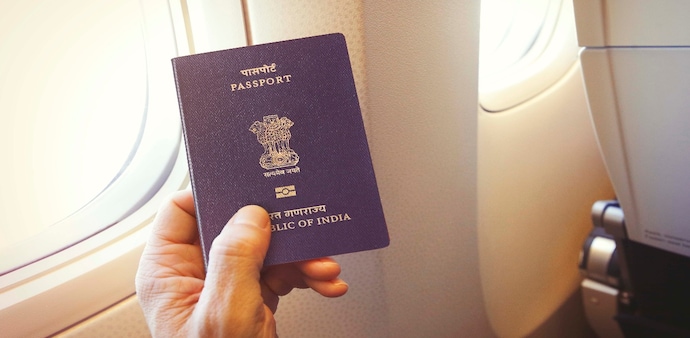
Indian passport has dropped one position in the July 2026 update of the Henley Passport Index, now sitting at 81st globally. Indian passport holders can currently travel visa-free or receive a visa on arrival at 55 destinations worldwide.
It has been an unsteady year for the passport's ranking. It opened 2026 at 80th in January, climbed to 75th in February, and has since slipped back, touching 80th in June before falling to 81st this month.
Two decades of movement
The July update forms part of the index's 20th anniversary edition, which traces how passport power has shifted since 2006. The picture for India is one of overall decline — the passport stood at 71st in 2006, dropped to its lowest point of 91st in 2021, and has since recovered some ground without returning to its earlier strength.
How the world has changed
The broader global picture tells a different story. In 2006, the average passport provided visa-free or visa-on-arrival access to just 58 destinations. That figure has nearly doubled to 108 today, reflecting a significant expansion in global mobility over two decades.
The world's most powerful passports in 2006 — including those of the US, Denmark, and Finland — allowed access to 130 destinations without a prior visa. Today, Singapore leads the rankings, with its passport opening doors to 192 destinations. The UAE, Japan, and South Korea share second place, each providing access to 188 destinations.
The top tier has also grown more crowded. In 2006, 26 passports featured in the top 10 rankings. That number has since expanded to 38, reflecting how many more countries have strengthened their diplomatic ties and bilateral visa agreements over the period.
The US, which held the top position in 2006, now ranks 10th. The UK, which was 3rd, now sits at 6th. Afghanistan continues to hold the bottom position on the index.
How the index works
The Henley Passport Index compares 199 passports across 227 travel destinations, using data compiled by the International Air Transport Association. It is updated monthly to reflect shifts in visa policies driven by diplomatic agreements and government decisions. The index measures access that includes visa-free entry, visa-on-arrival arrangements, and e-visas.
Indian passport has dropped one position in the July 2026 update of the Henley Passport Index, now sitting at 81st globally. Indian passport holders can currently travel visa-free or receive a visa on arrival at 55 destinations worldwide.
It has been an unsteady year for the passport's ranking. It opened 2026 at 80th in January, climbed to 75th in February, and has since slipped back, touching 80th in June before falling to 81st this month.
Two decades of movement
The July update forms part of the index's 20th anniversary edition, which traces how passport power has shifted since 2006. The picture for India is one of overall decline — the passport stood at 71st in 2006, dropped to its lowest point of 91st in 2021, and has since recovered some ground without returning to its earlier strength.
How the world has changed
The broader global picture tells a different story. In 2006, the average passport provided visa-free or visa-on-arrival access to just 58 destinations. That figure has nearly doubled to 108 today, reflecting a significant expansion in global mobility over two decades.
The world's most powerful passports in 2006 — including those of the US, Denmark, and Finland — allowed access to 130 destinations without a prior visa. Today, Singapore leads the rankings, with its passport opening doors to 192 destinations. The UAE, Japan, and South Korea share second place, each providing access to 188 destinations.
The top tier has also grown more crowded. In 2006, 26 passports featured in the top 10 rankings. That number has since expanded to 38, reflecting how many more countries have strengthened their diplomatic ties and bilateral visa agreements over the period.
The US, which held the top position in 2006, now ranks 10th. The UK, which was 3rd, now sits at 6th. Afghanistan continues to hold the bottom position on the index.
How the index works
The Henley Passport Index compares 199 passports across 227 travel destinations, using data compiled by the International Air Transport Association. It is updated monthly to reflect shifts in visa policies driven by diplomatic agreements and government decisions. The index measures access that includes visa-free entry, visa-on-arrival arrangements, and e-visas.