
France eases EU Blue Card rules: How Indian skilled workers can get easier Europe access even without a degree
The changes are part of France’s implementation of the European Union’s revised Blue Card framework, which was designed to make it easier for European employers to hire highly qualified workers from outside the EU
- Jun 2, 2026,
- Updated Jun 2, 2026 11:02 AM IST
France has made it easier for skilled foreign professionals, including Indians, to qualify for the EU Blue Card by widening eligibility, reducing contract requirements and improving mobility for workers already in Europe.
The changes are part of France’s implementation of the European Union’s revised Blue Card framework, which was designed to make it easier for European employers to hire highly qualified workers from outside the EU. For Indian professionals looking at Europe, the French update matters because it lowers some of the barriers that previously made the route difficult, especially for those with strong work experience but without a formal university degree.
What has France changed?
One of the biggest changes is around professional experience.
Under the revised rules, some applicants may now qualify for a French EU Blue Card without a university degree if they have at least three years of relevant professional experience gained within the previous seven years. Their occupation must fall within categories that will be specified by French authorities.
Earlier, applicants generally needed either a three-year higher education qualification or five years of professional experience. The new rule could help skilled professionals who built their careers through practical experience rather than formal academic credentials.
"Employers will be able to hire highly skilled talent from a wider pool of applicants. This is particularly pertinent given current labor shortages in France," said immigration firm Fragomen in a note.
France has also reduced the minimum employment contract requirement for EU Blue Card applications from 12 months to six months. This makes the route more accessible for employers and workers in sectors where project-based hiring or shorter contracts are common.
Easier movement within Europe
Another major change is linked to mobility. EU Blue Card holders who have already lived in another EU country can now move to France more quickly in many cases. The waiting period has been reduced from 18 months to 12 months, making it easier for skilled workers to shift between participating European labour markets.
As of April 25, 2026, holders of either a European Blue Card issued by another EU member state or an EU Long-Term Residence Permit bearing the notation “Former holder of a European Blue Card” issued by another EU member state may enter France to take up paid employment for up to 90 days within any 180-day period without a work permit.
However, the practical effect of the shorter contract rule may vary.
"Although this change grants employers more flexibility when hiring highly skilled foreign workers, the practical impact may be less significant than first impressions suggest as highly skilled workers in France tend to be hired under permanent contracts," said immigration firm Fragomen.
What is the EU Blue Card?
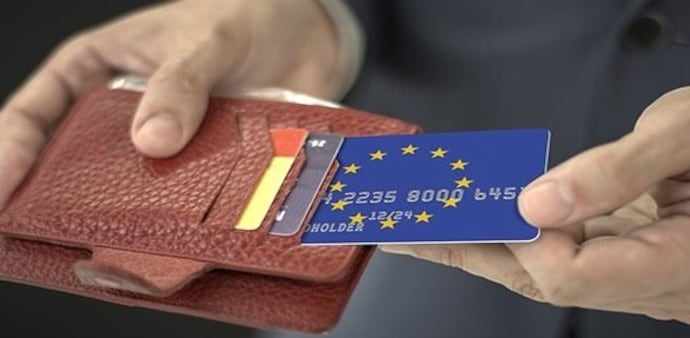
The EU Blue Card is a combined work and residence permit for highly qualified professionals from outside the European Union. It allows them to live and work in an EU member state.
It was created to help European employers compete for global talent by offering a more structured and relatively standardised route for hiring skilled workers from abroad.
The permit is available in 25 of the 27 EU member states. Denmark and Ireland do not participate in the scheme.
The programme was updated under the revised Blue Card Directive (EU) 2021/1883. EU countries implemented the changes by November 2023. The revised framework lowered salary thresholds, reduced minimum contract requirements, expanded eligibility in some sectors and made it easier for Blue Card holders to move between EU countries.
Who can apply for an EU Blue Card?
A candidate must generally meet three broad conditions.
First, they need to show qualifications. This usually means a higher education degree, typically from a three-year university programme. In some sectors, such as IT, cybersecurity and artificial intelligence, relevant professional experience may also be accepted.
Second, the applicant needs a binding employment contract or job offer. Under the revised framework, this can be for at least six months.
Third, the salary must meet the minimum threshold set by the country where the applicant is applying. These thresholds differ across Europe and are updated regularly.
EU citizens and EEA nationals are not eligible for the EU Blue Card. The route is meant for third-country nationals.
Why does this matter for Indian professionals?
For Indian workers in technology, engineering, healthcare, cybersecurity, AI and other specialised fields, the EU Blue Card can offer a more structured route into Europe’s labour market.
France’s latest changes are particularly important because they recognise professional experience in some cases, reduce the required contract duration and make it easier for Blue Card holders already in Europe to move to France.
This could help professionals who may not have traditional academic credentials but have built strong careers in high-demand sectors. It may also help companies hire faster in areas facing labour shortages.
What are the benefits of the EU Blue Card?
For employers, the EU Blue Card offers a recognised framework to hire skilled non-EU workers. In some countries, approved employers may also benefit from faster or prioritised processing.
For employees, the benefits include intra-EU mobility, family reunification and potential access to long-term residence. After 12 months in one participating country, Blue Card holders can move to another participating country under simplified rules, depending on national requirements.
Spouses and dependents can usually join the worker, and in many countries, family members may also get access to the labour market. Several EU countries also offer faster routes to long-term or permanent residency for Blue Card holders compared with standard work permits.
How do salary rules differ across Europe?
Salary thresholds vary widely by country. In 2026, Germany’s general minimum gross annual salary for Blue Card applicants is €48,300 (₹53,37,150). For shortage occupations such as STEM, IT, healthcare and engineering, the threshold is €43,759.80 (₹48,36,457.90), subject to approval from the Federal Employment Agency.
Belgium requires more than €63,500 (₹70,16,750) in some regions, while Bulgaria has thresholds below €10,000 (₹11,05,000). Germany falls in the mid-range for larger European economies.
This means applicants and employers cannot assume that a salary qualifying in one country will automatically qualify in another. The minimum threshold and the going rate for the role must be checked before an offer is made.
Common mistakes applicants and employers should avoid
One common mistake is using the wrong salary benchmark. Employers may check only the minimum threshold and miss the going rate for the role. In many cases, the applicant must meet whichever is higher.
Another mistake is misclassifying the role. Job title, duties and salary need to align with the occupation category. Inflating titles or choosing the wrong category can lead to rejection.
Applicants also need to remember that EU Blue Card rules are not identical across countries. Eligibility, salary thresholds, processing timelines and documentation requirements can differ significantly.
Degree recognition is another key issue. In countries such as Germany, qualifications must be recognised or considered comparable. If they are not, additional documentation may be required before the application can move forward.
France has made it easier for skilled foreign professionals, including Indians, to qualify for the EU Blue Card by widening eligibility, reducing contract requirements and improving mobility for workers already in Europe.
The changes are part of France’s implementation of the European Union’s revised Blue Card framework, which was designed to make it easier for European employers to hire highly qualified workers from outside the EU. For Indian professionals looking at Europe, the French update matters because it lowers some of the barriers that previously made the route difficult, especially for those with strong work experience but without a formal university degree.
What has France changed?
One of the biggest changes is around professional experience.
Under the revised rules, some applicants may now qualify for a French EU Blue Card without a university degree if they have at least three years of relevant professional experience gained within the previous seven years. Their occupation must fall within categories that will be specified by French authorities.
Earlier, applicants generally needed either a three-year higher education qualification or five years of professional experience. The new rule could help skilled professionals who built their careers through practical experience rather than formal academic credentials.
"Employers will be able to hire highly skilled talent from a wider pool of applicants. This is particularly pertinent given current labor shortages in France," said immigration firm Fragomen in a note.
France has also reduced the minimum employment contract requirement for EU Blue Card applications from 12 months to six months. This makes the route more accessible for employers and workers in sectors where project-based hiring or shorter contracts are common.
Easier movement within Europe
Another major change is linked to mobility. EU Blue Card holders who have already lived in another EU country can now move to France more quickly in many cases. The waiting period has been reduced from 18 months to 12 months, making it easier for skilled workers to shift between participating European labour markets.
As of April 25, 2026, holders of either a European Blue Card issued by another EU member state or an EU Long-Term Residence Permit bearing the notation “Former holder of a European Blue Card” issued by another EU member state may enter France to take up paid employment for up to 90 days within any 180-day period without a work permit.
However, the practical effect of the shorter contract rule may vary.
"Although this change grants employers more flexibility when hiring highly skilled foreign workers, the practical impact may be less significant than first impressions suggest as highly skilled workers in France tend to be hired under permanent contracts," said immigration firm Fragomen.
What is the EU Blue Card?
The EU Blue Card is a combined work and residence permit for highly qualified professionals from outside the European Union. It allows them to live and work in an EU member state.
It was created to help European employers compete for global talent by offering a more structured and relatively standardised route for hiring skilled workers from abroad.
The permit is available in 25 of the 27 EU member states. Denmark and Ireland do not participate in the scheme.
The programme was updated under the revised Blue Card Directive (EU) 2021/1883. EU countries implemented the changes by November 2023. The revised framework lowered salary thresholds, reduced minimum contract requirements, expanded eligibility in some sectors and made it easier for Blue Card holders to move between EU countries.
Who can apply for an EU Blue Card?
A candidate must generally meet three broad conditions.
First, they need to show qualifications. This usually means a higher education degree, typically from a three-year university programme. In some sectors, such as IT, cybersecurity and artificial intelligence, relevant professional experience may also be accepted.
Second, the applicant needs a binding employment contract or job offer. Under the revised framework, this can be for at least six months.
Third, the salary must meet the minimum threshold set by the country where the applicant is applying. These thresholds differ across Europe and are updated regularly.
EU citizens and EEA nationals are not eligible for the EU Blue Card. The route is meant for third-country nationals.
Why does this matter for Indian professionals?
For Indian workers in technology, engineering, healthcare, cybersecurity, AI and other specialised fields, the EU Blue Card can offer a more structured route into Europe’s labour market.
France’s latest changes are particularly important because they recognise professional experience in some cases, reduce the required contract duration and make it easier for Blue Card holders already in Europe to move to France.
This could help professionals who may not have traditional academic credentials but have built strong careers in high-demand sectors. It may also help companies hire faster in areas facing labour shortages.
What are the benefits of the EU Blue Card?
For employers, the EU Blue Card offers a recognised framework to hire skilled non-EU workers. In some countries, approved employers may also benefit from faster or prioritised processing.
For employees, the benefits include intra-EU mobility, family reunification and potential access to long-term residence. After 12 months in one participating country, Blue Card holders can move to another participating country under simplified rules, depending on national requirements.
Spouses and dependents can usually join the worker, and in many countries, family members may also get access to the labour market. Several EU countries also offer faster routes to long-term or permanent residency for Blue Card holders compared with standard work permits.
How do salary rules differ across Europe?
Salary thresholds vary widely by country. In 2026, Germany’s general minimum gross annual salary for Blue Card applicants is €48,300 (₹53,37,150). For shortage occupations such as STEM, IT, healthcare and engineering, the threshold is €43,759.80 (₹48,36,457.90), subject to approval from the Federal Employment Agency.
Belgium requires more than €63,500 (₹70,16,750) in some regions, while Bulgaria has thresholds below €10,000 (₹11,05,000). Germany falls in the mid-range for larger European economies.
This means applicants and employers cannot assume that a salary qualifying in one country will automatically qualify in another. The minimum threshold and the going rate for the role must be checked before an offer is made.
Common mistakes applicants and employers should avoid
One common mistake is using the wrong salary benchmark. Employers may check only the minimum threshold and miss the going rate for the role. In many cases, the applicant must meet whichever is higher.
Another mistake is misclassifying the role. Job title, duties and salary need to align with the occupation category. Inflating titles or choosing the wrong category can lead to rejection.
Applicants also need to remember that EU Blue Card rules are not identical across countries. Eligibility, salary thresholds, processing timelines and documentation requirements can differ significantly.
Degree recognition is another key issue. In countries such as Germany, qualifications must be recognised or considered comparable. If they are not, additional documentation may be required before the application can move forward.