
H-1B lottery loss, USCIS probe: How EB visa helped this Indian engineer become US citizen even after continuous scrutiny
Despite scrutiny and false reports, his transition marks a triumphant milestone and ongoing support for fellow skilled immigrants
- Aug 19, 2026,
- Updated Aug 19, 2026 5:25 AM IST
A post by Indian-origin entrepreneur Saiman Shetty created confusion online after he claimed that the US Citizenship and Immigration Services (USCIS) had taken away his Green Card. The statement appeared to suggest that he had lost his permanent residency status.
But the announcement carried a very different message.
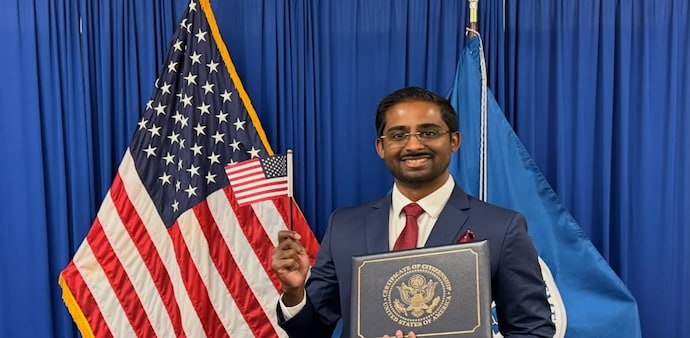
Shetty was no longer a Green Card holder because he had become a US citizen. His post, shared before Indian Independence Day, highlighted a transition that marked the end of a long immigration journey rather than a setback.
For Shetty, the milestone came after years of navigating the uncertainties faced by many skilled immigrants, from visa hurdles and financial pressure to building a career in a highly competitive technology ecosystem.
The journey from engineering student to entrepreneur
Shetty moved to the United States after completing his engineering degree from Visvesvaraya Technological University in 2013. He later enrolled at Arizona State University for a master’s degree in electrical engineering.
Coming from India as the first person in his family to move to the US, Shetty had to build his career without an established professional network or a guaranteed pathway to stay.
After completing his education, he worked with technology companies including Tesla, Lyft and Nuro. He later entered entrepreneurship, co-founding ResumePuppy, a platform that helps technology professionals improve their job applications.
His later venture, Smart Immigration AI, focused on helping skilled immigrants understand the US immigration process and build their careers.
When the H-1B route did not work out
Shetty’s path to settling in the US was not straightforward. In a post reflecting on his experience, he described the challenges he faced during the immigration process.
"America did not roll out a red carpet. She beat me up. She tested me at every single turn. The debt I didn't know how I'd repay. The jobs that said no. The H1B lottery I lost. The backlogs. Walking away from a comfortable Silicon Valley paycheck to go build something of my own. Every step, I had to prove myself. Again. And again," he wrote.
A major turning point came after he failed to secure an H-1B visa through the lottery system. Instead of waiting for another opportunity through an employer, Shetty explored the EB-1A route, an employment-based Green Card category for people who can demonstrate extraordinary ability in their field.
Unlike several other employment-based immigration routes, EB-1A does not require an employer sponsor. Applicants can file their own petitions by proving they meet the required criteria.
"That one decision gave me freedom, stability, and a mission. I realized: no one should have to go through this alone," Shetty said.
The USCIS complaint that became another test
Shetty later faced another challenge when, according to him, people opposed to his immigration work reported his platform to US immigration authorities.
"A few jealous pricks decided I was a 'fraud' and built a neat little trap for me. Handed it to USCIS with a bow on top. And for a moment, the most powerful immigration system on earth almost took the bait," he said.
USCIS reviewed the allegations against his immigration platform. The investigation did not find wrongdoing, and the matter was closed in his favour.
How the EB-1A visa works
The EB-1A category, often referred to as the "Einstein visa", is meant for individuals who can demonstrate extraordinary ability in fields such as science, business, education, arts or athletics.
Applicants need to show evidence of achievements in their area of expertise. The requirements can include major awards, significant original contributions, published work, judging the work of others, leadership positions, academic publications or evidence of earning significantly higher compensation than peers.
Some globally recognised achievements, such as a Nobel Prize, Oscar, Grammy or Olympic medal wins, can provide automatic qualification under the category.
A post by Indian-origin entrepreneur Saiman Shetty created confusion online after he claimed that the US Citizenship and Immigration Services (USCIS) had taken away his Green Card. The statement appeared to suggest that he had lost his permanent residency status.
But the announcement carried a very different message.
Shetty was no longer a Green Card holder because he had become a US citizen. His post, shared before Indian Independence Day, highlighted a transition that marked the end of a long immigration journey rather than a setback.
For Shetty, the milestone came after years of navigating the uncertainties faced by many skilled immigrants, from visa hurdles and financial pressure to building a career in a highly competitive technology ecosystem.
The journey from engineering student to entrepreneur
Shetty moved to the United States after completing his engineering degree from Visvesvaraya Technological University in 2013. He later enrolled at Arizona State University for a master’s degree in electrical engineering.
Coming from India as the first person in his family to move to the US, Shetty had to build his career without an established professional network or a guaranteed pathway to stay.
After completing his education, he worked with technology companies including Tesla, Lyft and Nuro. He later entered entrepreneurship, co-founding ResumePuppy, a platform that helps technology professionals improve their job applications.
His later venture, Smart Immigration AI, focused on helping skilled immigrants understand the US immigration process and build their careers.
When the H-1B route did not work out
Shetty’s path to settling in the US was not straightforward. In a post reflecting on his experience, he described the challenges he faced during the immigration process.
"America did not roll out a red carpet. She beat me up. She tested me at every single turn. The debt I didn't know how I'd repay. The jobs that said no. The H1B lottery I lost. The backlogs. Walking away from a comfortable Silicon Valley paycheck to go build something of my own. Every step, I had to prove myself. Again. And again," he wrote.
A major turning point came after he failed to secure an H-1B visa through the lottery system. Instead of waiting for another opportunity through an employer, Shetty explored the EB-1A route, an employment-based Green Card category for people who can demonstrate extraordinary ability in their field.
Unlike several other employment-based immigration routes, EB-1A does not require an employer sponsor. Applicants can file their own petitions by proving they meet the required criteria.
"That one decision gave me freedom, stability, and a mission. I realized: no one should have to go through this alone," Shetty said.
The USCIS complaint that became another test
Shetty later faced another challenge when, according to him, people opposed to his immigration work reported his platform to US immigration authorities.
"A few jealous pricks decided I was a 'fraud' and built a neat little trap for me. Handed it to USCIS with a bow on top. And for a moment, the most powerful immigration system on earth almost took the bait," he said.
USCIS reviewed the allegations against his immigration platform. The investigation did not find wrongdoing, and the matter was closed in his favour.
How the EB-1A visa works
The EB-1A category, often referred to as the "Einstein visa", is meant for individuals who can demonstrate extraordinary ability in fields such as science, business, education, arts or athletics.
Applicants need to show evidence of achievements in their area of expertise. The requirements can include major awards, significant original contributions, published work, judging the work of others, leadership positions, academic publications or evidence of earning significantly higher compensation than peers.
Some globally recognised achievements, such as a Nobel Prize, Oscar, Grammy or Olympic medal wins, can provide automatic qualification under the category.