
H-1B renewals may get costlier as US moves to expand additional visa fee; Here's how it will affect Indians
The proposed change would extend the charge to routine visa extensions, potentially raising costs for companies that rely heavily on foreign talent to retain existing employees in the US
- Aug 4, 2026,
- Updated Aug 4, 2026 3:55 PM IST
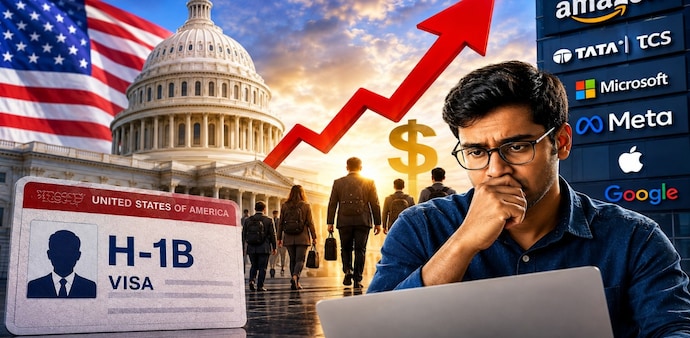
Indian professionals on H-1B visas could face another hurdle as the Trump administration moves to widen the scope of an additional visa fee that currently applies only to new applications and employer changes. The proposed change would extend the charge to routine visa extensions, potentially raising costs for companies that rely heavily on foreign talent to retain existing employees in the US.
The move could have a significant impact on Indian workers, who accounted for nearly 78% of H-1B extension approvals in 2025, making them the largest group affected by any increase in renewal-related expenses.
The proposal comes after a US federal appeals court recently allowed a lower court decision to stand that blocked the administration’s separate move to impose a $100,000 fee on new H-1B visas for highly skilled foreign workers.
What is changing under the proposal
The Department of Homeland Security (DHS) and Customs and Border Protection (CBP) had introduced the proposal through a Notice of Proposed Rulemaking published in the US Federal Register. The measure later appeared as a pending final-rule item in the Trump administration’s 2026 Unified Regulatory Agenda.
The proposed rule seeks to expand the “9-11 Response and Biometric Entry-Exit Fee” to cover not just new H-1B and L-1 petitions, but also applications filed by employers to extend the stay of existing visa holders.
Currently, eligible employers pay the fee when filing an initial H-1B or L-1 petition or when a worker changes employers. Under the proposed changes, the same fee would also apply when companies renew visas for employees who continue working with them.
The rule states: "The 9-11 Response and Biometric Entry-Exit Fees for H-1B and L-1 Visas (9-11 Response Fees) are fees paid by certain employers of H-1B and L non-immigrant workers. To implement Public Law 114-113, DHS is amending and clarifying the regulations to specify that the 9-11 Response Fees will apply to all H-1B and L-1 extension petitions in addition to all previously covered H-1B and L-1 petitions."
Indian workers likely to feel the impact
The proposed expansion is expected to affect employers with at least 50 employees in the US, where more than half of the workforce holds H-1B or L-1 status.
Currently, such employers pay at least $4,000 for new H-1B petitions and $4,500 for new L-1 petitions. If the proposal is implemented, similar costs could apply when these companies file extension petitions for existing employees.
The impact is likely to be felt most by companies with large Indian workforces, especially technology and IT services firms.
According to US Citizenship and Immigration Services (USCIS) data, 406,348 H-1B petitions were approved in FY2025. Of these, 291,542 were for continuing employment. Indian nationals accounted for 226,359 of those approvals, representing 77.6% of all H-1B extensions.
IT firms among those facing higher costs
Large technology companies that depend on H-1B talent could face higher expenses if the rule comes into effect.
Data from the National Foundation for American Policy (NFAP) shows Amazon had the highest number of approved H-1B petitions for continuing employment in FY2025 at 14,532, followed by Tata Consultancy Services (5,293), Microsoft (4,863), Meta (4,740), Apple (4,610) and Google (4,509).
NFAP noted that these figures represent approved petitions rather than individual employees, as a single worker may receive multiple approvals due to transfers or amended filings.
Why DHS wants to expand the fee
DHS said expanding the fee would bring the system closer to what Congress intended and help finance the US biometric entry-exit programme, which uses technologies such as facial recognition to verify travellers.
The department estimates the expanded fee could generate an additional $157.3 million annually. The proposed rule would continue to apply only to employers meeting the existing size and workforce criteria.
Indian professionals on H-1B visas could face another hurdle as the Trump administration moves to widen the scope of an additional visa fee that currently applies only to new applications and employer changes. The proposed change would extend the charge to routine visa extensions, potentially raising costs for companies that rely heavily on foreign talent to retain existing employees in the US.
The move could have a significant impact on Indian workers, who accounted for nearly 78% of H-1B extension approvals in 2025, making them the largest group affected by any increase in renewal-related expenses.
The proposal comes after a US federal appeals court recently allowed a lower court decision to stand that blocked the administration’s separate move to impose a $100,000 fee on new H-1B visas for highly skilled foreign workers.
What is changing under the proposal
The Department of Homeland Security (DHS) and Customs and Border Protection (CBP) had introduced the proposal through a Notice of Proposed Rulemaking published in the US Federal Register. The measure later appeared as a pending final-rule item in the Trump administration’s 2026 Unified Regulatory Agenda.
The proposed rule seeks to expand the “9-11 Response and Biometric Entry-Exit Fee” to cover not just new H-1B and L-1 petitions, but also applications filed by employers to extend the stay of existing visa holders.
Currently, eligible employers pay the fee when filing an initial H-1B or L-1 petition or when a worker changes employers. Under the proposed changes, the same fee would also apply when companies renew visas for employees who continue working with them.
The rule states: "The 9-11 Response and Biometric Entry-Exit Fees for H-1B and L-1 Visas (9-11 Response Fees) are fees paid by certain employers of H-1B and L non-immigrant workers. To implement Public Law 114-113, DHS is amending and clarifying the regulations to specify that the 9-11 Response Fees will apply to all H-1B and L-1 extension petitions in addition to all previously covered H-1B and L-1 petitions."
Indian workers likely to feel the impact
The proposed expansion is expected to affect employers with at least 50 employees in the US, where more than half of the workforce holds H-1B or L-1 status.
Currently, such employers pay at least $4,000 for new H-1B petitions and $4,500 for new L-1 petitions. If the proposal is implemented, similar costs could apply when these companies file extension petitions for existing employees.
The impact is likely to be felt most by companies with large Indian workforces, especially technology and IT services firms.
According to US Citizenship and Immigration Services (USCIS) data, 406,348 H-1B petitions were approved in FY2025. Of these, 291,542 were for continuing employment. Indian nationals accounted for 226,359 of those approvals, representing 77.6% of all H-1B extensions.
IT firms among those facing higher costs
Large technology companies that depend on H-1B talent could face higher expenses if the rule comes into effect.
Data from the National Foundation for American Policy (NFAP) shows Amazon had the highest number of approved H-1B petitions for continuing employment in FY2025 at 14,532, followed by Tata Consultancy Services (5,293), Microsoft (4,863), Meta (4,740), Apple (4,610) and Google (4,509).
NFAP noted that these figures represent approved petitions rather than individual employees, as a single worker may receive multiple approvals due to transfers or amended filings.
Why DHS wants to expand the fee
DHS said expanding the fee would bring the system closer to what Congress intended and help finance the US biometric entry-exit programme, which uses technologies such as facial recognition to verify travellers.
The department estimates the expanded fee could generate an additional $157.3 million annually. The proposed rule would continue to apply only to employers meeting the existing size and workforce criteria.