
Schengen visa: Indian travellers need to know these requirements before applying
Covering 29 countries, including 25 EU members and four associated states, the Schengen framework allows a traveller to move freely without border checks once admitted
- Aug 22, 2025,
- Updated Aug 22, 2025 1:18 PM IST
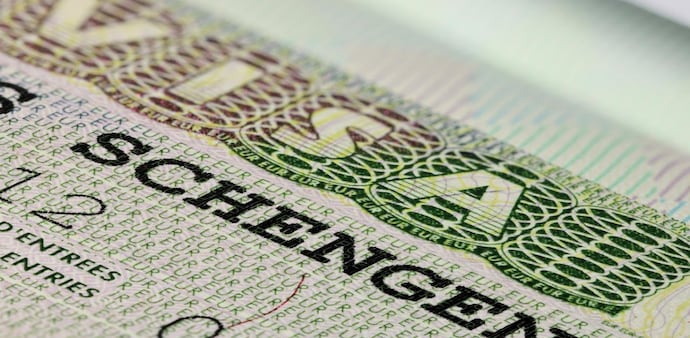
For Indians heading to Europe, the Schengen visa is the essential travel document that opens borders across much of the continent. Covering 29 countries, including 25 EU members and four associated states, the Schengen framework allows a traveller to move freely without border checks once admitted.
What is a Schengen short-stay visa?
A Schengen short-stay visa permits transit or stay for up to 90 days in any 180-day period. It is issued under the EU Visa Code (Regulation EC No. 810/2009), which standardises rules across member states. For longer stays, such as work or study exceeding 90 days, applicants must follow the national visa rules of the specific country.
Which countries are covered?
The Schengen zone currently includes Austria, Belgium, Bulgaria, Croatia, Czechia, Denmark, Estonia, Finland, France, Germany, Greece, Hungary, Iceland, Italy, Latvia, Liechtenstein, Lithuania, Luxembourg, Malta, the Netherlands, Norway, Poland, Portugal, Romania, Slovakia, Slovenia, Spain, Sweden and Switzerland. Once admitted with a valid visa, travellers may generally cross internal borders without additional checks.
Types of visas
-
Uniform Visa (C-Visa): Valid for short stays of up to 90 days across all Schengen states.
Advertisement -
Limited Territorial Validity Visa (LTV): Valid only for the states listed on the visa sticker.
-
Airport Transit Visa (ATV): Allows transit through the international zone of airports. Nationals of countries such as Afghanistan, Nigeria, Pakistan and Somalia require ATVs, and in some cases Indian nationals may also need one, depending on the country.
Passport validity and multiple entries
Applicants must hold a passport valid for at least three months beyond the last intended departure date, issued within the past 10 years, with at least two blank pages. Multiple-entry visas (“MULT”) are possible, allowing repeated travel as long as the 90/180 rule is respected.
Fees and exemptions
The standard visa fee is €90. Children aged 6–12 pay €45, while children under 6 are exempt. Other exemptions include students, researchers, and participants under 25 in non-profit cultural, educational or sports events.
Application process in India
Indian nationals or legal residents of India can apply. Applications must be lodged at least 15 days before travel, and no earlier than six months in advance. Consulates usually decide within 15 calendar days, though complex cases may take up to 45 days.
Applicants must appear in person for biometric collection (fingerprints and photo). Once collected, fingerprints remain valid for five years. Each application requires a signed form, passport, supporting documents (flight bookings, accommodation proof, financial means, and insurance), and travel medical insurance with coverage of at least €30,000 for emergency care and repatriation.
Appeals and complaints
If refused, applicants receive a written notification stating the reasons. They may appeal under the national laws of the deciding state. Complaints about consular staff or service providers can also be filed directly with the consulate.
Key takeaway for Indian travellers
Possession of a Schengen visa does not guarantee entry, border officials may still ask for proof of accommodation, financial means, or return tickets. However, once admitted, the visa allows access to 29 European countries, making it one of the most powerful travel documents for short-term stays.
For more details, Indian travellers are encouraged to consult the EU Immigration Portal or the websites of the specific consulates handling their applications.
For Indians heading to Europe, the Schengen visa is the essential travel document that opens borders across much of the continent. Covering 29 countries, including 25 EU members and four associated states, the Schengen framework allows a traveller to move freely without border checks once admitted.
What is a Schengen short-stay visa?
A Schengen short-stay visa permits transit or stay for up to 90 days in any 180-day period. It is issued under the EU Visa Code (Regulation EC No. 810/2009), which standardises rules across member states. For longer stays, such as work or study exceeding 90 days, applicants must follow the national visa rules of the specific country.
Which countries are covered?
The Schengen zone currently includes Austria, Belgium, Bulgaria, Croatia, Czechia, Denmark, Estonia, Finland, France, Germany, Greece, Hungary, Iceland, Italy, Latvia, Liechtenstein, Lithuania, Luxembourg, Malta, the Netherlands, Norway, Poland, Portugal, Romania, Slovakia, Slovenia, Spain, Sweden and Switzerland. Once admitted with a valid visa, travellers may generally cross internal borders without additional checks.
Types of visas
-
Uniform Visa (C-Visa): Valid for short stays of up to 90 days across all Schengen states.
Advertisement -
Limited Territorial Validity Visa (LTV): Valid only for the states listed on the visa sticker.
-
Airport Transit Visa (ATV): Allows transit through the international zone of airports. Nationals of countries such as Afghanistan, Nigeria, Pakistan and Somalia require ATVs, and in some cases Indian nationals may also need one, depending on the country.
Passport validity and multiple entries
Applicants must hold a passport valid for at least three months beyond the last intended departure date, issued within the past 10 years, with at least two blank pages. Multiple-entry visas (“MULT”) are possible, allowing repeated travel as long as the 90/180 rule is respected.
Fees and exemptions
The standard visa fee is €90. Children aged 6–12 pay €45, while children under 6 are exempt. Other exemptions include students, researchers, and participants under 25 in non-profit cultural, educational or sports events.
Application process in India
Indian nationals or legal residents of India can apply. Applications must be lodged at least 15 days before travel, and no earlier than six months in advance. Consulates usually decide within 15 calendar days, though complex cases may take up to 45 days.
Applicants must appear in person for biometric collection (fingerprints and photo). Once collected, fingerprints remain valid for five years. Each application requires a signed form, passport, supporting documents (flight bookings, accommodation proof, financial means, and insurance), and travel medical insurance with coverage of at least €30,000 for emergency care and repatriation.
Appeals and complaints
If refused, applicants receive a written notification stating the reasons. They may appeal under the national laws of the deciding state. Complaints about consular staff or service providers can also be filed directly with the consulate.
Key takeaway for Indian travellers
Possession of a Schengen visa does not guarantee entry, border officials may still ask for proof of accommodation, financial means, or return tickets. However, once admitted, the visa allows access to 29 European countries, making it one of the most powerful travel documents for short-term stays.
For more details, Indian travellers are encouraged to consult the EU Immigration Portal or the websites of the specific consulates handling their applications.