
Festive EMIs, easy loans and risky investments: Finance expert flags 3 money mistakes to avoid
Festive shopping EMIs, easy access to small loans and misleading financial ratios can expose households and investors to unexpected financial risks. Finance expert Dr Kavitha Prade explains how excessive borrowing, hidden liabilities and overlooked corporate disclosures can affect financial stability and investment decisions.
- Nov 13, 2026,
- Updated Nov 13, 2026 3:35 AM IST
Festive shopping, easy access to small loans and attractive investment opportunities may offer immediate financial convenience, but they can also expose households to mounting debt and unexpected losses. Dr Kavitha Pradeep, Assistant Professor of Finance at the Thapar School of Liberal Arts and Sciences (TSLAS), Thapar Institute, has highlighted three financial mistakes that consumers and investors should watch out for.
Festive spending: How many EMIs are too many?
Festive discounts and no-cost EMI offers often encourage consumers to make purchases beyond their financial capacity. However, even relatively small monthly instalments can strain household budgets when combined with existing debt obligations.
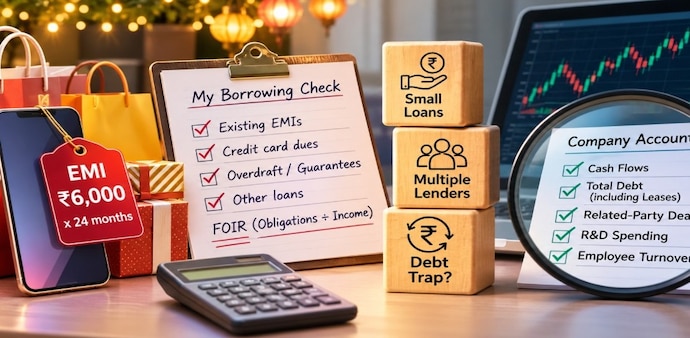
Prade explains that purchasing a smartphone on a ₹6,000 monthly EMI for two years may appear affordable, but the commitment can become burdensome if earlier EMIs are still running.
"Rs.6000 is not a big amount, but if it is10% of your already stretched take-home pay, it can disturb your financial peace as early as next month," she said.
She cautioned that missing even a small EMI can damage creditworthiness and affect future borrowing opportunities, including vehicle and housing loans.
Banks assess borrowers using the Fixed Obligations to Income Ratio (FOIR), which measures existing financial commitments against income.
MUST READ: Booked a Maruti CNG this Diwali? Delivery is expected to improve from January
Importantly, lenders may examine more than housing and vehicle loan instalments. Credit card dues, overdraft facilities, guarantees and other liabilities can influence credit assessments.
Prade also warned against settling loans for less than the outstanding amount, as such settlements may negatively affect subsequent loan applications.
Small loans: When financial inclusion becomes a debt trap
The rapid expansion of microfinance institutions, non-banking financial companies (NBFCs) and fintech lenders has improved access to small-ticket credit, particularly among lower-income households.
However, easier borrowing can also encourage excessive indebtedness when borrowers obtain multiple loans without assessing their repayment capacity.
Prade observed that competition among lenders could encourage aggressive lending practices, sometimes without sufficient scrutiny of borrowers' existing obligations.
This can create a cycle in which households borrow from one institution to repay another.
When additional credit becomes unavailable, borrowers may turn to gold loans, potentially putting assets accumulated through years of savings at risk.
She suggested stronger financial literacy, limits on concurrent borrowing and greater emphasis on productive loans that increase income or reduce expenses.
ALSO READ: Gold, silver prices rise after Diwali: What's driving the surge and what should investors do?
Investing in stocks? Look beyond financial ratios
Prade also cautioned equity investors against relying exclusively on financial ratios displayed by investment platforms.
Profitability figures can be misleading when reported earnings consistently exceed operating cash flows, potentially indicating concerns over earnings quality.
Similarly, conventional debt ratios may understate financial obligations if operating leases or supplier-financing arrangements are overlooked.
Investors should examine annual report disclosures, particularly notes to accounts, exceptional items and related-party transactions.
For technology-focused companies, Prade recommended examining research and development spending relative to sales and employee turnover.
These indicators can offer insights into whether a business is investing in future products and retaining the talent required to develop them.
The takeaway: Whether borrowing or investing, consumers should examine underlying financial obligations and disclosures rather than relying on attractive offers or headline numbers.
DO READ: From gold coated sweets to firecracker hampers: Lucknow’s festive sweets gets a royal makeover
Festive shopping, easy access to small loans and attractive investment opportunities may offer immediate financial convenience, but they can also expose households to mounting debt and unexpected losses. Dr Kavitha Pradeep, Assistant Professor of Finance at the Thapar School of Liberal Arts and Sciences (TSLAS), Thapar Institute, has highlighted three financial mistakes that consumers and investors should watch out for.
Festive spending: How many EMIs are too many?
Festive discounts and no-cost EMI offers often encourage consumers to make purchases beyond their financial capacity. However, even relatively small monthly instalments can strain household budgets when combined with existing debt obligations.
Prade explains that purchasing a smartphone on a ₹6,000 monthly EMI for two years may appear affordable, but the commitment can become burdensome if earlier EMIs are still running.
"Rs.6000 is not a big amount, but if it is10% of your already stretched take-home pay, it can disturb your financial peace as early as next month," she said.
She cautioned that missing even a small EMI can damage creditworthiness and affect future borrowing opportunities, including vehicle and housing loans.
Banks assess borrowers using the Fixed Obligations to Income Ratio (FOIR), which measures existing financial commitments against income.
MUST READ: Booked a Maruti CNG this Diwali? Delivery is expected to improve from January
Importantly, lenders may examine more than housing and vehicle loan instalments. Credit card dues, overdraft facilities, guarantees and other liabilities can influence credit assessments.
Prade also warned against settling loans for less than the outstanding amount, as such settlements may negatively affect subsequent loan applications.
Small loans: When financial inclusion becomes a debt trap
The rapid expansion of microfinance institutions, non-banking financial companies (NBFCs) and fintech lenders has improved access to small-ticket credit, particularly among lower-income households.
However, easier borrowing can also encourage excessive indebtedness when borrowers obtain multiple loans without assessing their repayment capacity.
Prade observed that competition among lenders could encourage aggressive lending practices, sometimes without sufficient scrutiny of borrowers' existing obligations.
This can create a cycle in which households borrow from one institution to repay another.
When additional credit becomes unavailable, borrowers may turn to gold loans, potentially putting assets accumulated through years of savings at risk.
She suggested stronger financial literacy, limits on concurrent borrowing and greater emphasis on productive loans that increase income or reduce expenses.
ALSO READ: Gold, silver prices rise after Diwali: What's driving the surge and what should investors do?
Investing in stocks? Look beyond financial ratios
Prade also cautioned equity investors against relying exclusively on financial ratios displayed by investment platforms.
Profitability figures can be misleading when reported earnings consistently exceed operating cash flows, potentially indicating concerns over earnings quality.
Similarly, conventional debt ratios may understate financial obligations if operating leases or supplier-financing arrangements are overlooked.
Investors should examine annual report disclosures, particularly notes to accounts, exceptional items and related-party transactions.
For technology-focused companies, Prade recommended examining research and development spending relative to sales and employee turnover.
These indicators can offer insights into whether a business is investing in future products and retaining the talent required to develop them.
The takeaway: Whether borrowing or investing, consumers should examine underlying financial obligations and disclosures rather than relying on attractive offers or headline numbers.
DO READ: From gold coated sweets to firecracker hampers: Lucknow’s festive sweets gets a royal makeover