
Gold, equities or fixed income? Jainam’s Milan Parikh on the best bets for the next 12–18 months
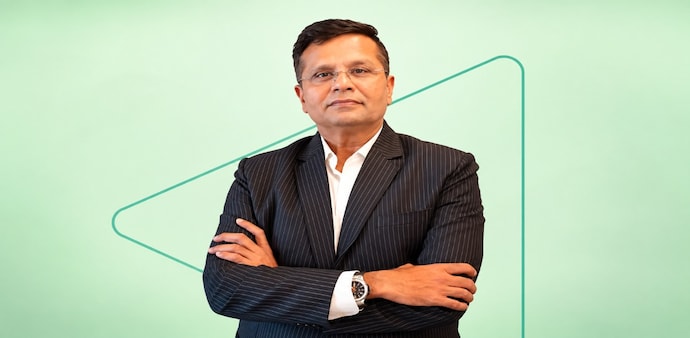
Milan Parikh, Managing Director and Chairman of Jainam Broking discusses where the risk-reward equation stands across large, mid, and small-caps. He also shares his views on gold and silver, fixed income, the rupee, interest rates and the outlook for equities over the next 12–18 months.
- Oct 7, 2026,
- Updated Oct 7, 2026 2:40 PM IST
After witnessing multiple market cycles over the past three decades, Milan Parikh, Managing Director and Chairman of Jainam Broking, believes investor behaviour often remains unchanged even as market conditions shift. In an interaction with Business Today, Parikh discusses the mistakes investors repeatedly make, what investors should look for beyond earnings and valuations, and where the risk-reward equation stands across large, mid and small-caps. He also shares his views on gold and silver, fixed income, the rupee, interest rates and the outlook for equities over the next 12–18 months, while highlighting sectors that could offer better investment opportunities.
Q. You have witnessed five major market cycles over the past two decades. What recurring mistakes do you see investors making through each cycle, and what key lessons do they often overlook?
Milan Parikh: The market may change from one cycle to another, but investors' behaviour remains quite similar. In a rising market, recent returns can create a lot of confidence. That confidence can sometimes lead investors to chase a stock, sector, or theme without looking closely at what is driving growth. When the cycle turns, fear can take over and decisions become equally reactive.
Another common mistake is confusing market noise with useful information. Every cycle brings a new set of narratives, forecasts and opinions. The challenge for an investor is to identify what matters to the investment decision.
Three decades around the market have reinforced one simple lesson: clarity must come before acting. Investors need to understand the business, its earnings, the price being paid, and the risks that can change the investment case.
Markets will always have noise. Good decisions come from having the perspective to separate the signal from that noise, staying disciplined through the cycle and protecting capital when the risk-reward no longer makes sense.
Q. After experiencing multiple bull and bear markets, what do you think investors should focus on today when evaluating a company beyond earnings growth and valuations?
Parikh: The quality behind the earnings deserves as much attention as the earnings number itself.
Cash-flow generation, return on capital, balance-sheet strength, and the ability to sustain growth through different parts of the cycle provide a better understanding of the business. Management quality and capital allocation are equally relevant because decisions made during a difficult cycle often determine the durability of a company.
Industry structure also matters. Pricing power, competitive intensity, capital requirements, and the sustainability of demand can materially influence future earnings.
Another useful measure is the gap between expectations and execution. When a company's valuation already assumes a high level of growth, even a good business can face pressure if that growth takes longer to materialise.
The focus, therefore, should be on understanding the business behind the numbers and the assumptions already reflected in its price. That gives investors the context required to make decisions with greater confidence.
Q. Has the valuation gap between large-caps and small- and mid-caps widened? Where do you see a better risk-reward opportunity for investors today?
Parikh: The valuation gap across market-cap segments must be assessed alongside earnings expectations. The current market is showing greater differentiation between businesses, which makes market-cap classification an insufficient basis for an investment decision.
Large caps offer scale, established business models, and, in many cases, stronger balance sheets. Mid- and small caps provide access to businesses with potentially higher growth trajectories, but the dispersion in valuations and fundamentals is also wider.
Recent market performance has brought greater scrutiny to mid- and small-cap valuations. At the same time, the earnings recovery is becoming broader, which means opportunities are emerging across market segments rather than being confined to one category. Current research also shows that large-cap valuations are becoming relatively more comfortable compared with some parts of the broader market.
The risk-reward assessment, therefore, needs to be company-specific. Earnings visibility, competitive position, balance sheet strength and the price being paid for that growth need to be considered together.
Q. How could the rupee, interest rates and geopolitical developments impact Indian equity markets over the next year?
Parikh: Currency, interest rates and geopolitics will remain important external variables for Indian equities because each can influence inflation, liquidity, corporate costs and investor sentiment.
A movement in the rupee has different implications across sectors. Export-oriented businesses may benefit from currency depreciation, while companies dependent on imported input can face higher costs. Interest rates similarly affect sectors through borrowing costs, credit demand, consumption, and investment.
Geopolitical developments can have a wider impact through crude oil, trade flows, supply chains and global risk appetite. For India, the important consideration will be how these external factors interact with domestic growth and corporate earnings.
The market's response to any macro development also depends on what has already been priced in. That makes it important to look beyond the headlines and understand its impact on earnings, cash flow and valuations.
A clear assessment of the underlying economic impact is more useful than reacting to every macro development in isolation.
Q. Gold and silver have delivered strong returns. Should investors continue to hold or add to precious metals, or there is the risk of buying after a sharp rally increasing?
Parikh: The strong performance of gold and silver warrants a closer look at allocation and entry levels. Silver alone gained close to 130% in 2025 and crossed the Rs 2 lakh per kg mark, while gold's five-year CAGR of 23.2% has outpaced Indian equities at 16.5% and US equities at 19.6%. A sharp rally can increase the risk of entering purely based on recent performance.
Gold has a distinct role in an asset allocation framework. It can provide diversification and act as a store of value during periods of inflation, currency weakness and geopolitical developments. That role remains relevant irrespective of its short-term price movement. The recent returns, therefore, do not by themselves change the structural role of gold in a portfolio.
For existing investors, the question should be whether the current allocation remains appropriate within the overall portfolio. For fresh allocations, staggered investments can help manage the risk associated with entering after a sharp move.
Silver needs to be assessed somewhat differently because of its industrial demand and greater sensitivity to economic activity. The sharp rally in 2011, when silver moved from around $18 to nearly $49 an ounce before correcting by more than 60%, is a useful reminder of the risk involved in entering after a steep move. History does not repeat exactly, but a sharp rally does make timing more difficult.
The broader principle remains the same: the asset's recent performance should not be the primary reason for increasing exposure.
Q. Given current valuations and market uncertainties, where should investors look for better opportunities over the next 12–18 months, equities, fixed income, gold or cash?
Parikh: The next 12–18 months should be approached through asset allocation rather than an all-or-nothing choice between asset classes.
Equities remain important for investors with a longer horizon because they provide participation in corporate earnings and economic growth. With the Nifty 50 having remained range-bound for much of 2026, the environment calls for greater selectivity rather than assuming that the broader market will move uniformly. Fixed income also deserves attention. The 10-year G-Sec yield is currently around 7%, offering a meaningful income opportunity for investors looking for greater stability.
Gold can provide diversification, and investor demand for gold ETFs has remained strong, with gold ETFs recording Rs 24,040 crore of inflows in January 2026 alone, their highest monthly inflow at the time. Cash or liquid instruments, meanwhile, offer flexibility when markets present better entry points.
Within equities, the focus should remain on businesses with sustainable earnings, strong balance sheets, and valuations that leave reasonable room for execution. In fixed income, credit quality and duration need to be considered alongside prevailing yields.
The role of each asset class is different. A well-constructed portfolio does not require every component to perform at the same time. It requires each component to serve a clear purpose.
In a volatile market, clarity around asset allocation can be as important as the individual investment choices within it.
Q. Which sectors or investment themes currently offer the best combination of reasonable valuations and earnings growth? Which sectors should investors be cautious about?
Parikh: The opportunity set is broader than any single sector, particularly in an economy where domestic investment and formalisation continue to create multiple areas of growth.
Themes linked to India's domestic investment cycle, manufacturing, infrastructure and financialisation of savings can offer structural opportunities. Within this, financial services stand out because the credit cycle has improved alongside a much healthier banking system. Credit growth has remained strong, while gross NPAs of scheduled commercial banks have fallen to a historic low of 2.15% as of September 2025.
However, the sector theme alone is not sufficient. Margins are also coming under pressure as the rate cycle works through the banking system. CRISIL expects banking-sector NIMs to remain around 2.9% in FY27 after declining in the previous year. This makes underwriting quality, asset quality, capital adequacy, and the sustainability of credit growth important considerations.
Caution is warranted where market expectations have moved ahead of the underlying earnings trajectory. FMCG, for instance, declined 6.27% in August even as IT gained 1.59%, reflecting how sector performance can diverge when earnings expectations and valuations are reassessed.
The focus should remain on the gap between expectations and what a business can realistically deliver. That is where valuation risk often becomes visible.
Q. The Nifty 50 has delivered largely flat returns over the past two years. What can investors expect from the index over the next 12 months?
Parikh: The subdued performance of the Nifty 50 over the past two years has come alongside genuine earnings reset. Earnings expectations were revised through FY26, which limited the ability of the index to deliver meaningful returns even as valuations remained elevated in parts of the market.
The more important question now is whether the earnings cycle is beginning to turn. There are early signs of stabilisation. In August, FY27 EPS estimates were revised higher for 23 of the 50 Nifty constituents, while overall FY27 estimates edged up 0.1% after several months of cuts.
Over the next 12 months, the direction of the index will depend on how broadly that earnings recovery develops. Financials, domestic consumption, infrastructure, and other sectors will need to contribute beyond a narrow set of companies. The Q1 FY27 earnings season also showed improvement in underlying earnings growth, although margin pressures and global factors remain relevant.
Assigning a specific Nifty target can create a false sense of precision. The more useful approach is to assess whether earnings are delivering against expectations and whether valuations are supported by that delivery.
A period of consolidation can also bring greater differentiation between businesses. For investors, clarity around the earnings cycle, valuation discipline, and the ability to separate the broader market signal from individual stock movements will remain important.
The next phase of the market, therefore, will be shaped less by the index level itself and more by the breadth and quality of earnings growth.
After witnessing multiple market cycles over the past three decades, Milan Parikh, Managing Director and Chairman of Jainam Broking, believes investor behaviour often remains unchanged even as market conditions shift. In an interaction with Business Today, Parikh discusses the mistakes investors repeatedly make, what investors should look for beyond earnings and valuations, and where the risk-reward equation stands across large, mid and small-caps. He also shares his views on gold and silver, fixed income, the rupee, interest rates and the outlook for equities over the next 12–18 months, while highlighting sectors that could offer better investment opportunities.
Q. You have witnessed five major market cycles over the past two decades. What recurring mistakes do you see investors making through each cycle, and what key lessons do they often overlook?
Milan Parikh: The market may change from one cycle to another, but investors' behaviour remains quite similar. In a rising market, recent returns can create a lot of confidence. That confidence can sometimes lead investors to chase a stock, sector, or theme without looking closely at what is driving growth. When the cycle turns, fear can take over and decisions become equally reactive.
Another common mistake is confusing market noise with useful information. Every cycle brings a new set of narratives, forecasts and opinions. The challenge for an investor is to identify what matters to the investment decision.
Three decades around the market have reinforced one simple lesson: clarity must come before acting. Investors need to understand the business, its earnings, the price being paid, and the risks that can change the investment case.
Markets will always have noise. Good decisions come from having the perspective to separate the signal from that noise, staying disciplined through the cycle and protecting capital when the risk-reward no longer makes sense.
Q. After experiencing multiple bull and bear markets, what do you think investors should focus on today when evaluating a company beyond earnings growth and valuations?
Parikh: The quality behind the earnings deserves as much attention as the earnings number itself.
Cash-flow generation, return on capital, balance-sheet strength, and the ability to sustain growth through different parts of the cycle provide a better understanding of the business. Management quality and capital allocation are equally relevant because decisions made during a difficult cycle often determine the durability of a company.
Industry structure also matters. Pricing power, competitive intensity, capital requirements, and the sustainability of demand can materially influence future earnings.
Another useful measure is the gap between expectations and execution. When a company's valuation already assumes a high level of growth, even a good business can face pressure if that growth takes longer to materialise.
The focus, therefore, should be on understanding the business behind the numbers and the assumptions already reflected in its price. That gives investors the context required to make decisions with greater confidence.
Q. Has the valuation gap between large-caps and small- and mid-caps widened? Where do you see a better risk-reward opportunity for investors today?
Parikh: The valuation gap across market-cap segments must be assessed alongside earnings expectations. The current market is showing greater differentiation between businesses, which makes market-cap classification an insufficient basis for an investment decision.
Large caps offer scale, established business models, and, in many cases, stronger balance sheets. Mid- and small caps provide access to businesses with potentially higher growth trajectories, but the dispersion in valuations and fundamentals is also wider.
Recent market performance has brought greater scrutiny to mid- and small-cap valuations. At the same time, the earnings recovery is becoming broader, which means opportunities are emerging across market segments rather than being confined to one category. Current research also shows that large-cap valuations are becoming relatively more comfortable compared with some parts of the broader market.
The risk-reward assessment, therefore, needs to be company-specific. Earnings visibility, competitive position, balance sheet strength and the price being paid for that growth need to be considered together.
Q. How could the rupee, interest rates and geopolitical developments impact Indian equity markets over the next year?
Parikh: Currency, interest rates and geopolitics will remain important external variables for Indian equities because each can influence inflation, liquidity, corporate costs and investor sentiment.
A movement in the rupee has different implications across sectors. Export-oriented businesses may benefit from currency depreciation, while companies dependent on imported input can face higher costs. Interest rates similarly affect sectors through borrowing costs, credit demand, consumption, and investment.
Geopolitical developments can have a wider impact through crude oil, trade flows, supply chains and global risk appetite. For India, the important consideration will be how these external factors interact with domestic growth and corporate earnings.
The market's response to any macro development also depends on what has already been priced in. That makes it important to look beyond the headlines and understand its impact on earnings, cash flow and valuations.
A clear assessment of the underlying economic impact is more useful than reacting to every macro development in isolation.
Q. Gold and silver have delivered strong returns. Should investors continue to hold or add to precious metals, or there is the risk of buying after a sharp rally increasing?
Parikh: The strong performance of gold and silver warrants a closer look at allocation and entry levels. Silver alone gained close to 130% in 2025 and crossed the Rs 2 lakh per kg mark, while gold's five-year CAGR of 23.2% has outpaced Indian equities at 16.5% and US equities at 19.6%. A sharp rally can increase the risk of entering purely based on recent performance.
Gold has a distinct role in an asset allocation framework. It can provide diversification and act as a store of value during periods of inflation, currency weakness and geopolitical developments. That role remains relevant irrespective of its short-term price movement. The recent returns, therefore, do not by themselves change the structural role of gold in a portfolio.
For existing investors, the question should be whether the current allocation remains appropriate within the overall portfolio. For fresh allocations, staggered investments can help manage the risk associated with entering after a sharp move.
Silver needs to be assessed somewhat differently because of its industrial demand and greater sensitivity to economic activity. The sharp rally in 2011, when silver moved from around $18 to nearly $49 an ounce before correcting by more than 60%, is a useful reminder of the risk involved in entering after a steep move. History does not repeat exactly, but a sharp rally does make timing more difficult.
The broader principle remains the same: the asset's recent performance should not be the primary reason for increasing exposure.
Q. Given current valuations and market uncertainties, where should investors look for better opportunities over the next 12–18 months, equities, fixed income, gold or cash?
Parikh: The next 12–18 months should be approached through asset allocation rather than an all-or-nothing choice between asset classes.
Equities remain important for investors with a longer horizon because they provide participation in corporate earnings and economic growth. With the Nifty 50 having remained range-bound for much of 2026, the environment calls for greater selectivity rather than assuming that the broader market will move uniformly. Fixed income also deserves attention. The 10-year G-Sec yield is currently around 7%, offering a meaningful income opportunity for investors looking for greater stability.
Gold can provide diversification, and investor demand for gold ETFs has remained strong, with gold ETFs recording Rs 24,040 crore of inflows in January 2026 alone, their highest monthly inflow at the time. Cash or liquid instruments, meanwhile, offer flexibility when markets present better entry points.
Within equities, the focus should remain on businesses with sustainable earnings, strong balance sheets, and valuations that leave reasonable room for execution. In fixed income, credit quality and duration need to be considered alongside prevailing yields.
The role of each asset class is different. A well-constructed portfolio does not require every component to perform at the same time. It requires each component to serve a clear purpose.
In a volatile market, clarity around asset allocation can be as important as the individual investment choices within it.
Q. Which sectors or investment themes currently offer the best combination of reasonable valuations and earnings growth? Which sectors should investors be cautious about?
Parikh: The opportunity set is broader than any single sector, particularly in an economy where domestic investment and formalisation continue to create multiple areas of growth.
Themes linked to India's domestic investment cycle, manufacturing, infrastructure and financialisation of savings can offer structural opportunities. Within this, financial services stand out because the credit cycle has improved alongside a much healthier banking system. Credit growth has remained strong, while gross NPAs of scheduled commercial banks have fallen to a historic low of 2.15% as of September 2025.
However, the sector theme alone is not sufficient. Margins are also coming under pressure as the rate cycle works through the banking system. CRISIL expects banking-sector NIMs to remain around 2.9% in FY27 after declining in the previous year. This makes underwriting quality, asset quality, capital adequacy, and the sustainability of credit growth important considerations.
Caution is warranted where market expectations have moved ahead of the underlying earnings trajectory. FMCG, for instance, declined 6.27% in August even as IT gained 1.59%, reflecting how sector performance can diverge when earnings expectations and valuations are reassessed.
The focus should remain on the gap between expectations and what a business can realistically deliver. That is where valuation risk often becomes visible.
Q. The Nifty 50 has delivered largely flat returns over the past two years. What can investors expect from the index over the next 12 months?
Parikh: The subdued performance of the Nifty 50 over the past two years has come alongside genuine earnings reset. Earnings expectations were revised through FY26, which limited the ability of the index to deliver meaningful returns even as valuations remained elevated in parts of the market.
The more important question now is whether the earnings cycle is beginning to turn. There are early signs of stabilisation. In August, FY27 EPS estimates were revised higher for 23 of the 50 Nifty constituents, while overall FY27 estimates edged up 0.1% after several months of cuts.
Over the next 12 months, the direction of the index will depend on how broadly that earnings recovery develops. Financials, domestic consumption, infrastructure, and other sectors will need to contribute beyond a narrow set of companies. The Q1 FY27 earnings season also showed improvement in underlying earnings growth, although margin pressures and global factors remain relevant.
Assigning a specific Nifty target can create a false sense of precision. The more useful approach is to assess whether earnings are delivering against expectations and whether valuations are supported by that delivery.
A period of consolidation can also bring greater differentiation between businesses. For investors, clarity around the earnings cycle, valuation discipline, and the ability to separate the broader market signal from individual stock movements will remain important.
The next phase of the market, therefore, will be shaped less by the index level itself and more by the breadth and quality of earnings growth.