
MDR on UPI: What is Merchant Discount Rate? Why is the government bringing it now?
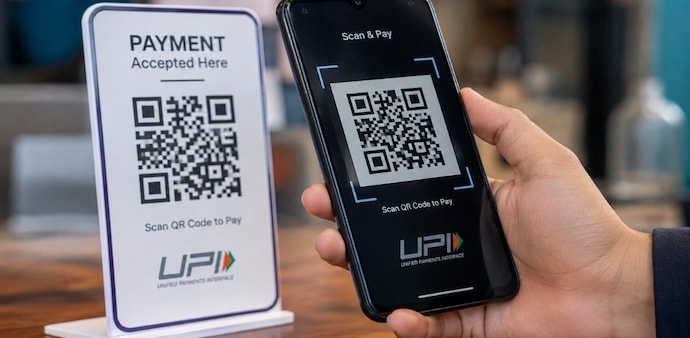
The government on September 14 has notified that banks and payment system providers cannot charge a fee on UPI transactions of up to ₹2,000. Payments above ₹2,000 are not covered by this exemption, opening the door for charges such as Merchant Discount Rate (MDR). These changes have been brought under the Payment and Settlement Systems Act.
- Sep 15, 2026,
- Updated Sep 15, 2026 3:33 PM IST
Merchant Discount Rate (MDR) is a fee that merchants pay for accepting certain digital payments. It is generally charged as a percentage of the transaction value and is shared among banks, payment networks, payment service providers and other entities involved in processing the payment. The exact rate can vary depending on the payment mode, merchant category, transaction value and commercial arrangement.
Credit-card transactions typically attract an MDR of around 1-3%, while debit-card MDR can be up to 0.9%. UPI, however, has operated under a zero-MDR regime since January 2020, meaning merchants have not paid a transaction fee for accepting UPI.
That could now change for some high-value merchant transactions.
What has the government changed?
The government has barred banks and payment system providers from charging fees on UPI transactions of up to ₹2,000, while payments above that threshold are outside the exemption. This creates the legal framework for potentially introducing an MDR on certain UPI transactions above ₹2,000.
Importantly, this does not mean that an MDR has already been imposed on UPI. The rate and categories of transactions that may attract it are yet to be finalised. Reports have suggested that a nominal rate of around 0.4% could be considered for some high-value person-to-merchant (P2M) transactions.
MUST READ: NPCI to discuss MDR rates for UPI transactions above ₹2,000 today, say sources
Person-to-person (P2P) transfers, such as sending more than ₹2,000 to a friend or family member, would remain free.
Why does MDR matter to consumers?
Although MDR is technically a merchant-side charge, consumers could feel its impact if businesses pass the cost on to them. This is already seen in some credit-card transactions, where merchants may add a surcharge or adjust prices to recover payment-processing costs. A similar practice could emerge for UPI.
The potential impact is significant because high-value transactions account for a disproportionate share of UPI's total value. In 2025-26, transactions above ₹2,000 represented only about 4% of P2M UPI transactions by volume, but accounted for roughly two-thirds of their value. Overall, more than 24,000 crore UPI transactions worth ₹314 lakh crore were processed during the year.
What did FM say on MDR?
In August during the Monsoon session in the parliament, Finance Minister Nirmala Sitharaman said any MDR introduced on digital payments would be charged to merchants, not customers. Her clarification came after Congress leader Jairam Ramesh argued that merchants could ultimately pass the cost on to consumers.
Sitharaman said MDR is intended to strengthen the digital payments ecosystem by giving banks and fintech companies greater capacity to invest in payment infrastructure, innovation, cybersecurity and fraud prevention. She said UPI users would ultimately benefit from these investments.
ALSO READ: MDR on UPI: What it means for customers
No decision yet on UPI MDR
The Finance Minister also stressed that the government had not yet decided to introduce MDR on UPI transactions. She said the UPI and Services Steering Committee, headed by NPCI, would examine the issue after Parliament passes the Taxation and Other Laws (Amendment) Bill, 2026.
The legislation does not itself impose MDR or specify a fee. Instead, it gives the government the legal authority to decide which electronic payment modes or transactions should remain free.
Why is the government considering MDR now?
UPI's rapid expansion has increased the cost of maintaining infrastructure, cybersecurity and fraud-prevention systems. More than 55 crore people use UPI, while hundreds of banks and payment-service entities facilitate transactions. Industry estimates put the annual cost of running and securing the ecosystem at around ₹20,000 crore.
The government has cited three broad reasons: rising transaction volumes, greater competition and financial sustainability. The Standing Committee on Finance has also flagged concerns over the long-term sustainability of a zero-MDR model.
The key question now is how any fee is structured and whether merchants absorb it or pass it on to consumers. If it remains limited and nominal, the impact on everyday UPI users may be minimal.
DO READ: No 0.5% UPI fee above ₹2,000: Amit Malviya calls Congress claim 'completely false'
Merchant Discount Rate (MDR) is a fee that merchants pay for accepting certain digital payments. It is generally charged as a percentage of the transaction value and is shared among banks, payment networks, payment service providers and other entities involved in processing the payment. The exact rate can vary depending on the payment mode, merchant category, transaction value and commercial arrangement.
Credit-card transactions typically attract an MDR of around 1-3%, while debit-card MDR can be up to 0.9%. UPI, however, has operated under a zero-MDR regime since January 2020, meaning merchants have not paid a transaction fee for accepting UPI.
That could now change for some high-value merchant transactions.
What has the government changed?
The government has barred banks and payment system providers from charging fees on UPI transactions of up to ₹2,000, while payments above that threshold are outside the exemption. This creates the legal framework for potentially introducing an MDR on certain UPI transactions above ₹2,000.
Importantly, this does not mean that an MDR has already been imposed on UPI. The rate and categories of transactions that may attract it are yet to be finalised. Reports have suggested that a nominal rate of around 0.4% could be considered for some high-value person-to-merchant (P2M) transactions.
MUST READ: NPCI to discuss MDR rates for UPI transactions above ₹2,000 today, say sources
Person-to-person (P2P) transfers, such as sending more than ₹2,000 to a friend or family member, would remain free.
Why does MDR matter to consumers?
Although MDR is technically a merchant-side charge, consumers could feel its impact if businesses pass the cost on to them. This is already seen in some credit-card transactions, where merchants may add a surcharge or adjust prices to recover payment-processing costs. A similar practice could emerge for UPI.
The potential impact is significant because high-value transactions account for a disproportionate share of UPI's total value. In 2025-26, transactions above ₹2,000 represented only about 4% of P2M UPI transactions by volume, but accounted for roughly two-thirds of their value. Overall, more than 24,000 crore UPI transactions worth ₹314 lakh crore were processed during the year.
What did FM say on MDR?
In August during the Monsoon session in the parliament, Finance Minister Nirmala Sitharaman said any MDR introduced on digital payments would be charged to merchants, not customers. Her clarification came after Congress leader Jairam Ramesh argued that merchants could ultimately pass the cost on to consumers.
Sitharaman said MDR is intended to strengthen the digital payments ecosystem by giving banks and fintech companies greater capacity to invest in payment infrastructure, innovation, cybersecurity and fraud prevention. She said UPI users would ultimately benefit from these investments.
ALSO READ: MDR on UPI: What it means for customers
No decision yet on UPI MDR
The Finance Minister also stressed that the government had not yet decided to introduce MDR on UPI transactions. She said the UPI and Services Steering Committee, headed by NPCI, would examine the issue after Parliament passes the Taxation and Other Laws (Amendment) Bill, 2026.
The legislation does not itself impose MDR or specify a fee. Instead, it gives the government the legal authority to decide which electronic payment modes or transactions should remain free.
Why is the government considering MDR now?
UPI's rapid expansion has increased the cost of maintaining infrastructure, cybersecurity and fraud-prevention systems. More than 55 crore people use UPI, while hundreds of banks and payment-service entities facilitate transactions. Industry estimates put the annual cost of running and securing the ecosystem at around ₹20,000 crore.
The government has cited three broad reasons: rising transaction volumes, greater competition and financial sustainability. The Standing Committee on Finance has also flagged concerns over the long-term sustainability of a zero-MDR model.
The key question now is how any fee is structured and whether merchants absorb it or pass it on to consumers. If it remains limited and nominal, the impact on everyday UPI users may be minimal.
DO READ: No 0.5% UPI fee above ₹2,000: Amit Malviya calls Congress claim 'completely false'