
Amazon rainforest's secret past: Scans uncover lost civilization that housed 3 million people
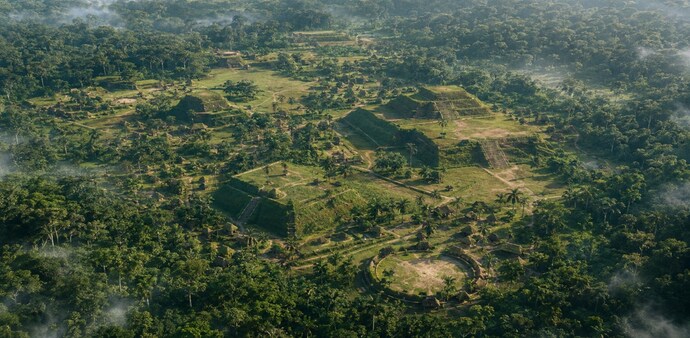
By stripping away the forest cover digitally, researchers uncovered hundreds of previously unknown archaeological sites, revealing a network of settlements, ceremonial centres, roads and geometric earthworks that had remained hidden for centuries.
- Aug 2, 2026,
- Updated Aug 2, 2026 6:15 AM IST
For centuries, the Amazon was seen as an endless wilderness — vast, untouched and too hostile to support large human settlements. Then lasers pierced its dense canopy. What emerged wasn't just a handful of ruins, but the outlines of an ancient civilization that may have been home to as many as 3 million people, challenging one of archaeology's longest-standing assumptions about the world's largest rainforest.
The breakthrough comes from LiDAR (Light Detection and Ranging), a remote-sensing technology capable of mapping the ground beneath thick vegetation. By stripping away the forest cover digitally, researchers uncovered hundreds of previously unknown archaeological sites, revealing a network of settlements, ceremonial centres, roads and geometric earthworks that had remained hidden for centuries.
Civilization concealed by the forest
Scientists identified 396 previously unknown geoglyphs across southwestern Amazonia, significantly expanding the known archaeological landscape of the region. Using these discoveries alongside predictive computer models, researchers estimate that 24,000 to 30,000 earthworks could still be buried beneath the rainforest.
The civilization, known as the Aquiry culture, is believed to have thrived between 600 BC and AD 850. At its peak, it may have supported between 1.25 million and 3 million people, making it one of the largest known pre-Columbian population centres in the Americas.
More than isolated villages
The findings challenge the long-held belief that poor soils and dense forests prevented complex societies from developing in the Amazon.
Instead of scattered communities living in isolation, researchers found evidence of interconnected settlements linked by straight roads and shared ceremonial spaces. Massive geometric earthworks — formed using deep ditches and raised embankments — were likely used for rituals, public gatherings, political meetings and other community events.
Rather than functioning as a single empire, scientists believe the Aquiry represented a network of culturally connected communities spread across an area comparable in size to modern-day Syria.
Rainforest was shaped by humans
Perhaps the most significant takeaway is that the Amazon was not simply inhabited — it was actively engineered.
Evidence suggests ancient residents managed forests through controlled burning, cultivated crops including maize and squash, and modified the landscape while preserving much of its tree cover. What appears today to be pristine wilderness is, in many areas, a forest that regenerated after centuries-old settlements were abandoned.
The discoveries reinforce a growing scientific consensus that large parts of the Amazon have been shaped by human activity for thousands of years.
Why LiDAR is changing archaeology
LiDAR has transformed archaeological research by allowing scientists to see through dense vegetation that obscures ancient landscapes.
Mounted on aircraft, the system sends millions of laser pulses toward the ground. While many reflect off the forest canopy, enough reach the surface to create highly detailed three-dimensional maps, exposing roads, platforms, canals and ceremonial complexes that would otherwise remain invisible.
Despite the scale of the discovery, many questions remain unanswered.
Researchers are still investigating why the Aquiry civilization declined around AD 850-950, and only a fraction of the Amazon has been surveyed using LiDAR. That means thousands of additional archaeological sites may still lie hidden beneath the rainforest.
For centuries, the Amazon was seen as an endless wilderness — vast, untouched and too hostile to support large human settlements. Then lasers pierced its dense canopy. What emerged wasn't just a handful of ruins, but the outlines of an ancient civilization that may have been home to as many as 3 million people, challenging one of archaeology's longest-standing assumptions about the world's largest rainforest.
The breakthrough comes from LiDAR (Light Detection and Ranging), a remote-sensing technology capable of mapping the ground beneath thick vegetation. By stripping away the forest cover digitally, researchers uncovered hundreds of previously unknown archaeological sites, revealing a network of settlements, ceremonial centres, roads and geometric earthworks that had remained hidden for centuries.
Civilization concealed by the forest
Scientists identified 396 previously unknown geoglyphs across southwestern Amazonia, significantly expanding the known archaeological landscape of the region. Using these discoveries alongside predictive computer models, researchers estimate that 24,000 to 30,000 earthworks could still be buried beneath the rainforest.
The civilization, known as the Aquiry culture, is believed to have thrived between 600 BC and AD 850. At its peak, it may have supported between 1.25 million and 3 million people, making it one of the largest known pre-Columbian population centres in the Americas.
More than isolated villages
The findings challenge the long-held belief that poor soils and dense forests prevented complex societies from developing in the Amazon.
Instead of scattered communities living in isolation, researchers found evidence of interconnected settlements linked by straight roads and shared ceremonial spaces. Massive geometric earthworks — formed using deep ditches and raised embankments — were likely used for rituals, public gatherings, political meetings and other community events.
Rather than functioning as a single empire, scientists believe the Aquiry represented a network of culturally connected communities spread across an area comparable in size to modern-day Syria.
Rainforest was shaped by humans
Perhaps the most significant takeaway is that the Amazon was not simply inhabited — it was actively engineered.
Evidence suggests ancient residents managed forests through controlled burning, cultivated crops including maize and squash, and modified the landscape while preserving much of its tree cover. What appears today to be pristine wilderness is, in many areas, a forest that regenerated after centuries-old settlements were abandoned.
The discoveries reinforce a growing scientific consensus that large parts of the Amazon have been shaped by human activity for thousands of years.
Why LiDAR is changing archaeology
LiDAR has transformed archaeological research by allowing scientists to see through dense vegetation that obscures ancient landscapes.
Mounted on aircraft, the system sends millions of laser pulses toward the ground. While many reflect off the forest canopy, enough reach the surface to create highly detailed three-dimensional maps, exposing roads, platforms, canals and ceremonial complexes that would otherwise remain invisible.
Despite the scale of the discovery, many questions remain unanswered.
Researchers are still investigating why the Aquiry civilization declined around AD 850-950, and only a fraction of the Amazon has been surveyed using LiDAR. That means thousands of additional archaeological sites may still lie hidden beneath the rainforest.