
From laptops to EVs: How IIT Madras is rethinking the science of keeping electronics cool
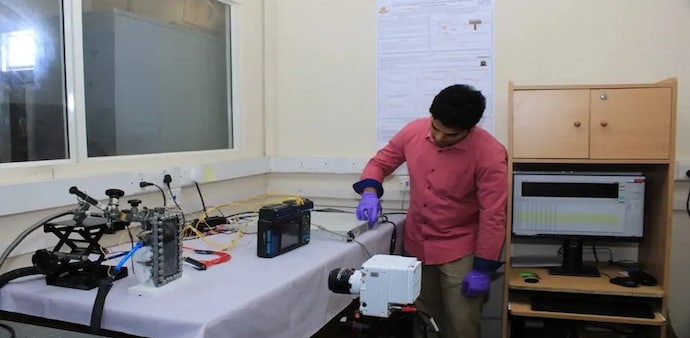
Scientists at the institute have developed and experimentally validated a new cooling configuration that improves how heat is removed from compact electronic systems.
- Jul 30, 2026,
- Updated Jul 30, 2026 2:54 PM IST
The faster electronic devices become, the more heat they generate. That heat is more than just an inconvenience — it can reduce performance, shorten the lifespan of components and limit how much computing power engineers can pack into increasingly compact devices.
Solving this challenge has become one of the biggest priorities for the electronics industry, and researchers at IIT Madras believe they have found a smarter way forward.
Scientists at the institute have developed and experimentally validated a new cooling configuration that improves how heat is removed from compact electronic systems. The innovation could have applications in everything from smartphones and laptops to electric vehicles, data centres, defence equipment and aerospace systems.
Passive cooling system with a smarter design
The breakthrough centres on a redesigned Flat Plate Pulsating Heat Pipe (FPPHP) — a passive cooling device that transfers heat without requiring pumps or any external power.
The system contains tiny channels partially filled with liquid. As electronic components heat up, the liquid evaporates and moves towards cooler sections, where it condenses before flowing back. This continuous cycle efficiently carries heat away from critical components while consuming no additional energy.
Unlike conventional designs, the IIT Madras team adopted an antiparallel configuration, placing the heat-absorbing evaporator and the heat-releasing condenser on opposite faces of the plate. This arrangement makes the cooling device easier to integrate into compact electronic systems where space is at a premium.
The researchers also replaced conventional gasket sealing with an O-ring sealing configuration. Although the modification appears minor, laboratory tests showed that the new design reduced overall thermal resistance by 16% under higher heat loads compared with traditional gasket-based systems.
Lower thermal resistance enables heat to escape more efficiently, allowing electronic components to operate at safer temperatures.
Why aluminium outperformed copper
Another notable finding emerged during material testing. The aluminium version of the cooling device not only proved lighter than copper but also demonstrated nearly 20% lower thermal resistance, indicating that lighter materials can simultaneously improve cooling efficiency.
This could help manufacturers build lighter, more energy-efficient electronic products without compromising thermal performance.
According to Professor Arvind Pattamatta from IIT Madras' Department of Mechanical Engineering, the cooling system works like a sealed tube in which liquid continuously oscillates between hot and cold regions. As the liquid repeatedly evaporates and condenses, it transports heat naturally without requiring mechanical assistance.
This makes the technology particularly attractive for applications where reliability, compactness and energy efficiency are critical.
Applications beyond consumer gadgets
The implications of the research extend well beyond smartphones and laptops. Electric vehicles rely on effective cooling to manage battery packs and power electronics, while AI data centres generate enormous amounts of heat as processors operate continuously under heavy workloads.
Defence platforms and aerospace systems also require compact, lightweight cooling technologies capable of functioning reliably in demanding environments.
An efficient passive cooling solution could improve performance, reduce maintenance requirements and extend the operational life of critical electronic systems across these sectors.
The faster electronic devices become, the more heat they generate. That heat is more than just an inconvenience — it can reduce performance, shorten the lifespan of components and limit how much computing power engineers can pack into increasingly compact devices.
Solving this challenge has become one of the biggest priorities for the electronics industry, and researchers at IIT Madras believe they have found a smarter way forward.
Scientists at the institute have developed and experimentally validated a new cooling configuration that improves how heat is removed from compact electronic systems. The innovation could have applications in everything from smartphones and laptops to electric vehicles, data centres, defence equipment and aerospace systems.
Passive cooling system with a smarter design
The breakthrough centres on a redesigned Flat Plate Pulsating Heat Pipe (FPPHP) — a passive cooling device that transfers heat without requiring pumps or any external power.
The system contains tiny channels partially filled with liquid. As electronic components heat up, the liquid evaporates and moves towards cooler sections, where it condenses before flowing back. This continuous cycle efficiently carries heat away from critical components while consuming no additional energy.
Unlike conventional designs, the IIT Madras team adopted an antiparallel configuration, placing the heat-absorbing evaporator and the heat-releasing condenser on opposite faces of the plate. This arrangement makes the cooling device easier to integrate into compact electronic systems where space is at a premium.
The researchers also replaced conventional gasket sealing with an O-ring sealing configuration. Although the modification appears minor, laboratory tests showed that the new design reduced overall thermal resistance by 16% under higher heat loads compared with traditional gasket-based systems.
Lower thermal resistance enables heat to escape more efficiently, allowing electronic components to operate at safer temperatures.
Why aluminium outperformed copper
Another notable finding emerged during material testing. The aluminium version of the cooling device not only proved lighter than copper but also demonstrated nearly 20% lower thermal resistance, indicating that lighter materials can simultaneously improve cooling efficiency.
This could help manufacturers build lighter, more energy-efficient electronic products without compromising thermal performance.
According to Professor Arvind Pattamatta from IIT Madras' Department of Mechanical Engineering, the cooling system works like a sealed tube in which liquid continuously oscillates between hot and cold regions. As the liquid repeatedly evaporates and condenses, it transports heat naturally without requiring mechanical assistance.
This makes the technology particularly attractive for applications where reliability, compactness and energy efficiency are critical.
Applications beyond consumer gadgets
The implications of the research extend well beyond smartphones and laptops. Electric vehicles rely on effective cooling to manage battery packs and power electronics, while AI data centres generate enormous amounts of heat as processors operate continuously under heavy workloads.
Defence platforms and aerospace systems also require compact, lightweight cooling technologies capable of functioning reliably in demanding environments.
An efficient passive cooling solution could improve performance, reduce maintenance requirements and extend the operational life of critical electronic systems across these sectors.