
From seafood waste to reef recovery: How 500,000 tons of oyster shells helped restore the Gulf
As living oysters developed, they helped filter the water and keep harmful algae blooms at bay.
- Sep 18, 2026,
- Updated Sep 18, 2026 2:00 AM IST
A large-scale shell recycling effort in Florida has helped restore parts of the Gulf of Mexico’s marine ecosystem, with more than 500,000 tons of discarded oyster and clam shells returned to the water between 2007 and 2024, Upworthy reported on Sunday.
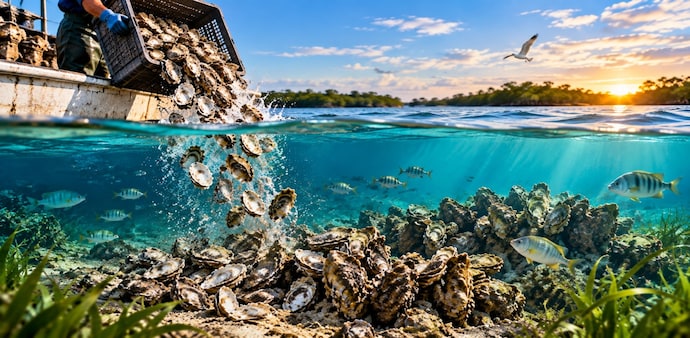
The shells, collected from seafood restaurants and seafood processing plants, were used to rebuild oyster reefs in areas where natural reef structures had declined. What initially looked like little more than dumping waste into the sea eventually helped create conditions for marine life to return.
The restoration effort relied on a simple idea, put hard shell material back into waterways where oyster reefs had disappeared.
Once underwater, bacteria began attaching themselves to the discarded shells and forming a biofilm. The shells also released calcium as they gradually broke down, creating “microzones” with slightly different chemical conditions that can support underwater organisms.
Don't Miss: 90% metal recovery: Singapore pilot plant uses orange, lemon, pineapple peels to recycle batteries
The dead shells also provided a hard surface for young oysters to attach to and grow. This was important in areas where reef loss had left mainly soft surfaces.
As living oysters developed, they helped filter the water and keep harmful algae blooms at bay. Over time, the combination of shell material, oysters and other marine organisms helped rebuild the reef ecosystem.
The restoration was not immediately visible. Researchers initially had doubts about whether the project would produce noticeable results, but biological activity was taking place beneath the surface.
Impact on marine life and coastal communities
As the reefs recovered, fish, turtle and dolphin populations reportedly returned to numbers not seen in over two and a half decades.
Oyster reefs can also have wider effects on coastal communities. Healthy marine ecosystems support fisheries and the livelihoods of fishermen, while declining fish populations can affect seafood prices and tourism.
Reefs can also help protect coastlines during storms, making their restoration relevant beyond marine biodiversity.
Shell recycling expands to other states
Florida’s restoration programme has also been followed by similar shell recycling efforts elsewhere in the US. Programs have been deployed in Alabama, Texas, Louisiana, California, Mississippi and the Carolinas.
The approach is based on using a natural material that would otherwise be treated as waste to recreate the physical foundation needed for oyster reefs.
Oyster populations have declined because of overharvesting as well as human-caused disasters, including the Deepwater Horizon oil spill.
While no single restoration project can reverse decades of environmental damage, the Florida effort highlights how discarded shells can be put back into marine ecosystems and used as a foundation for reef recovery.
A large-scale shell recycling effort in Florida has helped restore parts of the Gulf of Mexico’s marine ecosystem, with more than 500,000 tons of discarded oyster and clam shells returned to the water between 2007 and 2024, Upworthy reported on Sunday.
The shells, collected from seafood restaurants and seafood processing plants, were used to rebuild oyster reefs in areas where natural reef structures had declined. What initially looked like little more than dumping waste into the sea eventually helped create conditions for marine life to return.
The restoration effort relied on a simple idea, put hard shell material back into waterways where oyster reefs had disappeared.
Once underwater, bacteria began attaching themselves to the discarded shells and forming a biofilm. The shells also released calcium as they gradually broke down, creating “microzones” with slightly different chemical conditions that can support underwater organisms.
Don't Miss: 90% metal recovery: Singapore pilot plant uses orange, lemon, pineapple peels to recycle batteries
The dead shells also provided a hard surface for young oysters to attach to and grow. This was important in areas where reef loss had left mainly soft surfaces.
As living oysters developed, they helped filter the water and keep harmful algae blooms at bay. Over time, the combination of shell material, oysters and other marine organisms helped rebuild the reef ecosystem.
The restoration was not immediately visible. Researchers initially had doubts about whether the project would produce noticeable results, but biological activity was taking place beneath the surface.
Impact on marine life and coastal communities
As the reefs recovered, fish, turtle and dolphin populations reportedly returned to numbers not seen in over two and a half decades.
Oyster reefs can also have wider effects on coastal communities. Healthy marine ecosystems support fisheries and the livelihoods of fishermen, while declining fish populations can affect seafood prices and tourism.
Reefs can also help protect coastlines during storms, making their restoration relevant beyond marine biodiversity.
Shell recycling expands to other states
Florida’s restoration programme has also been followed by similar shell recycling efforts elsewhere in the US. Programs have been deployed in Alabama, Texas, Louisiana, California, Mississippi and the Carolinas.
The approach is based on using a natural material that would otherwise be treated as waste to recreate the physical foundation needed for oyster reefs.
Oyster populations have declined because of overharvesting as well as human-caused disasters, including the Deepwater Horizon oil spill.
While no single restoration project can reverse decades of environmental damage, the Florida effort highlights how discarded shells can be put back into marine ecosystems and used as a foundation for reef recovery.