
India’s first AI-powered half-humanoid Vyommitra gets ready for historic space flight
ISRO’s robotic astronaut will fly aboard an uncrewed mission in the last quarter of 2026 to validate key technologies ahead of India’s human spaceflight programme.
- Aug 5, 2026,
- Updated Aug 5, 2026 6:09 PM IST
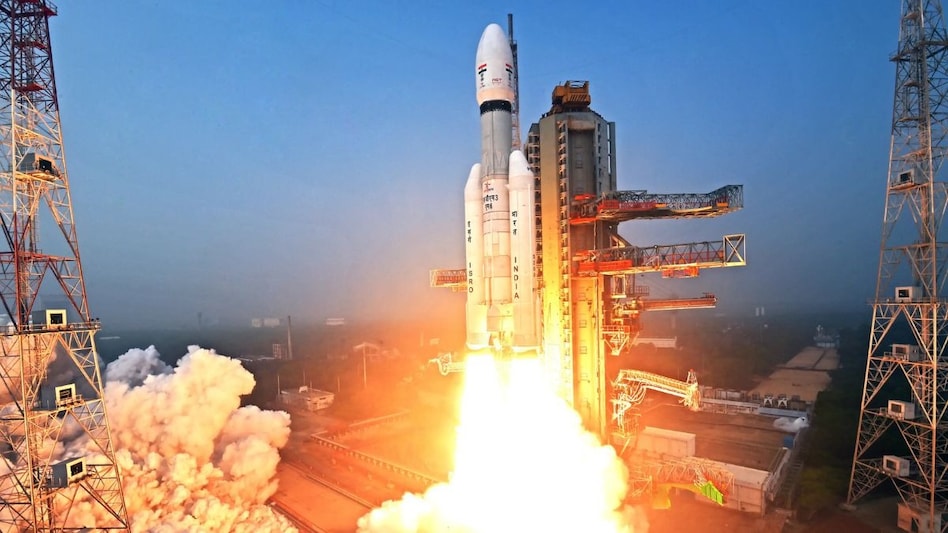
India is set to launch Vyommitra, an AI-powered half-humanoid, as part of the first uncrewed experimental space mission in the last quarter of calendar year 2026.
The mission will validate various technologies being developed for the first time, including the Vyommitra half-humanoid. Two more uncrewed missions in a configuration identical to the first crewed mission are targeted by 2027, the government informed Parliament today.
The operationalisation of Bharatiya Antariksh Station (BAS) is targeted by 2035. ISRO has worked out the overall configuration of Bharatiya Antariksh Station, which will comprise five modules. The government has approved the development and launch of the first module, BAS-01. Overall system engineering of the BAS-01 module and technology development activities for various subsystems are progressing at ISRO centres and units.
The Union Cabinet approved a budgetary allocation of Rs 20,193 crore for the accomplishment of eight missions in September 2024.
ISRO is collaborating with international space agencies in various areas. Network operations support for the Gaganyaan missions is being enabled through collaboration with the European Space Agency (ESA).
Through an implementing arrangement with the Australian Space Agency (ASA), cooperation on crew and crew module recovery for Gaganyaan missions is being pursued. ISRO’s collaboration with the French National Space Agency (CNES) has enabled the training of ISRO’s flight surgeons and ground support teams at CNES/European facilities.
Further, ISRO and Russia’s State Space Corporation Roscosmos entered into an MoU for joint activities in the Human Spaceflight Programme. This has enabled contracts for the delivery of subsystems such as crew seats, viewports and flight suits, as well as wind tunnel testing and generic space flight training of the first batch of Gaganyatris at the Gagarin Cosmonaut Training Centre.
India is set to launch Vyommitra, an AI-powered half-humanoid, as part of the first uncrewed experimental space mission in the last quarter of calendar year 2026.
The mission will validate various technologies being developed for the first time, including the Vyommitra half-humanoid. Two more uncrewed missions in a configuration identical to the first crewed mission are targeted by 2027, the government informed Parliament today.
The operationalisation of Bharatiya Antariksh Station (BAS) is targeted by 2035. ISRO has worked out the overall configuration of Bharatiya Antariksh Station, which will comprise five modules. The government has approved the development and launch of the first module, BAS-01. Overall system engineering of the BAS-01 module and technology development activities for various subsystems are progressing at ISRO centres and units.
The Union Cabinet approved a budgetary allocation of Rs 20,193 crore for the accomplishment of eight missions in September 2024.
ISRO is collaborating with international space agencies in various areas. Network operations support for the Gaganyaan missions is being enabled through collaboration with the European Space Agency (ESA).
Through an implementing arrangement with the Australian Space Agency (ASA), cooperation on crew and crew module recovery for Gaganyaan missions is being pursued. ISRO’s collaboration with the French National Space Agency (CNES) has enabled the training of ISRO’s flight surgeons and ground support teams at CNES/European facilities.
Further, ISRO and Russia’s State Space Corporation Roscosmos entered into an MoU for joint activities in the Human Spaceflight Programme. This has enabled contracts for the delivery of subsystems such as crew seats, viewports and flight suits, as well as wind tunnel testing and generic space flight training of the first batch of Gaganyatris at the Gagarin Cosmonaut Training Centre.