
Pacific Ocean warms to 30°C as El Niño strengthens; India faces weather concerns
According to the World Meteorological Organisation (WMO), temperatures across the central and eastern tropical Pacific are expected to reach record levels during October-December, with the phenomenon likely to peak around December
- Oct 24, 2026,
- Updated Oct 24, 2026 5:47 PM IST
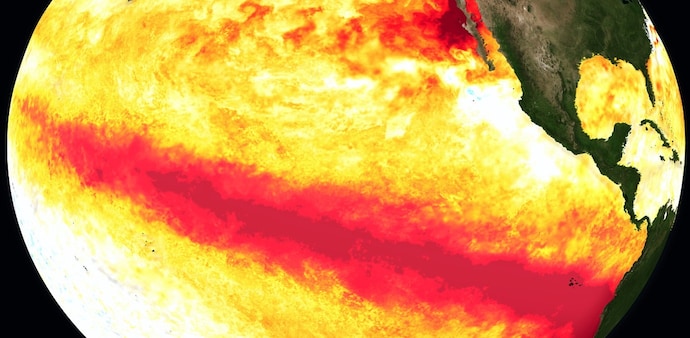
The Pacific Ocean has reached an unprecedented temperature milestone as a powerful El Niño continues to intensify, raising concerns about global weather patterns and their potential impact on India. Sea surface temperatures in the central equatorial Pacific reached around 30°C on October 22, according to data from the US National Oceanic and Atmospheric Administration (NOAA).
The development comes as scientists warn that the current El Niño could become one of the strongest on record, with its effects potentially extending into early 2027.
According to the World Meteorological Organisation (WMO), temperatures across the central and eastern tropical Pacific are expected to reach record levels during October-December, with the phenomenon likely to peak around December.
READ THIS: Why is El Niño 2026 a crucial case for India’s thermal power assets?
Why is the Pacific Ocean warming concerning?
El Niño is a natural climate phenomenon characterised by unusually warm sea surface temperatures across the central and eastern tropical Pacific. It alters atmospheric circulation, wind patterns and the movement of rain-bearing clouds, influencing weather conditions across several parts of the world.
The intensity of the current event has raised particular concerns. The average sea surface temperature anomaly in the Niño 3.4 region rose from 1.6°C above normal in June to 2.5°C in August, according to figures cited by India Today from WMO data.
Forecasts suggest the anomaly could reach approximately 3.7°C during October-December, potentially exceeding the previous record of 2.6°C recorded between November 2015 and January 2016.
These figures represent temperatures above the long-term average, rather than the actual temperature of the ocean.
ALSO READ: India ranks 4th among countries worst hit by heat-related deaths due to Super El Nino. Here's how
How could El Niño affect India?
For India, the strengthening El Niño raises concerns about rainfall distribution, rising temperatures and the possibility of disruptive weather conditions in the coming months.
The southwest monsoon ended in 2026 with rainfall around 13% below normal, according to the India Meteorological Department (IMD). The developing climate pattern could also influence the ongoing post-monsoon season.
The WMO's October outlook indicates that above-normal temperatures are likely across much of South Asia. Meanwhile, below-normal rainfall is more likely over large parts of central and southern peninsular South Asia during October-December.
However, El Niño does not determine India's weather on its own. Other oceanic and atmospheric factors, including the Indian Ocean Dipole, also influence rainfall patterns. Regional weather systems can still produce heavy rainfall even when seasonal projections indicate below-normal precipitation.