
Retina chip restoring partial sight enters Europe as US startup nears commercial neurotech
The US Food and Drug Administration has allowed the startup to pursue a humanitarian device exemption pathway, which is intended for products that address rare conditions and offers a streamlined route to approval.
- Jul 25, 2026,
- Updated Jul 25, 2026 6:00 AM IST
Science Corp is set to begin selling a retina chip in Europe that can restore some vision for people suffering from an advanced form of age-related blindness, marking a major step for the startup as it looks to expand beyond eye implants into brain-based technologies, as per a Bloomberg report.
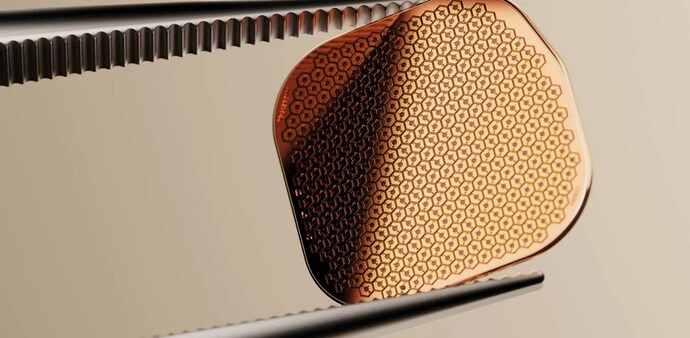
The Alameda, California-based company’s Prima implant is the first device from a US brain implant company to become widely available to patients. The chip is placed at the back of the eye and works with specially designed glasses to help users regain limited vision.
“This is the first in hopefully a long series of commercial products that proceed to advance that horizon, sometimes incrementally, but relentlessly,” Chief Executive Officer Max Hodak told Bloomberg.
The implant has received the CE mark, allowing it to be sold across Europe without additional country-level approvals. Science expects to implant its first commercial patient in August, likely in Germany, and plans to treat dozens of patients this year and around 200 next year.
The Prima implant is designed for patients with geographic atrophy caused by age-related macular degeneration, an advanced form of the disease that affects the retina and can severely limit central vision. While existing treatments can slow progression, there are currently no cures.
Hundreds of thousands of people in Europe could potentially qualify for the treatment, Hodak told Bloomberg. A study published last year in the New England Journal of Medicine found that the device improved vision in 26 of 32 patients with advanced age-related macular degeneration, allowing them to identify forms such as letters, numbers and words.
Science Corp is also pursuing broader ambitions in the neurotechnology space, including devices that connect with brain tissue using engineered neurons. The company has raised $489 million and was valued at $1.5 billion, Bloomberg News reported in March.
The company is among the most valuable US brain implant startups, behind Elon Musk’s Neuralink, as investment in the sector grows globally. Governments and investors are increasingly backing brain-computer interface technologies, with China also making the field a national priority and approving its first commercial brain-computer interface this year.
The company is also seeking approval in the US and hopes to bring the device to the American market next year. The US Food and Drug Administration has allowed Science to pursue a humanitarian device exemption pathway, which is intended for products that address rare conditions and offers a streamlined route to approval.
For Science, the retina implant represents an early commercial milestone in a much larger effort to develop technologies that connect humans with machines. “This is the first in hopefully a long series of commercial products that proceed to advance that horizon, sometimes incrementally, but relentlessly,” Hodak told Bloomberg.
Science Corp is set to begin selling a retina chip in Europe that can restore some vision for people suffering from an advanced form of age-related blindness, marking a major step for the startup as it looks to expand beyond eye implants into brain-based technologies, as per a Bloomberg report.
The Alameda, California-based company’s Prima implant is the first device from a US brain implant company to become widely available to patients. The chip is placed at the back of the eye and works with specially designed glasses to help users regain limited vision.
“This is the first in hopefully a long series of commercial products that proceed to advance that horizon, sometimes incrementally, but relentlessly,” Chief Executive Officer Max Hodak told Bloomberg.
The implant has received the CE mark, allowing it to be sold across Europe without additional country-level approvals. Science expects to implant its first commercial patient in August, likely in Germany, and plans to treat dozens of patients this year and around 200 next year.
The Prima implant is designed for patients with geographic atrophy caused by age-related macular degeneration, an advanced form of the disease that affects the retina and can severely limit central vision. While existing treatments can slow progression, there are currently no cures.
Hundreds of thousands of people in Europe could potentially qualify for the treatment, Hodak told Bloomberg. A study published last year in the New England Journal of Medicine found that the device improved vision in 26 of 32 patients with advanced age-related macular degeneration, allowing them to identify forms such as letters, numbers and words.
Science Corp is also pursuing broader ambitions in the neurotechnology space, including devices that connect with brain tissue using engineered neurons. The company has raised $489 million and was valued at $1.5 billion, Bloomberg News reported in March.
The company is among the most valuable US brain implant startups, behind Elon Musk’s Neuralink, as investment in the sector grows globally. Governments and investors are increasingly backing brain-computer interface technologies, with China also making the field a national priority and approving its first commercial brain-computer interface this year.
The company is also seeking approval in the US and hopes to bring the device to the American market next year. The US Food and Drug Administration has allowed Science to pursue a humanitarian device exemption pathway, which is intended for products that address rare conditions and offers a streamlined route to approval.
For Science, the retina implant represents an early commercial milestone in a much larger effort to develop technologies that connect humans with machines. “This is the first in hopefully a long series of commercial products that proceed to advance that horizon, sometimes incrementally, but relentlessly,” Hodak told Bloomberg.