
Singapore put 13,312 solar panels in the sea. Then this tiny creature became a huge problem
The facility has 40 central inverters and one large transformer. It produces around six million kilowatt-hours of clean electricity every year.
- Aug 20, 2026,
- Updated Aug 20, 2026 9:00 AM IST
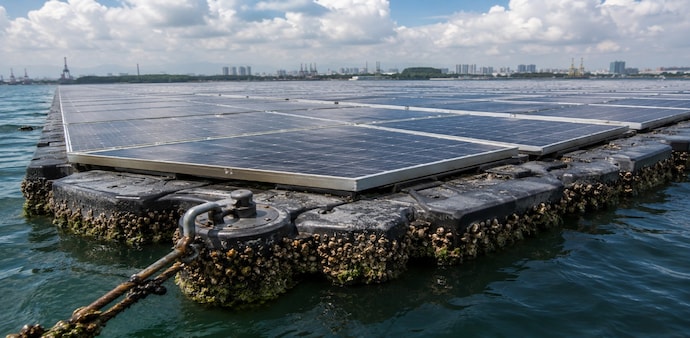
Singapore found an unusual problem after taking solar power to the sea — barnacles. Thousands of them grew on the floating structures, adding significant weight and reducing the platforms’ ability to stay above water.
Singapore is home to almost six million people and has an entire land area of just 280 square miles. With limited space for large solar farms on land, the country has been looking for other ways to produce more renewable energy, according to a report by The Pulse.
Rooftop solar is one option, but it cannot provide enough power to meet the targets under the Singapore Green Plan 2030. This led developers to look towards the sea.
Renewable energy firm EDP APAC and its subsidiary Sunseap Group developed the Woodlands Sea-Based Floating Photovoltaic (OFPV) System in the Strait of Johor, off Singapore’s northern coast.
Don't Miss: Tech layoffs weigh on India’s real estate market as housing sales fall 6% in Q2
Building a solar farm at sea brought several challenges. The floating panels had to deal with saltwater, waves, tides and strong winds. Engineers first focused on making sure the structures could remain stable in difficult weather.
A custom tension system made from marine-grade materials was anchored to the seafloor. It was designed to reduce movement, prevent corrosion and keep the solar array in place.
13,312 solar panels on 30,000 pontoons
The five-megawatt project has 13,312 solar panels installed on more than 30,000 pontoons. It covers 12 acres of the Strait of Johor and is one of the world’s largest floating solar projects in a marine environment.
The sea also offers an advantage. The water helps cool the solar panels during the hottest part of the day, which can improve their output compared with panels installed on land.
The facility has 40 central inverters and one large transformer. It produces around six million kilowatt-hours of clean electricity every year.
According to the Singapore Economic Development Board, the project cuts over four thousand metric tons of carbon emissions each year while supplying clean power to Singapore’s municipal grid.
But the biggest problem was not waves or strong winds. It came from marine life.
Barnacles added nearly 43% to the weight
The warm tropical seawater around the project provided the perfect conditions for marine organisms to grow.
Algae, sea squirts and thousands of barnacles attached themselves to the submerged pontoons and mooring lines. Over time, they formed thick layers across the structures.
This buildup increased the mass of the floating system by nearly 43 percent.
The extra weight pushed the pontoons deeper into the water and reduced their buoyancy. As the platforms sank lower, heavy steel hinges designed to handle wave movement began to lock in place.
The lower position also meant that seawater could splash onto electrical connectors more easily. This increased the risk of corrosion and could affect the solar farm’s operation.
Must Read: Think Gen Z Is shunning formal jobs? 59% of new EPFO subscribers in FY25 were 18–25
Engineers had to find a new solution
Workers began manually scraping the marine growth from the structures. Chemical anti-fouling treatments were also used to slow down further growth.
Engineers then started testing new designs. These included elevated geometric pontoons and submerged load sensors that could track changes in weight caused by marine growth.
The project showed that building a floating solar farm is about more than making structures strong enough to survive waves and storms. Engineers also have to deal with the marine life that grows on them.
New pontoon designs and protective coatings could help reduce the problem. However, the long-term cost of cleaning and maintenance is still unclear as multi-year trials continue.
For countries with limited land that want to build solar farms at sea, Singapore’s experience offers an important lesson: the ocean can provide space for solar power, but keeping the structures free from marine growth can be a major challenge.
Singapore found an unusual problem after taking solar power to the sea — barnacles. Thousands of them grew on the floating structures, adding significant weight and reducing the platforms’ ability to stay above water.
Singapore is home to almost six million people and has an entire land area of just 280 square miles. With limited space for large solar farms on land, the country has been looking for other ways to produce more renewable energy, according to a report by The Pulse.
Rooftop solar is one option, but it cannot provide enough power to meet the targets under the Singapore Green Plan 2030. This led developers to look towards the sea.
Renewable energy firm EDP APAC and its subsidiary Sunseap Group developed the Woodlands Sea-Based Floating Photovoltaic (OFPV) System in the Strait of Johor, off Singapore’s northern coast.
Don't Miss: Tech layoffs weigh on India’s real estate market as housing sales fall 6% in Q2
Building a solar farm at sea brought several challenges. The floating panels had to deal with saltwater, waves, tides and strong winds. Engineers first focused on making sure the structures could remain stable in difficult weather.
A custom tension system made from marine-grade materials was anchored to the seafloor. It was designed to reduce movement, prevent corrosion and keep the solar array in place.
13,312 solar panels on 30,000 pontoons
The five-megawatt project has 13,312 solar panels installed on more than 30,000 pontoons. It covers 12 acres of the Strait of Johor and is one of the world’s largest floating solar projects in a marine environment.
The sea also offers an advantage. The water helps cool the solar panels during the hottest part of the day, which can improve their output compared with panels installed on land.
The facility has 40 central inverters and one large transformer. It produces around six million kilowatt-hours of clean electricity every year.
According to the Singapore Economic Development Board, the project cuts over four thousand metric tons of carbon emissions each year while supplying clean power to Singapore’s municipal grid.
But the biggest problem was not waves or strong winds. It came from marine life.
Barnacles added nearly 43% to the weight
The warm tropical seawater around the project provided the perfect conditions for marine organisms to grow.
Algae, sea squirts and thousands of barnacles attached themselves to the submerged pontoons and mooring lines. Over time, they formed thick layers across the structures.
This buildup increased the mass of the floating system by nearly 43 percent.
The extra weight pushed the pontoons deeper into the water and reduced their buoyancy. As the platforms sank lower, heavy steel hinges designed to handle wave movement began to lock in place.
The lower position also meant that seawater could splash onto electrical connectors more easily. This increased the risk of corrosion and could affect the solar farm’s operation.
Must Read: Think Gen Z Is shunning formal jobs? 59% of new EPFO subscribers in FY25 were 18–25
Engineers had to find a new solution
Workers began manually scraping the marine growth from the structures. Chemical anti-fouling treatments were also used to slow down further growth.
Engineers then started testing new designs. These included elevated geometric pontoons and submerged load sensors that could track changes in weight caused by marine growth.
The project showed that building a floating solar farm is about more than making structures strong enough to survive waves and storms. Engineers also have to deal with the marine life that grows on them.
New pontoon designs and protective coatings could help reduce the problem. However, the long-term cost of cleaning and maintenance is still unclear as multi-year trials continue.
For countries with limited land that want to build solar farms at sea, Singapore’s experience offers an important lesson: the ocean can provide space for solar power, but keeping the structures free from marine growth can be a major challenge.