
Super El Nino may peak by November-December, push global heat to record highs
Scientists expect the current El Nino to strengthen further during the second half of 2026, with its intensity potentially peaking around November and December.
- Aug 16, 2026,
- Updated Aug 16, 2026 1:27 PM IST
A developing El Nino in the tropical Pacific is showing signs of becoming an unusually powerful climate event, with scientists warning that it could peak in November-December and drive global temperatures to unprecedented levels, according to a report by India Today.
Sea surface temperatures across the equatorial Pacific have already reached "Super El Nino" status. But researchers are closely watching the much larger store of heat beneath the ocean, which could rise to the surface in the coming months and further strengthen the phenomenon.
Current projections show that subsurface heat content in the tropical Pacific has already surpassed levels recorded during the major El Nino events of 1982-83, 1997-98 and 2015-16.
"This event is breaking records across multiple indicators, including the pace of warming, projected peak intensity, and the volume of stored ocean heat," climate analysts Colin McCarthy said.
Don't Miss: Fresh low-pressure area in Bay of Bengal, IMD warns of extremely heavy rain in Odisha
El Nino could peak by November-December
El Nino develops when unusually warm waters spread across the central and eastern Pacific, affecting atmospheric circulation far beyond the region. It can alter rainfall patterns and increase the risk of droughts, floods, heatwaves and changes in tropical cyclone activity across different parts of the world.
Scientists expect the current El Nino to strengthen further during the second half of 2026, with its intensity potentially peaking around November and December. If the forecasts hold, the event could exceed the strength of previous benchmark El Ninos by a significant margin.
Global temperatures could rise further
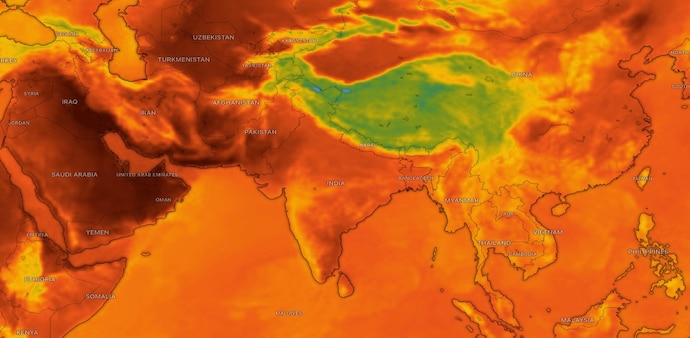
The effects could also be felt in global temperatures. Combined with long-term human-driven climate change, the powerful El Nino could temporarily push global average temperatures close to 2 degrees Celsius above pre-industrial levels in early 2027.
Such temperatures would put the planet in climate territory not seen for hundreds of thousands of years, according to researchers.
Must Read: Expired chicken, 68 kg meat seized at Mysuru hotels; KFC raided in Mangaluru
Extreme weather risks may increase
The next 12 to 18 months could also bring more extreme weather in different parts of the world, including stronger heatwaves, changing monsoon patterns, severe droughts and a higher risk of flooding.
Scientists caution that the exact regional effects remain uncertain. However, the strengthening El Nino, rising ocean temperatures and the large amount of heat stored beneath the Pacific point to a period of increased climate volatility in the months ahead.
A developing El Nino in the tropical Pacific is showing signs of becoming an unusually powerful climate event, with scientists warning that it could peak in November-December and drive global temperatures to unprecedented levels, according to a report by India Today.
Sea surface temperatures across the equatorial Pacific have already reached "Super El Nino" status. But researchers are closely watching the much larger store of heat beneath the ocean, which could rise to the surface in the coming months and further strengthen the phenomenon.
Current projections show that subsurface heat content in the tropical Pacific has already surpassed levels recorded during the major El Nino events of 1982-83, 1997-98 and 2015-16.
"This event is breaking records across multiple indicators, including the pace of warming, projected peak intensity, and the volume of stored ocean heat," climate analysts Colin McCarthy said.
Don't Miss: Fresh low-pressure area in Bay of Bengal, IMD warns of extremely heavy rain in Odisha
El Nino could peak by November-December
El Nino develops when unusually warm waters spread across the central and eastern Pacific, affecting atmospheric circulation far beyond the region. It can alter rainfall patterns and increase the risk of droughts, floods, heatwaves and changes in tropical cyclone activity across different parts of the world.
Scientists expect the current El Nino to strengthen further during the second half of 2026, with its intensity potentially peaking around November and December. If the forecasts hold, the event could exceed the strength of previous benchmark El Ninos by a significant margin.
Global temperatures could rise further
The effects could also be felt in global temperatures. Combined with long-term human-driven climate change, the powerful El Nino could temporarily push global average temperatures close to 2 degrees Celsius above pre-industrial levels in early 2027.
Such temperatures would put the planet in climate territory not seen for hundreds of thousands of years, according to researchers.
Must Read: Expired chicken, 68 kg meat seized at Mysuru hotels; KFC raided in Mangaluru
Extreme weather risks may increase
The next 12 to 18 months could also bring more extreme weather in different parts of the world, including stronger heatwaves, changing monsoon patterns, severe droughts and a higher risk of flooding.
Scientists caution that the exact regional effects remain uncertain. However, the strengthening El Nino, rising ocean temperatures and the large amount of heat stored beneath the Pacific point to a period of increased climate volatility in the months ahead.