
When is the next lunar eclipse? Check date, timing, visibility across India and the world
The February eclipse will coincide with the full Moon commonly known as the Snow Moon, a name associated with the cold and snowy conditions traditionally linked with February
- Sep 1, 2026,
- Updated Sep 1, 2026 7:00 AM IST
Next lunar eclipse
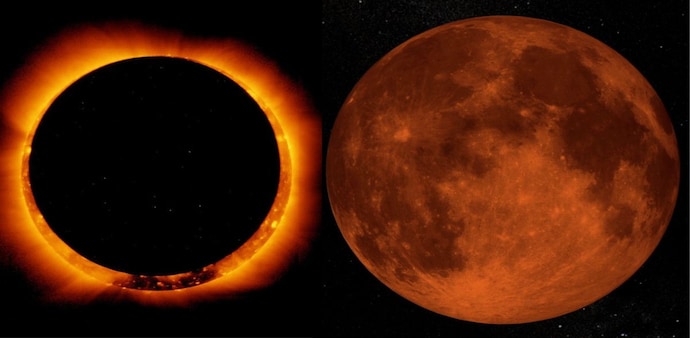
The upcoming event will be a penumbral lunar eclipse, meaning the Moon will pass through the outermost part of Earth’s shadow, known as the penumbra.
READ THIS: The Moon is drifting away from Earth — and the reason starts in our oceans
Unlike a partial or total lunar eclipse, a penumbral eclipse does not place the Moon inside Earth’s darker inner shadow, or umbra. As a result, observers should not expect the Moon to turn deep red or develop the sharply defined shadow that was visible during August’s eclipse.
The eclipse will reach its maximum at around 6:12 p.m. EST (2312 GMT) on February 20. The effect will be most noticeable around the Moon’s northern polar region, although the overall change in brightness is expected to be difficult to see with the naked eye.
According to NASA, it will be visible from the Americas, Europe, Africa, Asia and western Australia.
Will it be visible in India?
The eclipse will be visible from India during the early morning of February 21, 2027 (local time). In New Delhi, for example, it will begin at 2:42 a.m. IST, reach maximum eclipse at 4:42 a.m., and end at 6:43 a.m.
The Snow Moon will be part of the event
The February eclipse will coincide with the full Moon commonly known as the Snow Moon, a name associated with the cold and snowy conditions traditionally linked with February.
For photographers and dedicated skywatchers, the event could still provide an interesting opportunity. Space.com notes that capturing the Moon during the eclipse and comparing it with an image of an ordinary full Moon could help reveal the subtle effect of Earth's penumbral shadow.
Next lunar eclipse
The upcoming event will be a penumbral lunar eclipse, meaning the Moon will pass through the outermost part of Earth’s shadow, known as the penumbra.
READ THIS: The Moon is drifting away from Earth — and the reason starts in our oceans
Unlike a partial or total lunar eclipse, a penumbral eclipse does not place the Moon inside Earth’s darker inner shadow, or umbra. As a result, observers should not expect the Moon to turn deep red or develop the sharply defined shadow that was visible during August’s eclipse.
The eclipse will reach its maximum at around 6:12 p.m. EST (2312 GMT) on February 20. The effect will be most noticeable around the Moon’s northern polar region, although the overall change in brightness is expected to be difficult to see with the naked eye.
According to NASA, it will be visible from the Americas, Europe, Africa, Asia and western Australia.
Will it be visible in India?
The eclipse will be visible from India during the early morning of February 21, 2027 (local time). In New Delhi, for example, it will begin at 2:42 a.m. IST, reach maximum eclipse at 4:42 a.m., and end at 6:43 a.m.
The Snow Moon will be part of the event
The February eclipse will coincide with the full Moon commonly known as the Snow Moon, a name associated with the cold and snowy conditions traditionally linked with February.
For photographers and dedicated skywatchers, the event could still provide an interesting opportunity. Space.com notes that capturing the Moon during the eclipse and comparing it with an image of an ordinary full Moon could help reveal the subtle effect of Earth's penumbral shadow.