
CWG 2026: India finishes fourth with 39 medals, 13 golds; how many more medals could missing sports have delivered?
The strong showing across limited disciplines hints at a much higher medal potential when the full roster returns, especially at the 2030 Games in Ahmedabad
- Aug 3, 2026,
- Updated Aug 3, 2026 11:05 AM IST
India finished fourth at the 2026 Commonwealth Games with a 39-medal haul, including 13 gold, 17 silver and nine bronze. On the surface, it was another strong showing for a contingent competing in one of the most restricted editions of the Games, with only Australia, England and Canada finishing ahead in the standings.
But the final rankings do not fully capture India’s potential. The Glasgow edition featured just 10 sports, leaving out several disciplines that have traditionally been among the country’s biggest medal sources. The absence of shooting, wrestling, badminton and table tennis significantly reduced India’s opportunities to climb higher.
Four missing sports, dozens of lost opportunities
The impact of the reduced programme becomes clearer when looking at India’s past Commonwealth performances.
At the 2018 Gold Coast Games, shooting alone delivered 27 medals. Wrestling contributed 12 medals at Birmingham 2022, while badminton and table tennis added six and seven medals respectively at the same edition.
Together, these four disciplines accounted for 52 medals in recent Commonwealth campaigns, highlighting the scale of the opportunity India missed in Glasgow.
However, directly adding those numbers to the 2026 tally would not present a realistic picture. Medal outcomes depend on athlete form, competition levels and qualification standards in every edition. Still, the figures show how much of India’s traditional strength remained unused.
India finds depth beyond traditional medal events
Despite the missing disciplines, India managed to remain among the top four nations by producing a more balanced performance across the available events.
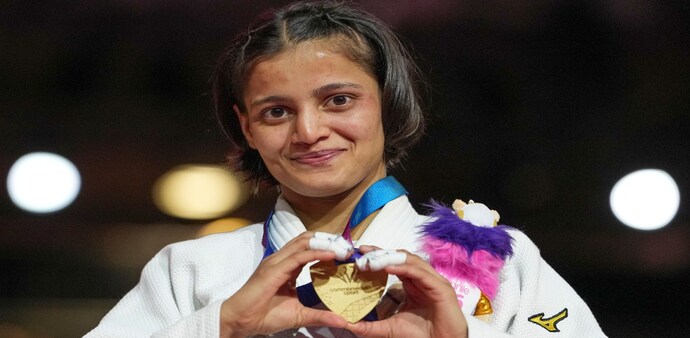
Boxing emerged as the biggest contributor with 10 medals, including seven golds, while athletics delivered one of India’s strongest Commonwealth campaigns. Weightlifting, judo and para sports also played an important role in the medal tally.
The performance suggested that India’s sporting base is expanding beyond a few established disciplines. Instead of depending heavily on shooting, wrestling or badminton, athletes across multiple sports stepped up to deliver medals.
What could happen when the full programme returns?
India’s Glasgow performance also raises an important question: what could the country achieve with its traditional medal-winning sports back on the Commonwealth schedule?
Had shooting, wrestling, badminton, and table tennis been included and Indian athletes matched previous performances, the medal tally could have moved well beyond the 70-mark, putting India in contention with Canada for third place.
The next major opportunity could come at the 2030 Commonwealth Games in Ahmedabad, where India is expected to compete in a more familiar sporting environment.
Glasgow proved that India can stay among the leading nations even without several of its strongest events. But it also showed that the 39-medal count represents only a fraction of the country’s Commonwealth potential.