
Bengaluru startup Zulu Defence bags order from Europe for AI combat drone. What is DRAP?
The deal marks a significant export milestone for the Indian startup and underlines the growing global demand for autonomous battlefield systems designed to operate in heavily jammed and electronically contested combat environments.
- May 14, 2026,
- Updated May 14, 2026 9:28 PM IST
India’s private defence manufacturing sector has scored a major international breakthrough, with Bengaluru-based Zulu Defence Systems securing a procurement order from Netherlands Special Forces for its AI-enabled DRAP loitering munition platform.
The deal marks a significant export milestone for the Indian startup and underlines the growing global demand for autonomous battlefield systems designed to operate in heavily jammed and electronically contested combat environments.
What Is DRAP?
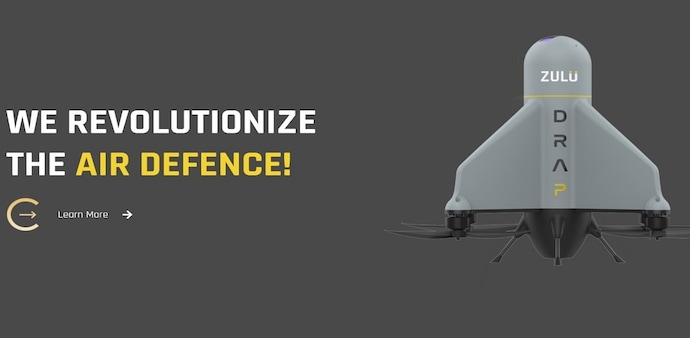
Known as the Directed Reconnaissance and Attack Platform (DRAP), the system has been developed as a compact hovering kamikaze drone capable of both surveillance and precision strike missions.
The platform is designed to bridge the operational gap between lightweight FPV drones and larger long-range loitering munitions increasingly used in modern warfare.
Zulu Defence describes the DRAP as India’s first indigenous hovering loitering munition platform capable of combining tactical reconnaissance with precision strike operations in a single deployable system.
Key features of the AI-powered drone
The DRAP has been engineered specifically for modern electronic warfare battlefields where GPS, radio links, and communications are actively jammed.
Its major capabilities include:
- AI-based autonomous targeting
- GPS-independent navigation
- Swarm attack capability
- Autonomous terminal strike mode
- Low radar and thermal signature
The platform is equipped with AI-driven edge computer vision, enabling autonomous target detection, tracking, and strike execution with minimal operator intervention.
According to the company, the drone can continue tracking and engaging targets even after communication links are disrupted or jammed — a major advantage in next-generation drone warfare.
Technical specifications
The DRAP uses a Vertical Take-Off and Landing (VTOL) architecture, allowing rapid deployment from difficult terrain without requiring runway infrastructure.
The platform is available in multiple variants:
- Tactical versions carrying up to a 1.5 kg warhead
- Heavier operational variants capable of carrying payloads up to 5 kg
The system also supports multiple fuse configurations for:
- Anti-armour missions
- Radar suppression operations
- Counter-drone warfare
Its anti-jamming architecture, encrypted communications, and multi-layer navigation systems are designed to maintain operational effectiveness inside GPS-denied zones.
Deployment with Indian special forces
The startup says the DRAP has already completed field evaluations and entered service with elite Indian military formations, including:
- Indian Navy MARCOS
- Indian Army Para Special Forces
The drone can also integrate with Zulu Defence’s CLAD multi-barrel canister launcher platform, enabling coordinated AI-assisted swarm strikes against multiple targets simultaneously.
The reported Dutch acquisition comes at a time when European militaries are rapidly increasing investments in autonomous combat systems and loitering munitions amid evolving battlefield requirements.
India’s private defence manufacturing sector has scored a major international breakthrough, with Bengaluru-based Zulu Defence Systems securing a procurement order from Netherlands Special Forces for its AI-enabled DRAP loitering munition platform.
The deal marks a significant export milestone for the Indian startup and underlines the growing global demand for autonomous battlefield systems designed to operate in heavily jammed and electronically contested combat environments.
What Is DRAP?
Known as the Directed Reconnaissance and Attack Platform (DRAP), the system has been developed as a compact hovering kamikaze drone capable of both surveillance and precision strike missions.
The platform is designed to bridge the operational gap between lightweight FPV drones and larger long-range loitering munitions increasingly used in modern warfare.
Zulu Defence describes the DRAP as India’s first indigenous hovering loitering munition platform capable of combining tactical reconnaissance with precision strike operations in a single deployable system.
Key features of the AI-powered drone
The DRAP has been engineered specifically for modern electronic warfare battlefields where GPS, radio links, and communications are actively jammed.
Its major capabilities include:
- AI-based autonomous targeting
- GPS-independent navigation
- Swarm attack capability
- Autonomous terminal strike mode
- Low radar and thermal signature
The platform is equipped with AI-driven edge computer vision, enabling autonomous target detection, tracking, and strike execution with minimal operator intervention.
According to the company, the drone can continue tracking and engaging targets even after communication links are disrupted or jammed — a major advantage in next-generation drone warfare.
Technical specifications
The DRAP uses a Vertical Take-Off and Landing (VTOL) architecture, allowing rapid deployment from difficult terrain without requiring runway infrastructure.
The platform is available in multiple variants:
- Tactical versions carrying up to a 1.5 kg warhead
- Heavier operational variants capable of carrying payloads up to 5 kg
The system also supports multiple fuse configurations for:
- Anti-armour missions
- Radar suppression operations
- Counter-drone warfare
Its anti-jamming architecture, encrypted communications, and multi-layer navigation systems are designed to maintain operational effectiveness inside GPS-denied zones.
Deployment with Indian special forces
The startup says the DRAP has already completed field evaluations and entered service with elite Indian military formations, including:
- Indian Navy MARCOS
- Indian Army Para Special Forces
The drone can also integrate with Zulu Defence’s CLAD multi-barrel canister launcher platform, enabling coordinated AI-assisted swarm strikes against multiple targets simultaneously.
The reported Dutch acquisition comes at a time when European militaries are rapidly increasing investments in autonomous combat systems and loitering munitions amid evolving battlefield requirements.