
Economic Survey warns freebies may crowd out capital spending, flags risks to state finances
The Survey estimates that aggregate spending on unconditional cash transfer programmes — many of them targeted at women — could reach around ₹1.7 lakh crore in FY26. The number of states implementing such schemes has increased sharply over the past few years.
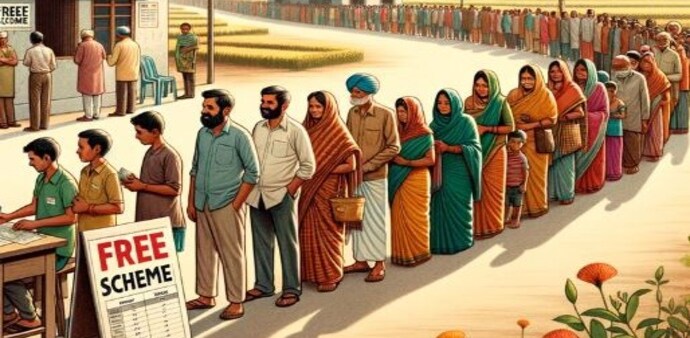
- Jan 29, 2026,
- Updated Jan 29, 2026 9:38 PM IST
The Economic Survey 2025-26 has raised concerns over the rapid expansion of so-called “freebies”, particularly unconditional cash transfer schemes run by States, warning that their growing scale could weaken fiscal sustainability and crowd out spending on productive capital investment.
In a detailed assessment of State finances, the Survey notes that revenue expenditure is increasingly tilted towards unconditional cash transfers and other committed outlays. As these schemes absorb a rising share of limited fiscal space, the ability of States to expand capital expenditure on infrastructure, health, education and human capital is getting constrained.
The Survey estimates that aggregate spending on unconditional cash transfer programmes — many of them targeted at women — could reach around ₹1.7 lakh crore in FY26. The number of states implementing such schemes has increased sharply over the past few years, with nearly half of these States estimated to be running revenue deficits.
While acknowledging that cash transfers provide immediate income support and help households meet unmet needs, the Survey cautions that their rapid scale-up and persistence raise concerns for medium-term growth, especially when they are not complemented by investments in employment generation, skills and human capital.
The document highlights the fiscal trade-offs involved. With state finances already under pressure, higher spending on freebies risks either widening fiscal deficits further or squeezing out capital expenditure. The Survey underlines that capital outlay delivers stronger and more durable growth benefits compared to open-ended income support, particularly during periods of fiscal stress.
Drawing on global evidence, the Survey notes that unconditional cash transfers tend to improve consumption and short-term income stability, but do not consistently lead to better education outcomes, improved child nutrition, or sustained exits from poverty unless supported by strong public services and job creation.
The Survey also flags design weaknesses in many state-level schemes, pointing out the absence of sunset clauses, periodic reviews or clear exit mechanisms. This increases rigidity in revenue expenditure and reduces fiscal flexibility over time. In contrast, conditional, time-bound and outcome-linked support systems have been shown to strengthen human capital while limiting long-term fiscal strain.
Overall, the Economic Survey does not argue against welfare spending but calls for a careful reprioritisation of State budgets. It stresses that preserving fiscal space for capital formation and human-capital investment is essential for sustaining medium-term growth, warning that an unchecked expansion of freebies could undermine the foundations of inclusive and durable prosperity.
The Economic Survey 2025-26 has raised concerns over the rapid expansion of so-called “freebies”, particularly unconditional cash transfer schemes run by States, warning that their growing scale could weaken fiscal sustainability and crowd out spending on productive capital investment.
In a detailed assessment of State finances, the Survey notes that revenue expenditure is increasingly tilted towards unconditional cash transfers and other committed outlays. As these schemes absorb a rising share of limited fiscal space, the ability of States to expand capital expenditure on infrastructure, health, education and human capital is getting constrained.
The Survey estimates that aggregate spending on unconditional cash transfer programmes — many of them targeted at women — could reach around ₹1.7 lakh crore in FY26. The number of states implementing such schemes has increased sharply over the past few years, with nearly half of these States estimated to be running revenue deficits.
While acknowledging that cash transfers provide immediate income support and help households meet unmet needs, the Survey cautions that their rapid scale-up and persistence raise concerns for medium-term growth, especially when they are not complemented by investments in employment generation, skills and human capital.
The document highlights the fiscal trade-offs involved. With state finances already under pressure, higher spending on freebies risks either widening fiscal deficits further or squeezing out capital expenditure. The Survey underlines that capital outlay delivers stronger and more durable growth benefits compared to open-ended income support, particularly during periods of fiscal stress.
Drawing on global evidence, the Survey notes that unconditional cash transfers tend to improve consumption and short-term income stability, but do not consistently lead to better education outcomes, improved child nutrition, or sustained exits from poverty unless supported by strong public services and job creation.
The Survey also flags design weaknesses in many state-level schemes, pointing out the absence of sunset clauses, periodic reviews or clear exit mechanisms. This increases rigidity in revenue expenditure and reduces fiscal flexibility over time. In contrast, conditional, time-bound and outcome-linked support systems have been shown to strengthen human capital while limiting long-term fiscal strain.
Overall, the Economic Survey does not argue against welfare spending but calls for a careful reprioritisation of State budgets. It stresses that preserving fiscal space for capital formation and human-capital investment is essential for sustaining medium-term growth, warning that an unchecked expansion of freebies could undermine the foundations of inclusive and durable prosperity.