
Davos 2026: 'AI smarter than any human is coming by next year,' says Elon Musk
WEF Davos 2026: Musk said the speed of progress is being driven by rapid advances in computing power and AI software. But he warned that the biggest challenge facing the AI industry is no longer technology, it is electricity.
- Jan 22, 2026,
- Updated Jan 22, 2026 10:29 PM IST
Elon Musk says the world is moving faster toward super-intelligent artificial intelligence than most people realise.
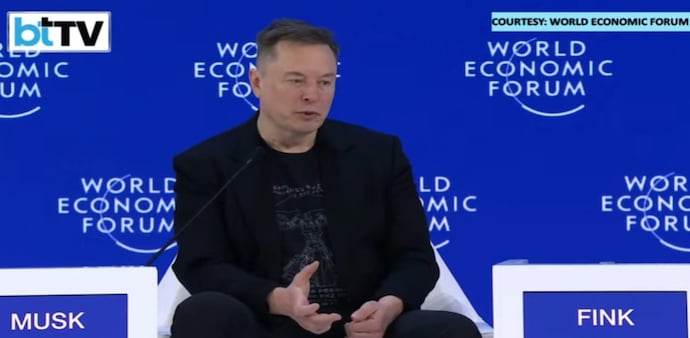
Speaking at the World Economic Forum in Davos in a fireside chat with BlackRock chief executive Laurence D. Fink, the Tesla and SpaceX CEO said AI could soon be smarter than the smartest humans alive.
“We may have AI smarter than any human by the end of this year. Definitely by next year,” Musk said. “And by 2030, AI will likely be smarter than all of humanity combined.”
Musk said the speed of progress is being driven by rapid advances in computing power and AI software. But he warned that the biggest challenge facing the AI industry is no longer technology, it is electricity.
Catch the exclusive coverage of WEF 2026 at Davos here
“The limiting factor for AI is electrical power,” Musk said.
While the production of AI chips is growing very fast, Musk said power generation is increasing much more slowly. “Very soon, we’ll be producing more chips than we can power,” he said.
He pointed to China’s massive solar expansion as a sign of how much energy the AI economy will need. “China is deploying over 1,000 gigawatts of solar per year. Solar is now the biggest energy source in the world,” Musk said.
Musk said most future energy will come from the sun. “Nearly all energy comes from the sun,” he said. “Even on a cosmic scale, the sun rounds up to 100% of all usable energy in the solar system.”
But Musk said AI alone will not change the world. The real transformation will come when AI is combined with robots.
“Economic output becomes the average productivity per robot multiplied by the number of robots,” Musk said.
In the future, Musk believes intelligent humanoid robots will be everywhere, in factories, offices and homes.
“In a benign future scenario, robots will make so many robots that they saturate all human needs,” he said.
Tesla is already testing its Optimus humanoid robots in factories, and Musk said they will soon take on more complex work. Over time, he expects robots to become more common than people.
“My prediction is that there will be more robots than people,” Musk said.
Watch the full interview here
Elon Musk says the world is moving faster toward super-intelligent artificial intelligence than most people realise.
Speaking at the World Economic Forum in Davos in a fireside chat with BlackRock chief executive Laurence D. Fink, the Tesla and SpaceX CEO said AI could soon be smarter than the smartest humans alive.
“We may have AI smarter than any human by the end of this year. Definitely by next year,” Musk said. “And by 2030, AI will likely be smarter than all of humanity combined.”
Musk said the speed of progress is being driven by rapid advances in computing power and AI software. But he warned that the biggest challenge facing the AI industry is no longer technology, it is electricity.
Catch the exclusive coverage of WEF 2026 at Davos here
“The limiting factor for AI is electrical power,” Musk said.
While the production of AI chips is growing very fast, Musk said power generation is increasing much more slowly. “Very soon, we’ll be producing more chips than we can power,” he said.
He pointed to China’s massive solar expansion as a sign of how much energy the AI economy will need. “China is deploying over 1,000 gigawatts of solar per year. Solar is now the biggest energy source in the world,” Musk said.
Musk said most future energy will come from the sun. “Nearly all energy comes from the sun,” he said. “Even on a cosmic scale, the sun rounds up to 100% of all usable energy in the solar system.”
But Musk said AI alone will not change the world. The real transformation will come when AI is combined with robots.
“Economic output becomes the average productivity per robot multiplied by the number of robots,” Musk said.
In the future, Musk believes intelligent humanoid robots will be everywhere, in factories, offices and homes.
“In a benign future scenario, robots will make so many robots that they saturate all human needs,” he said.
Tesla is already testing its Optimus humanoid robots in factories, and Musk said they will soon take on more complex work. Over time, he expects robots to become more common than people.
“My prediction is that there will be more robots than people,” Musk said.
Watch the full interview here