
12th night of US strikes on Iran; Brent crosses $95, Houthis threaten Saudi oil in Red Sea
Trump sharpened his warnings on Wednesday, saying the US would destroy Iranian bridges and power plants in retaliation for every Iranian strike against vessels in the Strait of Hormuz
- Jul 23, 2026,
- Updated Jul 23, 2026 7:36 AM IST
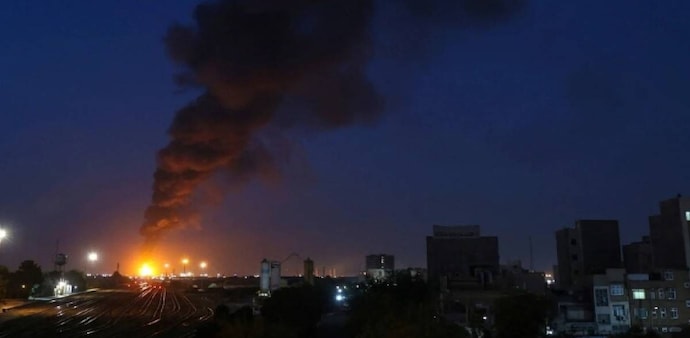
The United States military launched its 12th consecutive night of airstrikes against Iran on Wednesday, with US Central Command confirming the operation began at 5:30 pm ET on direct orders from President Trump. The ceasefire that briefly halted the conflict in June has fully collapsed, and the war is now expanding in both geographic scope and intensity.
"The mission will continue to further degrade Iran's ability to threaten civilian mariners and commercial vessels transiting regional waters," CENTCOM said.
Trump sharpened his warnings on Wednesday, saying the US would destroy Iranian bridges and power plants in retaliation for every Iranian strike against vessels in the Strait of Hormuz. Tehran responded with equal directness.
Iran's warning
Iranian Foreign Minister Abbas Araqchi posted on X: "Our defence doctrine is clear: eye for an eye. Any aggression against Iran, including our infrastructure, will compel a powerful and decisive response."
Iranian military officials went further, warning that the country could move to prevent oil exports from the entire region, a threat that immediately rattled energy markets. Brent crude futures briefly crossed $95 a barrel before settling above $94.
Two straits under threat
The Strait of Hormuz, already effectively blockaded by Iran, has been the central battleground of the conflict. But a second critical maritime chokepoint is now under threat. Yemen's Iran-backed Houthi group has threatened Saudi oil shipments through the Bab el-Mandeb Strait, the gateway connecting the Red Sea with the Gulf of Aden. Five oil tankers changed course in the Red Sea to avoid the route following the Houthi warning, adding further pressure to global energy markets. Saudi Arabia, already rerouting oil exports because of the Hormuz situation, now faces disruption on its alternative export corridor as well.
Diplomacy on life support
US Secretary of State Marco Rubio said Washington remains open to talks but made clear the conditions. "If they're serious, we're serious. If they're not, then we will do what's necessary to protect our interests, and also the interests of our allies," he said.
Iranian officials have characterised the US as trapped in a prolonged conflict with no clear exit strategy, while American officials maintain the military campaign is focused on protecting shipping routes and US forces.
The human cost
The conflict has now claimed 18 American military lives, with more than 450 US troops injured in Iranian strikes on American positions across the region. On the Iranian side, the country's Health Ministry said 53 civilians have been killed and 592 wounded since late last month. The US has maintained that its strikes target military infrastructure and do not deliberately target civilians.
The United States military launched its 12th consecutive night of airstrikes against Iran on Wednesday, with US Central Command confirming the operation began at 5:30 pm ET on direct orders from President Trump. The ceasefire that briefly halted the conflict in June has fully collapsed, and the war is now expanding in both geographic scope and intensity.
"The mission will continue to further degrade Iran's ability to threaten civilian mariners and commercial vessels transiting regional waters," CENTCOM said.
Trump sharpened his warnings on Wednesday, saying the US would destroy Iranian bridges and power plants in retaliation for every Iranian strike against vessels in the Strait of Hormuz. Tehran responded with equal directness.
Iran's warning
Iranian Foreign Minister Abbas Araqchi posted on X: "Our defence doctrine is clear: eye for an eye. Any aggression against Iran, including our infrastructure, will compel a powerful and decisive response."
Iranian military officials went further, warning that the country could move to prevent oil exports from the entire region, a threat that immediately rattled energy markets. Brent crude futures briefly crossed $95 a barrel before settling above $94.
Two straits under threat
The Strait of Hormuz, already effectively blockaded by Iran, has been the central battleground of the conflict. But a second critical maritime chokepoint is now under threat. Yemen's Iran-backed Houthi group has threatened Saudi oil shipments through the Bab el-Mandeb Strait, the gateway connecting the Red Sea with the Gulf of Aden. Five oil tankers changed course in the Red Sea to avoid the route following the Houthi warning, adding further pressure to global energy markets. Saudi Arabia, already rerouting oil exports because of the Hormuz situation, now faces disruption on its alternative export corridor as well.
Diplomacy on life support
US Secretary of State Marco Rubio said Washington remains open to talks but made clear the conditions. "If they're serious, we're serious. If they're not, then we will do what's necessary to protect our interests, and also the interests of our allies," he said.
Iranian officials have characterised the US as trapped in a prolonged conflict with no clear exit strategy, while American officials maintain the military campaign is focused on protecting shipping routes and US forces.
The human cost
The conflict has now claimed 18 American military lives, with more than 450 US troops injured in Iranian strikes on American positions across the region. On the Iranian side, the country's Health Ministry said 53 civilians have been killed and 592 wounded since late last month. The US has maintained that its strikes target military infrastructure and do not deliberately target civilians.