
24 Indian crew rescued after US Navy fires on sanctioned tanker breaching Iran blockade
The vessel, M/T Marivex, a Palau-flagged tanker, had ignored repeated US Navy warnings before an F/A-18 Super Hornet from the USS Abraham Lincoln fired a precision munition into its engineering and steering spaces
- Jun 9, 2026,
- Updated Jun 9, 2026 10:57 AM IST
All 24 Indian crew members aboard a sanctioned oil tanker have been rescued after US forces fired on the vessel in the Gulf of Oman on Monday, disabling it as it attempted to breach the American blockade against Iran. Omani authorities assisted in the rescue operation, and India's embassy in Oman confirmed its officials were in contact with local authorities to ensure the sailors' safety.
What happened
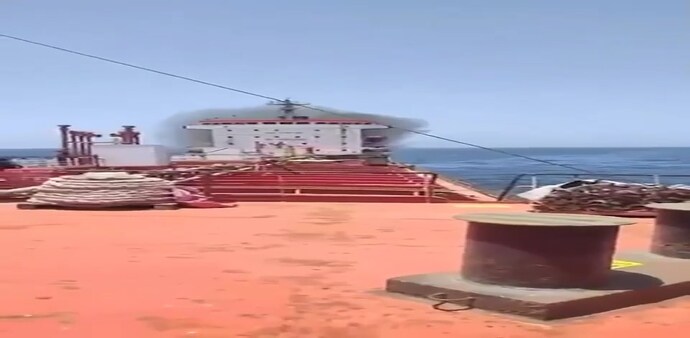
The vessel, M/T Marivex, a Palau-flagged tanker, had ignored repeated US Navy warnings before an F/A-18 Super Hornet from the USS Abraham Lincoln fired a precision munition into its engineering and steering spaces. A fire broke out on board following the strike. "Marivex is no longer sailing to Iran," US Central Command said in a post on X.
India's shipping ministry confirmed the crew's safety and said the government had activated multiple agencies in response. "We are coordinating with the Ministry of External Affairs, our Indian missions abroad, the Indian Navy, and the Ministry of Defence to ensure their safety," said Opesh Kumar Sharma, a director in the federal port and shipping ministry, at a press conference.
A vessel that had been warned and sanctioned
The Marivex was not an unknown vessel to US authorities. It had previously been sanctioned by the US Treasury's Office of Foreign Assets Control. According to an Indian source with direct knowledge of the matter, the ship had turned away on three separate occasions following warnings from the US Navy before making a final attempt to breach the blockade by routing through Omani territorial waters on Monday.
OFAC has imposed sanctions on approximately 1,000 Iran-related individuals, vessels, and aircraft since February 2025 as part of a campaign to apply maximum economic pressure on Iran's sanctions-evasion and money-laundering networks.
The blockade and its scope
The US blockade of Iranian ports began in April, after Iran severely curtailed shipping through the Strait of Hormuz, one of the world's most critical oil and gas routes. CENTCOM has clarified that the restrictions apply specifically to vessels travelling to or from Iran, and not to ships transiting the strait toward non-Iranian destinations.
All 24 Indian crew members aboard a sanctioned oil tanker have been rescued after US forces fired on the vessel in the Gulf of Oman on Monday, disabling it as it attempted to breach the American blockade against Iran. Omani authorities assisted in the rescue operation, and India's embassy in Oman confirmed its officials were in contact with local authorities to ensure the sailors' safety.
What happened
The vessel, M/T Marivex, a Palau-flagged tanker, had ignored repeated US Navy warnings before an F/A-18 Super Hornet from the USS Abraham Lincoln fired a precision munition into its engineering and steering spaces. A fire broke out on board following the strike. "Marivex is no longer sailing to Iran," US Central Command said in a post on X.
India's shipping ministry confirmed the crew's safety and said the government had activated multiple agencies in response. "We are coordinating with the Ministry of External Affairs, our Indian missions abroad, the Indian Navy, and the Ministry of Defence to ensure their safety," said Opesh Kumar Sharma, a director in the federal port and shipping ministry, at a press conference.
A vessel that had been warned and sanctioned
The Marivex was not an unknown vessel to US authorities. It had previously been sanctioned by the US Treasury's Office of Foreign Assets Control. According to an Indian source with direct knowledge of the matter, the ship had turned away on three separate occasions following warnings from the US Navy before making a final attempt to breach the blockade by routing through Omani territorial waters on Monday.
OFAC has imposed sanctions on approximately 1,000 Iran-related individuals, vessels, and aircraft since February 2025 as part of a campaign to apply maximum economic pressure on Iran's sanctions-evasion and money-laundering networks.
The blockade and its scope
The US blockade of Iranian ports began in April, after Iran severely curtailed shipping through the Strait of Hormuz, one of the world's most critical oil and gas routes. CENTCOM has clarified that the restrictions apply specifically to vessels travelling to or from Iran, and not to ships transiting the strait toward non-Iranian destinations.