
40% refining capacity lost: Why Russia is importing petrol from India after Ukraine's drone blitz
Russia remains one of the world's largest crude oil exporters, but refining that oil into usable fuels has become increasingly difficult as repeated Ukrainian strikes damage critical infrastructure faster than repairs can be completed.
- Jul 23, 2026,
- Updated Jul 23, 2026 2:20 PM IST
For a country that ranks among the world's biggest oil producers, importing petrol is an extraordinary step. Yet Russia is now doing exactly that. As Ukrainian drones continue targeting key oil refineries deep inside Russian territory, Moscow has been forced to buy gasoline refined in India — much of it produced from Russian crude shipped thousands of kilometres away before making the return journey.
The move underscores the growing impact of Ukraine's long-range strikes on Russia's energy infrastructure, with domestic refining capacity estimated to have fallen by around 40%. What began as attacks on strategic fuel facilities has evolved into a nationwide supply crisis affecting millions of Russians.
India sends petrol to Russia
Around 60,000 metric tonnes of petrol produced at Nayara Energy's Vadinar refinery in Gujarat has been dispatched to Russia through international commodity traders.
The Indian government has clarified that there are no direct government-to-government fuel sales, with the shipments being handled entirely through commercial third-party entities.
Ironically, much of the crude used at the Gujarat refinery originated in Russia itself. Moscow is effectively buying back gasoline refined from its own oil after sending the crude overseas, with the finished fuel travelling roughly 14,000 kilometres before reaching Russian ports — at a significantly higher cost than domestic production.
Ukrainian drones hammer Russia's refineries
Ukraine has steadily expanded the range and frequency of its drone attacks, targeting refineries, fuel depots and petrochemical complexes far from the battlefield.
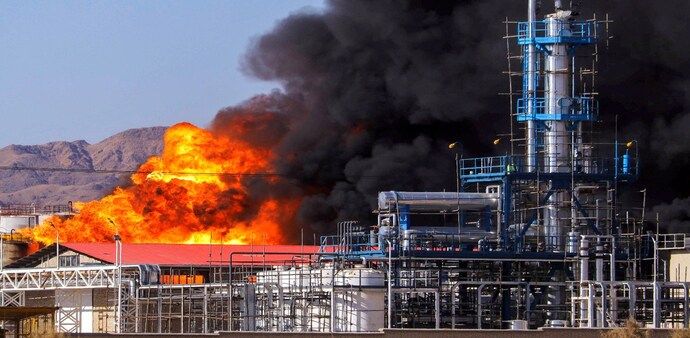
One of the latest strikes hit the Gazprom Neftekhim refinery in Salavat, in Russia's Republic of Bashkortostan, roughly 1,300 kilometres from the frontline. Multiple explosions were reported before a fire engulfed parts of the sprawling petrochemical complex.
The refinery processed 7.2 million tonnes of crude in 2024, accounting for roughly 2.7% of Russia's total refining capacity. Besides petrol and diesel, the facility produces kerosene, ammonia, urea and other petrochemical products.
Another fire was reported at the Afipsky refinery in Krasnodar Krai, adding to the growing list of damaged energy facilities.
According to recent estimates, Ukrainian strikes have affected infrastructure serving more than 50 million Russians, with fuel shortages stretching from Crimea in the south to Omsk in Siberia.
Fuel rationing spreads across Russia
The cumulative damage has pushed Russian refining output to its lowest level in more than two decades.
Fuel shortages are no longer confined to regions near the conflict. More than 55 Russian regions have reportedly introduced various forms of fuel rationing, including:
- Purchase limits for consumers
- Rising retail fuel prices
- Supply restrictions at petrol stations
The measures illustrate how disruptions at major refineries are rippling across the country's vast transportation network.
Moscow scrambles for emergency measures
Russian President Vladimir Putin has publicly acknowledged the fuel shortages as the government moves to stabilise supplies.
Authorities have responded with a series of emergency steps, including:
- Banning exports of gasoline, diesel and jet fuel
- Approving tax code changes and import subsidies linked to fuel deliveries
- Allowing refiners to market lower-grade fuels
The willingness to revisit outdated fuel standards highlights the extent of the pressure on Russia's refining sector. Russia remains one of the world's largest crude oil exporters, but refining that oil into usable fuels has become increasingly difficult as repeated Ukrainian strikes damage critical infrastructure faster than repairs can be completed.
For a country that ranks among the world's biggest oil producers, importing petrol is an extraordinary step. Yet Russia is now doing exactly that. As Ukrainian drones continue targeting key oil refineries deep inside Russian territory, Moscow has been forced to buy gasoline refined in India — much of it produced from Russian crude shipped thousands of kilometres away before making the return journey.
The move underscores the growing impact of Ukraine's long-range strikes on Russia's energy infrastructure, with domestic refining capacity estimated to have fallen by around 40%. What began as attacks on strategic fuel facilities has evolved into a nationwide supply crisis affecting millions of Russians.
India sends petrol to Russia
Around 60,000 metric tonnes of petrol produced at Nayara Energy's Vadinar refinery in Gujarat has been dispatched to Russia through international commodity traders.
The Indian government has clarified that there are no direct government-to-government fuel sales, with the shipments being handled entirely through commercial third-party entities.
Ironically, much of the crude used at the Gujarat refinery originated in Russia itself. Moscow is effectively buying back gasoline refined from its own oil after sending the crude overseas, with the finished fuel travelling roughly 14,000 kilometres before reaching Russian ports — at a significantly higher cost than domestic production.
Ukrainian drones hammer Russia's refineries
Ukraine has steadily expanded the range and frequency of its drone attacks, targeting refineries, fuel depots and petrochemical complexes far from the battlefield.
One of the latest strikes hit the Gazprom Neftekhim refinery in Salavat, in Russia's Republic of Bashkortostan, roughly 1,300 kilometres from the frontline. Multiple explosions were reported before a fire engulfed parts of the sprawling petrochemical complex.
The refinery processed 7.2 million tonnes of crude in 2024, accounting for roughly 2.7% of Russia's total refining capacity. Besides petrol and diesel, the facility produces kerosene, ammonia, urea and other petrochemical products.
Another fire was reported at the Afipsky refinery in Krasnodar Krai, adding to the growing list of damaged energy facilities.
According to recent estimates, Ukrainian strikes have affected infrastructure serving more than 50 million Russians, with fuel shortages stretching from Crimea in the south to Omsk in Siberia.
Fuel rationing spreads across Russia
The cumulative damage has pushed Russian refining output to its lowest level in more than two decades.
Fuel shortages are no longer confined to regions near the conflict. More than 55 Russian regions have reportedly introduced various forms of fuel rationing, including:
- Purchase limits for consumers
- Rising retail fuel prices
- Supply restrictions at petrol stations
The measures illustrate how disruptions at major refineries are rippling across the country's vast transportation network.
Moscow scrambles for emergency measures
Russian President Vladimir Putin has publicly acknowledged the fuel shortages as the government moves to stabilise supplies.
Authorities have responded with a series of emergency steps, including:
- Banning exports of gasoline, diesel and jet fuel
- Approving tax code changes and import subsidies linked to fuel deliveries
- Allowing refiners to market lower-grade fuels
The willingness to revisit outdated fuel standards highlights the extent of the pressure on Russia's refining sector. Russia remains one of the world's largest crude oil exporters, but refining that oil into usable fuels has become increasingly difficult as repeated Ukrainian strikes damage critical infrastructure faster than repairs can be completed.