
9 years, 7 tonnes of plastic and one home: How a Costa Rican mother built a future for her son
The project has also been repeatedly described online as being built by 800 volunteers.
- Aug 21, 2026,
- Updated Aug 21, 2026 6:25 AM IST
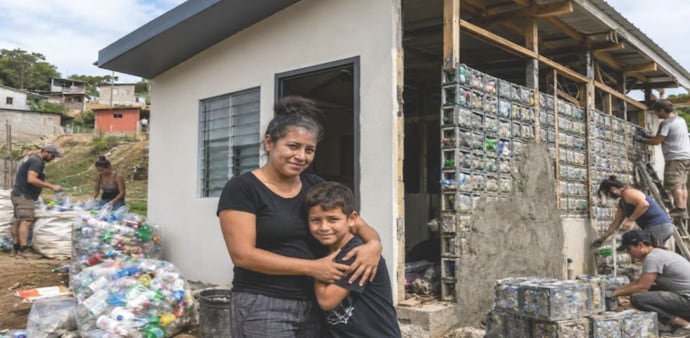
After saving for nine years to buy a plot of land, a Costa Rican mother finally got a permanent home for herself and her 6-year-old son — with its walls made using about 7 tonnes of recycled plastic, according to a report by The Times of India.
Cindy Mora Abarca had secured the small plot in the Lámparas neighbourhood of Alajuelita, near San José, through a loan. But after years of saving for the land, she did not have enough money left to build a house.
Her situation changed when Habitat for Humanity Costa Rica partnered with Procter & Gamble, local organisation Urbarium and recycled materials group Ekojunto to build her a home using interlocking blocks made primarily from recycled plastic.
From saving for land to building a home
Mora had spent nine years saving money for a place where she could raise her son, Fabrizio. Once she obtained the land, the cost of construction became the next major hurdle.
The project began in April 2018, and the completed house was handed over to Mora and her son on May 26 that year.
7 tonnes of plastic turned into building blocks
As per the report, the house used approximately 7 tons of recycled plastic. The material was processed into interlocking construction units known as Bioqueplas, designed to fit together much like Lego blocks.
The home used approximately 850 recycled plastic blocks. The blocks formed the walls, while conventional materials were used for the foundation, roof, plumbing, electrical wiring, doors and windows.
Don't Miss: Real estate faces a private credit paradox: Biggest deployment, highest default risk, shows report
After the structure was finished with plaster and paint, the house looked like a conventional modest home rather than an experimental recycling project.
More than 800 volunteer hours, not 800 people
The project has also been repeatedly described online as being built by 800 volunteers. However, the original reporting refers to more than 800 combined hours of volunteer labour, primarily contributed by Procter & Gamble employees.
Habitat for Humanity Costa Rica selected Mora's family based on socioeconomic need and helped ensure the property met the requirements for construction. Urbarium coordinated the local implementation of the recycled plastic block system, while volunteers worked alongside the organisations during construction.
Turning plastic waste into affordable housing
The project was designed to demonstrate how plastic waste could be diverted from landfills and waterways and converted into useful construction material while helping provide affordable housing.
Urbarium attributed several properties to its block system, including resistance to seismic forces, thermal and acoustic insulation and protection against weather. These are claims made by the organisation involved in the project, and no independent testing specific to Mora's house has been identified.
According to project materials, the blocks were designed to comply with Costa Rica's 2010 seismic construction code.
Must Read: Core sector growth eases to 5.4% in July from 6% in June; iron ore, cement lead
For Mora, the environmental aspect was only part of the story. After nine years of saving for land and struggling to afford construction, she finally had a permanent home where she could raise her son — while thousands of kilograms of discarded plastic became part of the walls around them.
After saving for nine years to buy a plot of land, a Costa Rican mother finally got a permanent home for herself and her 6-year-old son — with its walls made using about 7 tonnes of recycled plastic, according to a report by The Times of India.
Cindy Mora Abarca had secured the small plot in the Lámparas neighbourhood of Alajuelita, near San José, through a loan. But after years of saving for the land, she did not have enough money left to build a house.
Her situation changed when Habitat for Humanity Costa Rica partnered with Procter & Gamble, local organisation Urbarium and recycled materials group Ekojunto to build her a home using interlocking blocks made primarily from recycled plastic.
From saving for land to building a home
Mora had spent nine years saving money for a place where she could raise her son, Fabrizio. Once she obtained the land, the cost of construction became the next major hurdle.
The project began in April 2018, and the completed house was handed over to Mora and her son on May 26 that year.
7 tonnes of plastic turned into building blocks
As per the report, the house used approximately 7 tons of recycled plastic. The material was processed into interlocking construction units known as Bioqueplas, designed to fit together much like Lego blocks.
The home used approximately 850 recycled plastic blocks. The blocks formed the walls, while conventional materials were used for the foundation, roof, plumbing, electrical wiring, doors and windows.
Don't Miss: Real estate faces a private credit paradox: Biggest deployment, highest default risk, shows report
After the structure was finished with plaster and paint, the house looked like a conventional modest home rather than an experimental recycling project.
More than 800 volunteer hours, not 800 people
The project has also been repeatedly described online as being built by 800 volunteers. However, the original reporting refers to more than 800 combined hours of volunteer labour, primarily contributed by Procter & Gamble employees.
Habitat for Humanity Costa Rica selected Mora's family based on socioeconomic need and helped ensure the property met the requirements for construction. Urbarium coordinated the local implementation of the recycled plastic block system, while volunteers worked alongside the organisations during construction.
Turning plastic waste into affordable housing
The project was designed to demonstrate how plastic waste could be diverted from landfills and waterways and converted into useful construction material while helping provide affordable housing.
Urbarium attributed several properties to its block system, including resistance to seismic forces, thermal and acoustic insulation and protection against weather. These are claims made by the organisation involved in the project, and no independent testing specific to Mora's house has been identified.
According to project materials, the blocks were designed to comply with Costa Rica's 2010 seismic construction code.
Must Read: Core sector growth eases to 5.4% in July from 6% in June; iron ore, cement lead
For Mora, the environmental aspect was only part of the story. After nine years of saving for land and struggling to afford construction, she finally had a permanent home where she could raise her son — while thousands of kilograms of discarded plastic became part of the walls around them.