
Arsenal of Democracy 2.0? US revives World War II-era playbook as Pentagon eyes automakers
While details remain limited, the outreach to GM and Ford suggests early-stage discussions rather than formal contracts. Both companies have prior experience in defence manufacturing, though nothing on the scale of WWII-era conversion.
- Apr 16, 2026,
- Updated Apr 16, 2026 2:52 PM IST
In a move that signals a dramatic shift toward wartime-style industrial mobilisation, the Pentagon has reportedly approached major American automakers General Motors and Ford Motor Company to explore producing military equipment — reviving a model last seen during World War II.
Return to the 'Arsenal of Democracy'
During WWII, the United States transformed its industrial base into what President Franklin D Roosevelt famously called the “Arsenal of Democracy.” Civilian manufacturing giants pivoted almost overnight to produce tanks, aircraft, weapons, and ammunition at massive scale.
If current reports hold true, Washington may be drawing from that same playbook — leveraging private-sector manufacturing muscle to meet rising defence demands amid escalating global tensions.
What the Pentagon reportedly wants
While details remain limited, the outreach to GM and Ford suggests early-stage discussions rather than formal contracts. The goal appears to be assessing how quickly existing automotive production lines could be adapted for military use — ranging from transport vehicles to more complex defence systems.
Both companies have prior experience in defence manufacturing, though nothing on the scale of WWII-era conversion.
Lessons from World War II
The historical precedent is striking — and instructive.
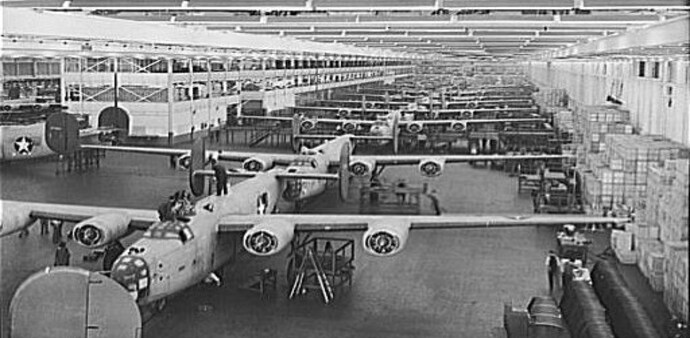
- Ford’s Willow Run plant: At its peak, Ford Motor Company operated the Willow Run facility in Michigan, producing one B-24 Liberator bomber every hour. It became one of the most efficient aircraft assembly lines in history.
- General Motors’ wartime output: General Motors manufactured everything from tanks and aircraft engines to machine guns. The company produced over 800,000 military vehicles and significant volumes of artillery and ammunition.
- Chrysler and the Detroit Arsenal: Chrysler built the Detroit Arsenal Tank Plant, producing iconic tanks like the M4 Sherman, which became a backbone of Allied ground forces.
- Civilian industry transformation: Beyond automakers, companies like Boeing and Lockheed Corporation expanded rapidly, while others that had never built military hardware — such as typewriter and appliance manufacturers — were repurposed to produce rifles, radar systems, and munitions.
Why now?
The reported move comes amid intensifying geopolitical pressures, supply chain vulnerabilities, and the growing complexity of modern warfare. Unlike WWII, today’s defence systems require advanced electronics, software integration, and precision manufacturing — raising questions about how easily traditional automakers can pivot.
Still, the underlying logic remains familiar: in times of strategic urgency, governments turn to industrial giants capable of scaling production quickly.
Recreating a WWII-style mobilisation in the 21st century is far from straightforward. Modern vehicles and weapons systems are far more technologically complex, supply chains are globally interdependent, and regulatory frameworks are tighter.
Moreover, such a shift could have ripple effects on civilian markets, employment, and global trade.
In a move that signals a dramatic shift toward wartime-style industrial mobilisation, the Pentagon has reportedly approached major American automakers General Motors and Ford Motor Company to explore producing military equipment — reviving a model last seen during World War II.
Return to the 'Arsenal of Democracy'
During WWII, the United States transformed its industrial base into what President Franklin D Roosevelt famously called the “Arsenal of Democracy.” Civilian manufacturing giants pivoted almost overnight to produce tanks, aircraft, weapons, and ammunition at massive scale.
If current reports hold true, Washington may be drawing from that same playbook — leveraging private-sector manufacturing muscle to meet rising defence demands amid escalating global tensions.
What the Pentagon reportedly wants
While details remain limited, the outreach to GM and Ford suggests early-stage discussions rather than formal contracts. The goal appears to be assessing how quickly existing automotive production lines could be adapted for military use — ranging from transport vehicles to more complex defence systems.
Both companies have prior experience in defence manufacturing, though nothing on the scale of WWII-era conversion.
Lessons from World War II
The historical precedent is striking — and instructive.
- Ford’s Willow Run plant: At its peak, Ford Motor Company operated the Willow Run facility in Michigan, producing one B-24 Liberator bomber every hour. It became one of the most efficient aircraft assembly lines in history.
- General Motors’ wartime output: General Motors manufactured everything from tanks and aircraft engines to machine guns. The company produced over 800,000 military vehicles and significant volumes of artillery and ammunition.
- Chrysler and the Detroit Arsenal: Chrysler built the Detroit Arsenal Tank Plant, producing iconic tanks like the M4 Sherman, which became a backbone of Allied ground forces.
- Civilian industry transformation: Beyond automakers, companies like Boeing and Lockheed Corporation expanded rapidly, while others that had never built military hardware — such as typewriter and appliance manufacturers — were repurposed to produce rifles, radar systems, and munitions.
Why now?
The reported move comes amid intensifying geopolitical pressures, supply chain vulnerabilities, and the growing complexity of modern warfare. Unlike WWII, today’s defence systems require advanced electronics, software integration, and precision manufacturing — raising questions about how easily traditional automakers can pivot.
Still, the underlying logic remains familiar: in times of strategic urgency, governments turn to industrial giants capable of scaling production quickly.
Recreating a WWII-style mobilisation in the 21st century is far from straightforward. Modern vehicles and weapons systems are far more technologically complex, supply chains are globally interdependent, and regulatory frameworks are tighter.
Moreover, such a shift could have ripple effects on civilian markets, employment, and global trade.