
As Pakistan mediates in US-Iran conflict, it seeks $10 billion from Washington
Pakistan continues to face economic challenges despite signs of stabilisation. It narrowly avoided a default in 2023 after securing a $3 billion IMF programme
- Jul 23, 2026,
- Updated Jul 23, 2026 1:02 PM IST
Pakistan, which has been troubled by lower economic growth and dwindling forex reserves, has reportedly requested the United States for a $10 billion Exchange Stabilisation Support Facility to strengthen its economy.
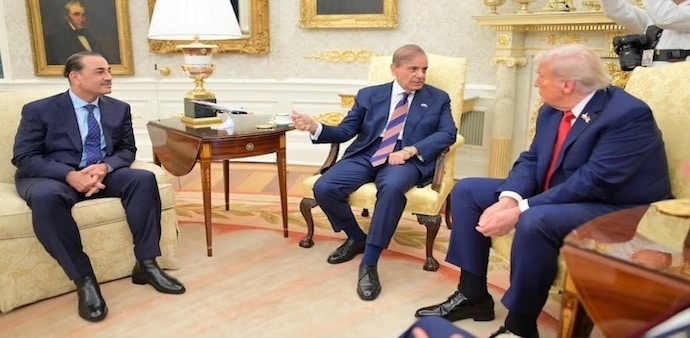
The timing is important. This demand comes at a time when Islamabad is mediating to end the ongoing war between Washington and Tehran. Earlier, an interim deal was reached between the US and Iran, but that collapsed after Tehran struck ships in the Strait of Hormuz.
Now, Islamabad has again begun talks to revive that deal. Iran's Interior Minister Eskandar Momeni visited Pakistan on Tuesday, where he held talks with the country's top leadership in an effort to revive negotiations.
Pakistan's Finance Minister Muhammad Aurangzeb made the request to US Treasury Secretary Scott Bessent, Dawn reported on Wednesday.
Dawn said Pakistan's embassy in Washington confirmed that the request had been made, although the official readout did not mention the reported $10 billion amount.
The facility, typically routed through the US Treasury's Exchange Stabilisation Fund, serves as a financial backstop and can include currency swaps, financial guarantees and loans.
ROAD TO INTERNATIONAL MARKETS
According to the embassy's readout, Aurangzeb sought US backing for Pakistan's "road-to-market" strategy, aimed at restoring independent access to international capital markets, rebuilding foreign exchange reserves and improving sovereign credit ratings.
Diplomatic sources in Washington told Dawn there were "strong chances" that the stabilisation request would be approved. One source said the Trump administration "has a keen interest in remaining engaged" with Pakistan and has "more than once pledged" to support the country's economic recovery.
BESSENT CITES ECONOMIC REFORMS
Treasury Secretary Scott Bessent confirmed meeting Aurangzeb in a post on X on Wednesday.
"Yesterday, I met with Pakistan's Federal Minister for Finance and Revenue Muhammad Aurangzeb. I welcomed Pakistan's progress in restoring macroeconomic stability and advancing key economic reforms. We discussed the importance of sustaining this reform momentum to promote durable growth, strengthen economic self-reliance, and help position Pakistan for a successful return to international capital markets," Bessent wrote.
FRAGILE RECOVERY
Pakistan continues to face economic challenges despite signs of stabilisation. The country narrowly avoided a default in 2023 after securing a $3 billion IMF programme. It is currently implementing reforms under a $7 billion IMF package approved in 2024, which remains tied to a series of policy conditions.
Pakistan's real GDP growth was roughly 3.6% to 3.7% in the 2026 fiscal year. It is expected to grow at 4.5% in FY2027.
Pakistan, which has been troubled by lower economic growth and dwindling forex reserves, has reportedly requested the United States for a $10 billion Exchange Stabilisation Support Facility to strengthen its economy.
The timing is important. This demand comes at a time when Islamabad is mediating to end the ongoing war between Washington and Tehran. Earlier, an interim deal was reached between the US and Iran, but that collapsed after Tehran struck ships in the Strait of Hormuz.
Now, Islamabad has again begun talks to revive that deal. Iran's Interior Minister Eskandar Momeni visited Pakistan on Tuesday, where he held talks with the country's top leadership in an effort to revive negotiations.
Pakistan's Finance Minister Muhammad Aurangzeb made the request to US Treasury Secretary Scott Bessent, Dawn reported on Wednesday.
Dawn said Pakistan's embassy in Washington confirmed that the request had been made, although the official readout did not mention the reported $10 billion amount.
The facility, typically routed through the US Treasury's Exchange Stabilisation Fund, serves as a financial backstop and can include currency swaps, financial guarantees and loans.
ROAD TO INTERNATIONAL MARKETS
According to the embassy's readout, Aurangzeb sought US backing for Pakistan's "road-to-market" strategy, aimed at restoring independent access to international capital markets, rebuilding foreign exchange reserves and improving sovereign credit ratings.
Diplomatic sources in Washington told Dawn there were "strong chances" that the stabilisation request would be approved. One source said the Trump administration "has a keen interest in remaining engaged" with Pakistan and has "more than once pledged" to support the country's economic recovery.
BESSENT CITES ECONOMIC REFORMS
Treasury Secretary Scott Bessent confirmed meeting Aurangzeb in a post on X on Wednesday.
"Yesterday, I met with Pakistan's Federal Minister for Finance and Revenue Muhammad Aurangzeb. I welcomed Pakistan's progress in restoring macroeconomic stability and advancing key economic reforms. We discussed the importance of sustaining this reform momentum to promote durable growth, strengthen economic self-reliance, and help position Pakistan for a successful return to international capital markets," Bessent wrote.
FRAGILE RECOVERY
Pakistan continues to face economic challenges despite signs of stabilisation. The country narrowly avoided a default in 2023 after securing a $3 billion IMF programme. It is currently implementing reforms under a $7 billion IMF package approved in 2024, which remains tied to a series of policy conditions.
Pakistan's real GDP growth was roughly 3.6% to 3.7% in the 2026 fiscal year. It is expected to grow at 4.5% in FY2027.