
'Democrats sceptical of Trump's Pakistan tilt': US expert sees stronger India ties after midterms
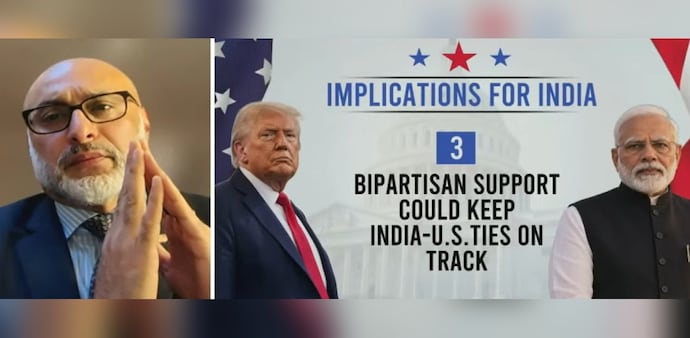
There's been a bipartisan interest in continuing the India-US relationship, and you're going to continue to see the Democrats lean in in terms of the Quad relationships, says Vinay Singh, Managing Director of Primus Partners USA
- Nov 5, 2026,
- Updated Nov 5, 2026 9:55 PM IST
The Democrats have been sceptical of the Trump administration's tilt towards Pakistan and are going to lean into the relationship with India, Vinay Singh, Managing Director of Primus Partners USA, said on Thursday.
Speaking to Business Today Group Editor Siddharth Zarabi, Singh said Democrats were likely to maintain Washington's bipartisan interest in ties with New Delhi.
"The Democrats have been skeptical of the administration's Pakistan's tilt. So you'll see some of that," Singh said when asked whether the Trump administration's rhetoric towards New Delhi could change following the Democrats' victory in the US midterm elections.
"You'll hear a little bit about some of the human rights elements. But there's been a bipartisan interest to continue that relationship, and you're going to continue to see the Democrats lean in in terms of the Quad relationships," he added.
Read More: Why US midterm elections may not change the tariff equation for India
Singh also pointed to growing engagement between Indian businesses and individual US states, citing an upcoming delegation from Maryland expected to visit India in December. "We have an upcoming state delegation. I think the state of Maryland is coming in December. So you're going to see a little bit more of that. You may actually see more states coming to India, and I think the Democratic Congress, the Senate, and the House are going to lean into the relationship with India," he added.
Democrats won control of both the House of Representatives and the Senate in the November 3 midterm elections, delivering a major setback to Trump. The party made significant gains in Republican strongholds, including Texas, Kansas and South Carolina.
Democrats may challenge Trump's tariff policy
The consulting executive said the change in congressional control could also affect Washington's trade approach, although Trump's presidential powers would limit how far Democrats could go.
"Well, I think that the Democrats will definitely work to undo the tariff regime, but the executive branch still has the ability to veto that," he said.
"The trade aspect will continue to grow. It's an opportunity actually for the executive branch to forge new relationships. The president has already said that he's ready to work and willing to work with this new Congress."
On the possibility of relief from US restrictions linked to India's purchases of Russian oil, Singh expressed cautious optimism. "There's hope from the oil aspect. I think you could see some progress from the Russian sanctions on India. But largely we'll need to wait till 2028 to see broader policy shifts," he said.
'Indian companies need more state-level engagement'
The India-US business adviser also urged Indian companies to strengthen their relationships with individual US states rather than focus primarily on Washington.
He pointed to Democrats' gains in governorships and statewide elections as an opportunity for businesses to build new investment partnerships.
"So my point would be to continue to do what a lot of the companies have been doing is that state-to-state dialogue," Singh said.
He cited an upcoming delegation from Maryland, expected to visit India in December, as an example of growing state-level engagement.
"You may actually see more interest of states coming into India, and I think the Democratic, Congress, the Senate, and the House are, are going to lean into the relationship with India," he said.
Singh said large Indian multinational companies already maintain strong relationships at the federal level but could do more to engage state administrations.
"The large companies, large multinational Indian companies do this in terms of the relationships at the federal level, but at the state level, there needs to be more action. There needs to be more engagement," he said.